Park News Feb 22 2026
The North Star
The North Owl has become the new star of the local owl scene. That became obvious on Friday morning when I met a dozen 10-year-olds and their counselor Susanna Mackintosh to “see the owls.”
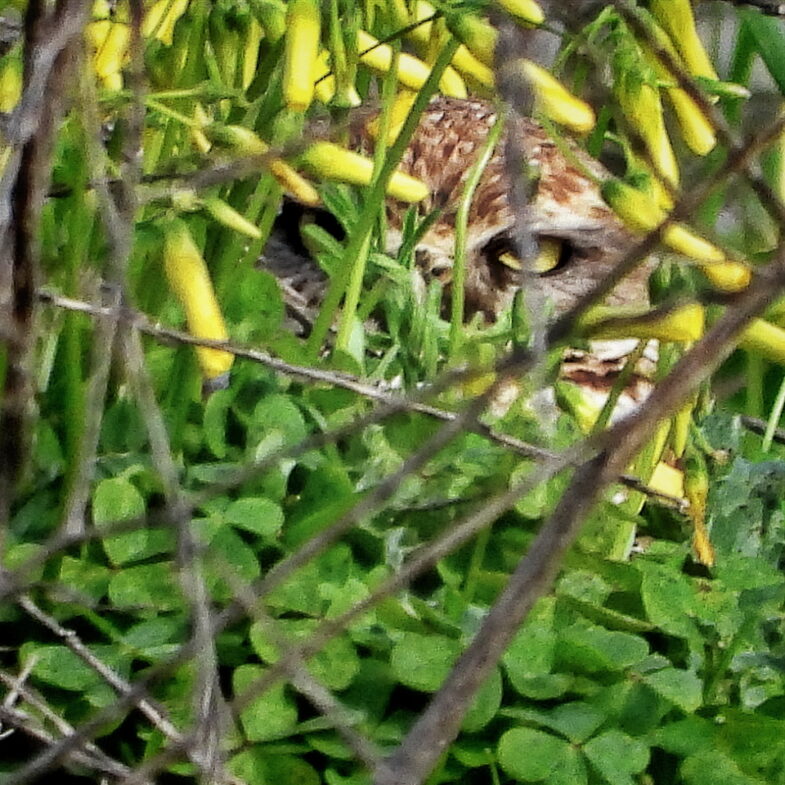
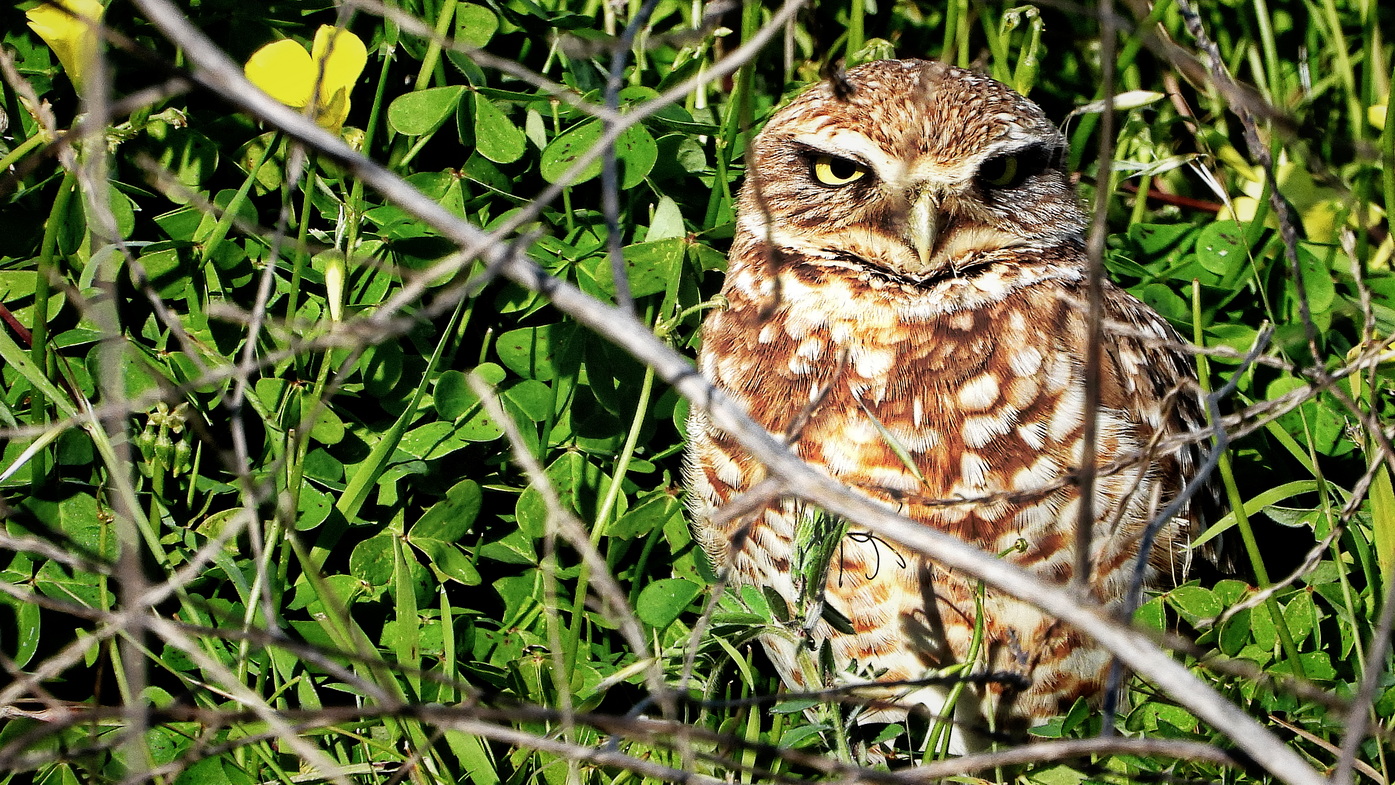
To start, I set up my camera south of the Spiral focused on the Perch C owl (look it up on the map). But this owl didn’t want to play “Show and Tell” at all. Instead, it hid deep in the vegetation, and the best image my camera could come up with was a bit of brown blur, with an occasional eye, behind a thick tangle of twigs, leaves, and flowers (photo right). Not a thrill for the kids.
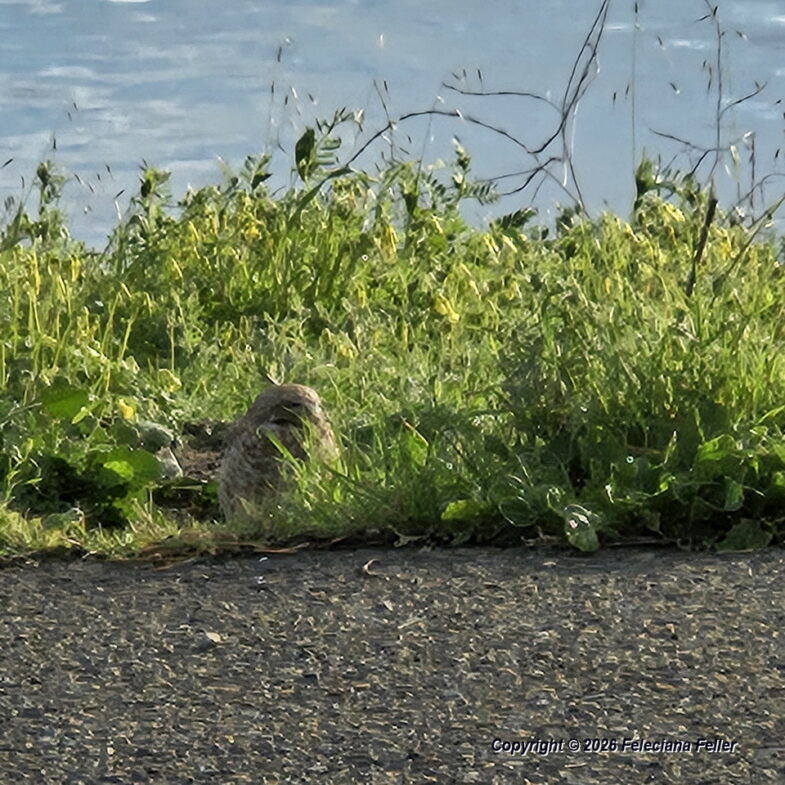
We moved north, hoping for a glimpse of the owl at Perch E (map). Feleciana Feller had seen it there at 8 am the day before (photo left), but at the time we passed, it was AWOL. The E owl in the past week has showed up in an irregular way. It used to be a reliable sight, if often hunkered down very low. Recently it’s been unpredictable, absent as often as present. This may be part of the Zugunruhe (migration restlessness) that migratory birds experience when it’s almost time for them to take off.
Onward bravely, hoping for a glimpse of the North Owl. I had seen and photographed it two days before and knew approximately where it might be. I swept the area twice, not seeing it, when the flock of kids caught up. Their sharp young eyes spotted it immediately. There it was, a foot or two from the spot where I had seen it earlier. At first view, we could see the whole bird in side view, with only a few twigs between it and us. A Ground Squirrel crossed the rock a few inches behind the owl, and the bird ignored it. After a while, the owl turned and faced us and we got a good frontal view. The bird was barely twenty feet away and the kids could easily see it without optical aids. I said a few words about their specialness, and some of the kids took that in, but the big thrill was actually seeing the bird.
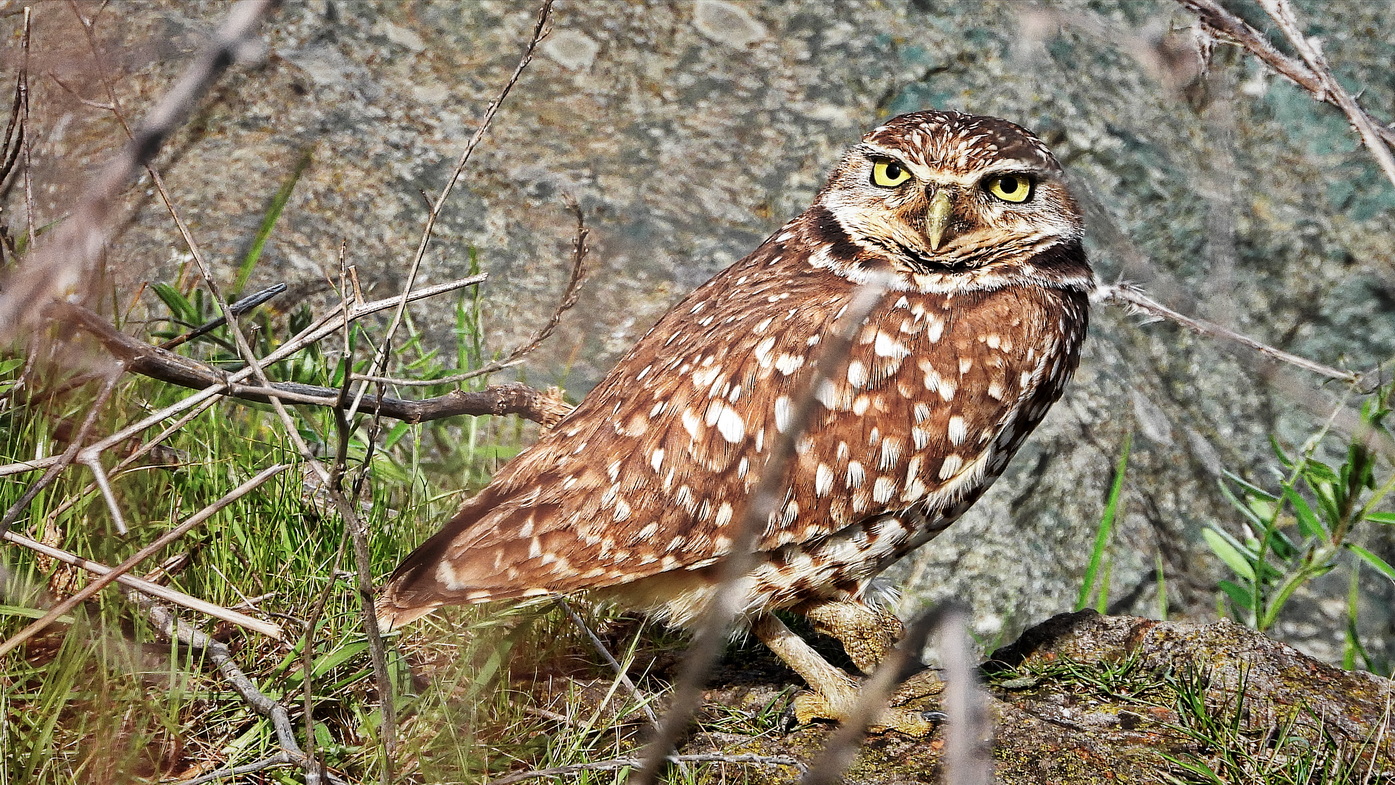

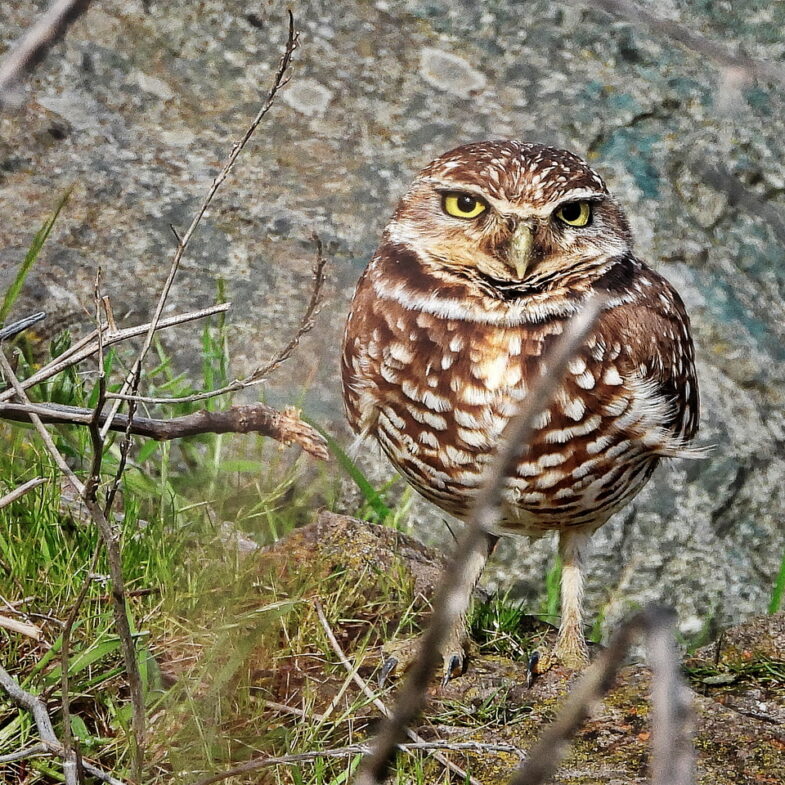
The owl looked at the gaggle of mostly little humans with some curiosity but showed no sign of alarm. (I’ve noticed the same thing in the Native Plant Area. The chitter-chattering of kindergarten kids doesn’t silence sparrows, finches, or wrens. The birds seem to know they’re harmless, and may even enjoy the twittering.) After a while, passing park visitors stopped to look at the owl, and the bird remained serene. I spoke to several park visitors who said that this was the first real Burrowing Owl they had ever seen in the park, despite years of walking here. Several asked how come the bird settled here, outside the Burrowing Owl Sanctuary. “Didn’t get the memo.”
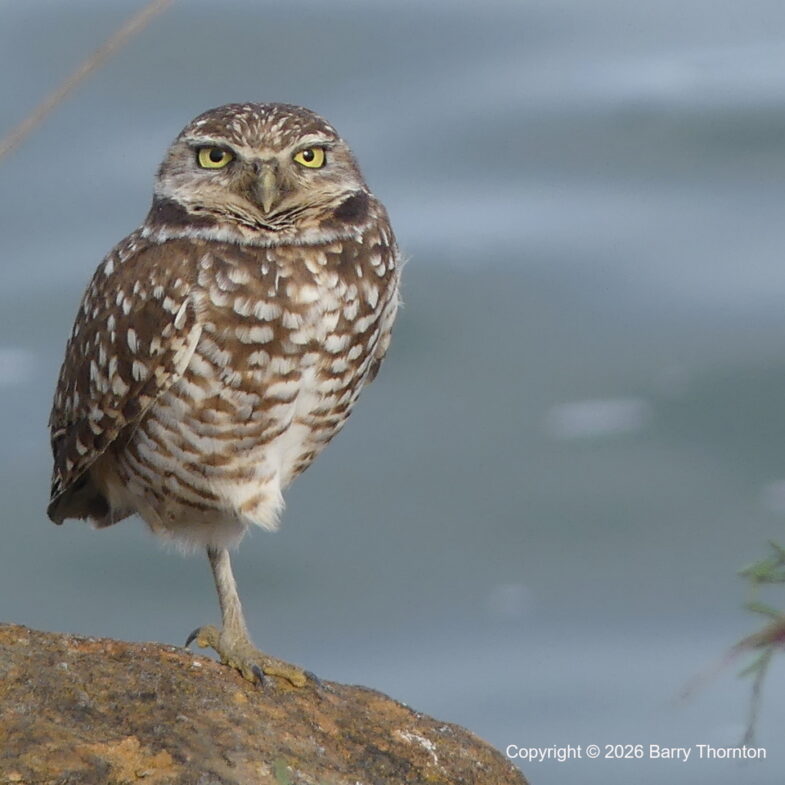
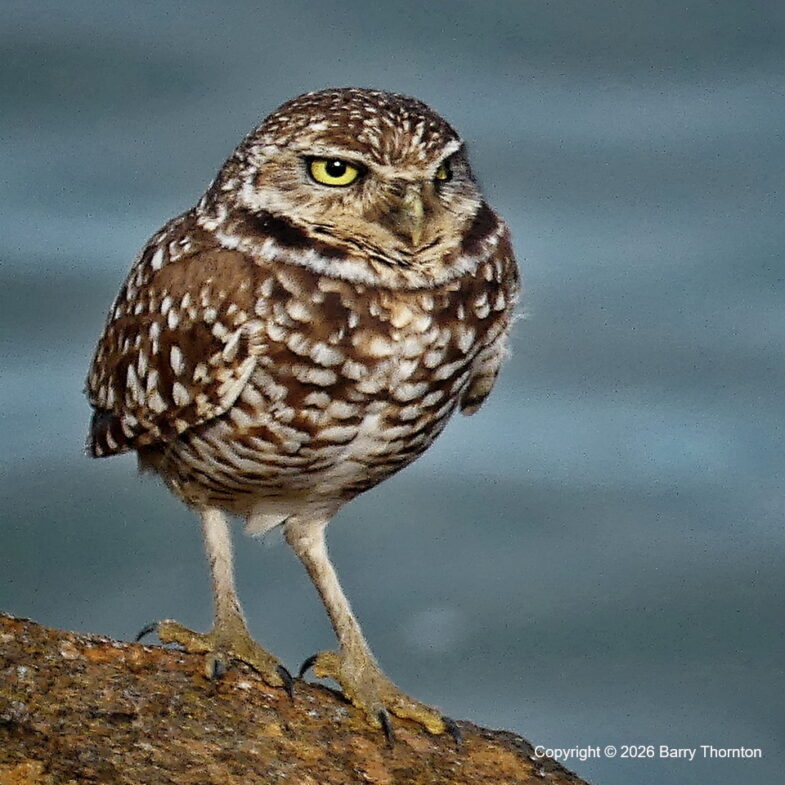
The North Owl also posed for other photographers. Barry Thornton, a new contributor, got nice images of the owl perched wide open on top of a rock.
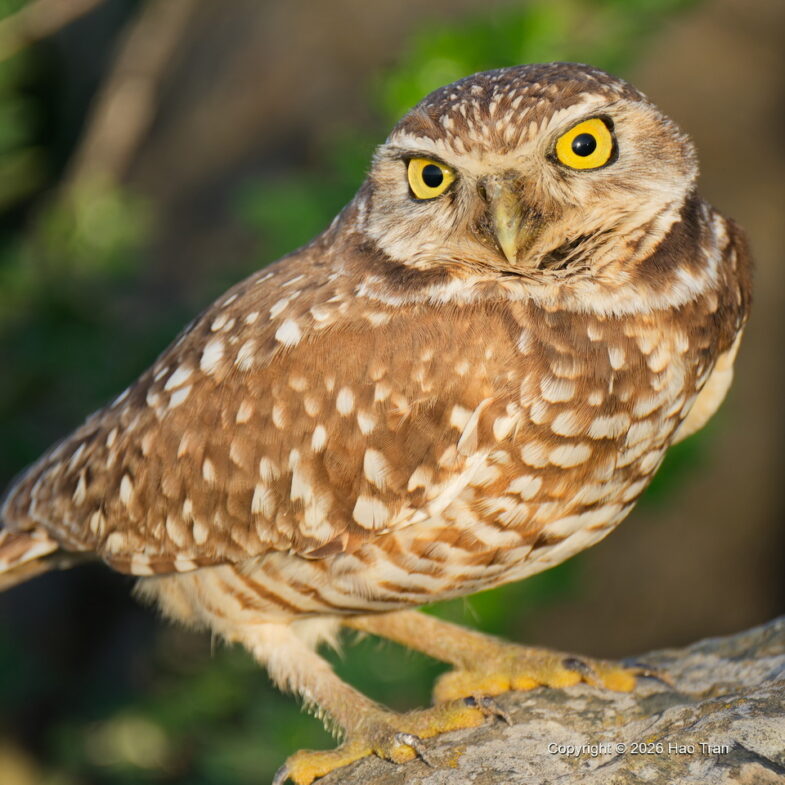
The most impressive photos of the North Owl come from its original discoverer, Hao Tran. Weeks ago, Hao had taken photos of an owl in this area at dusk in very dim light. At first the assumption was that this was one of the known owls at C or E out foraging at night, as they do. But then Hao saw the same bird in daylight, while the owls at C and E were also present. This was a third owl. Hao caught the owl again on Fri Feb 20 with a variety of expressions:
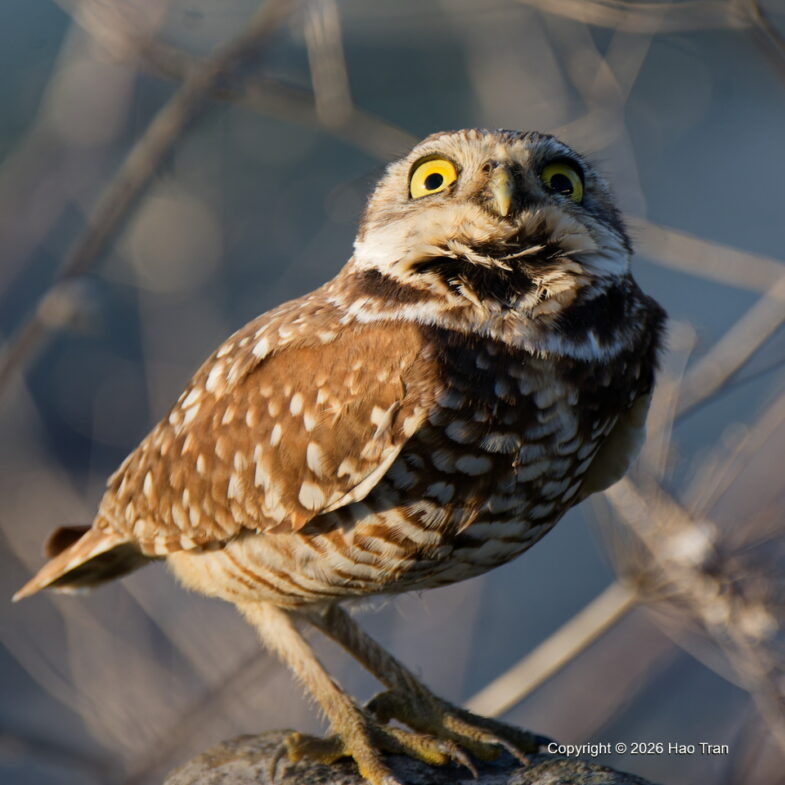

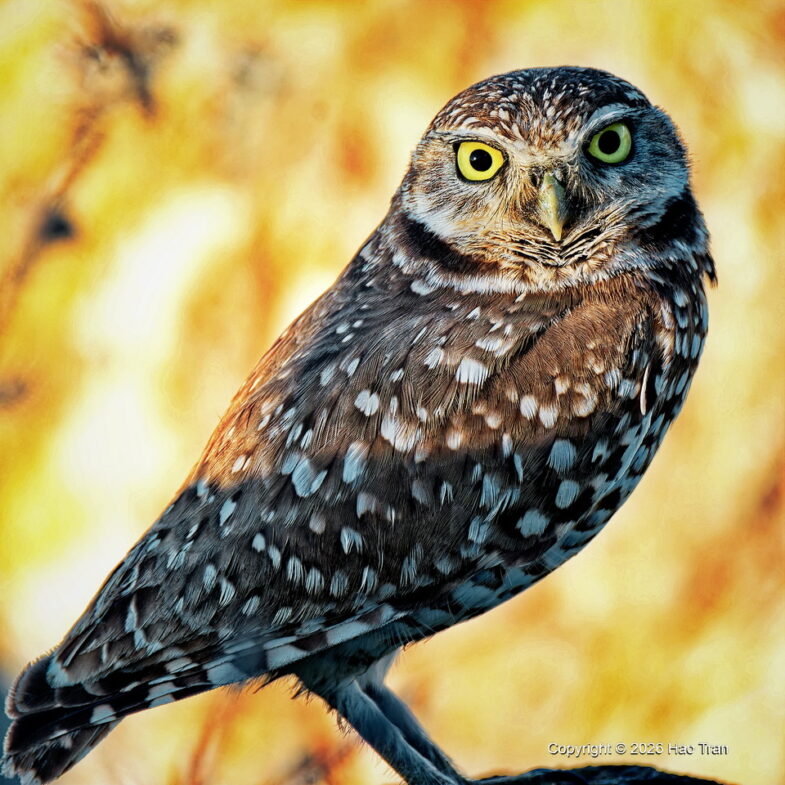
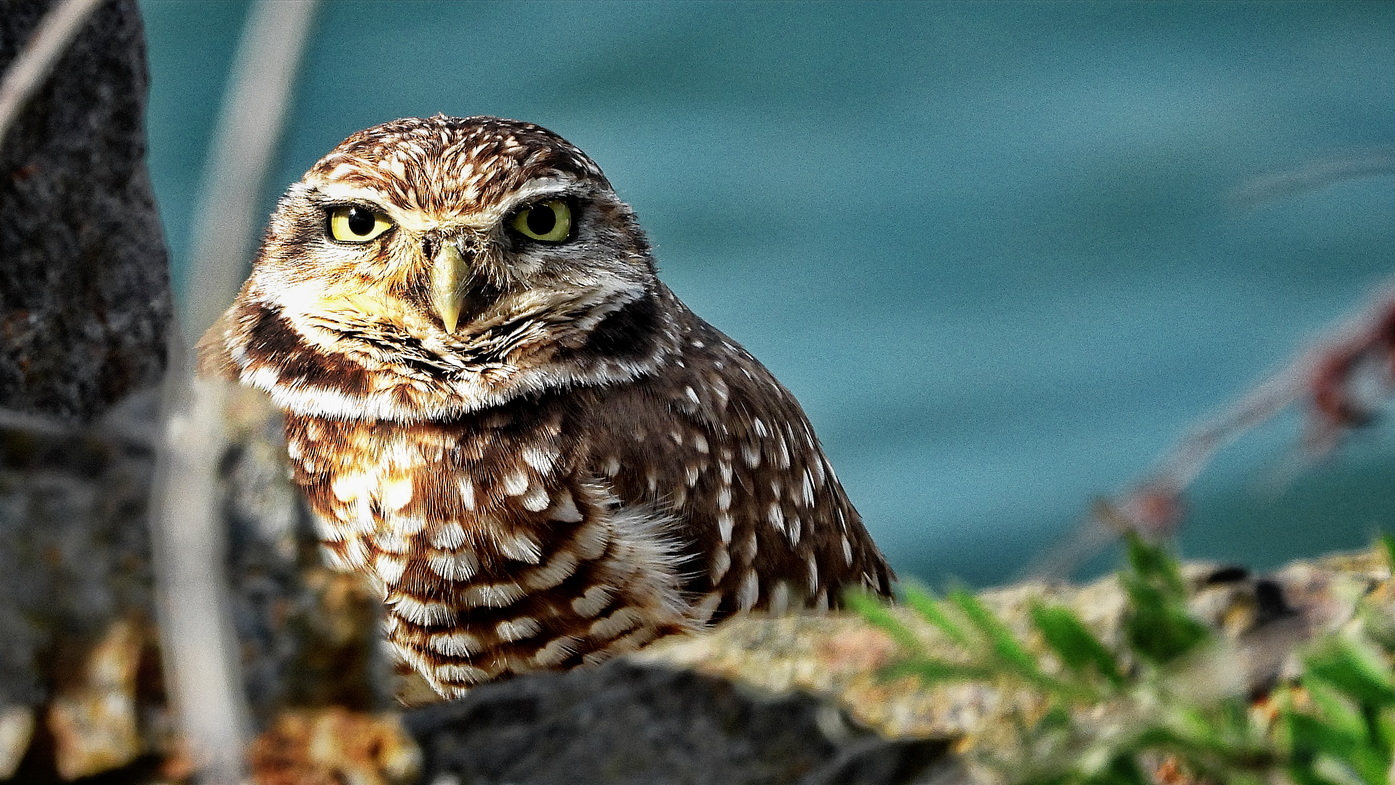
On Saturday Feb 21 the owl was perched low at the water’s edge next to a bigger stone in the exact spot where I had photographed it on Feb 18.
On the way back from visiting the North Owl on Feb 21, I saw a curious sight in the Perch C area (map). An hour earlier I had seen an owl there deep in the shrubbery behind the brown rock. Now an owl was perched in the open in the greenery much nearer the paved path, and easy to see, as on Feb 18. It seemed to me that the first owl was also still present, but the vegetation was so dense I couldn’t confirm it. Another photographer told me that he had also seen what he believed were two owls in this area. So, we may have another owl puzzle to untangle.
This is probably a good time to remind park visitors that if they want to see a Burrowing Owl, don’t procrastinate. In the past, owls have migrated away by this date. These birds could leave any day.
Other Feathers

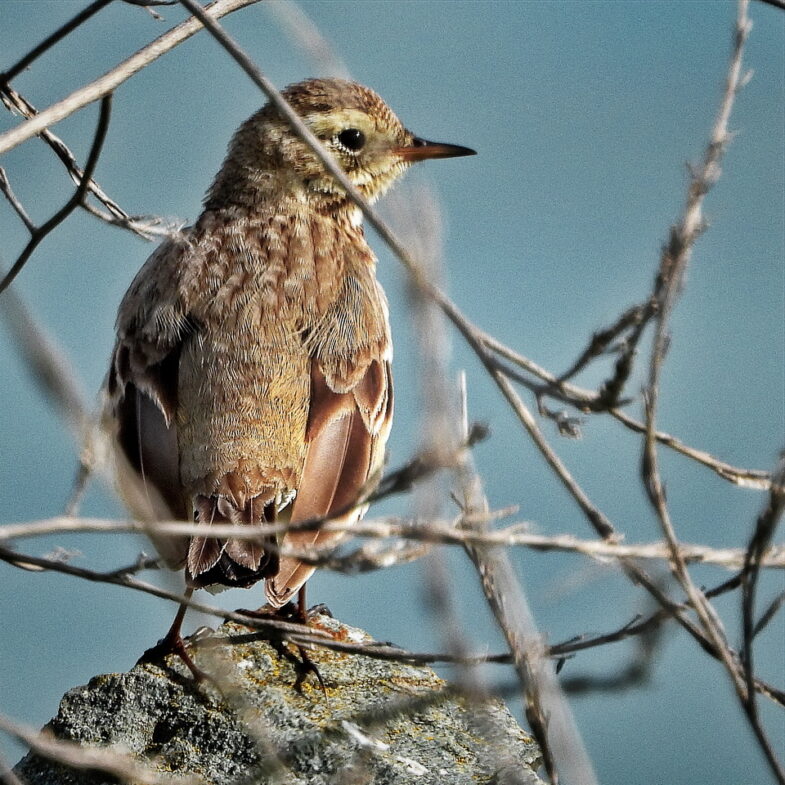
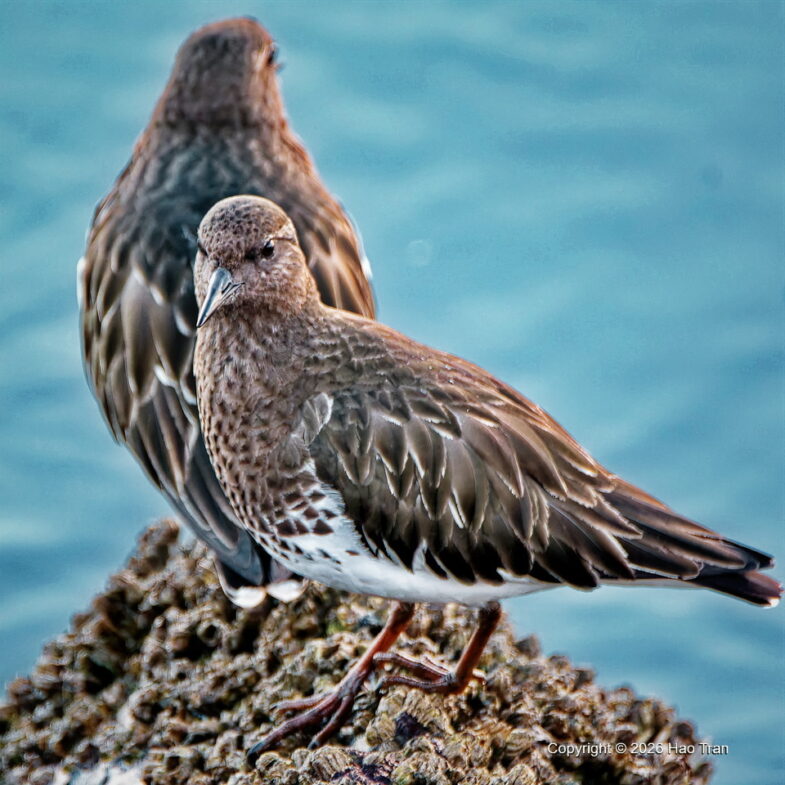
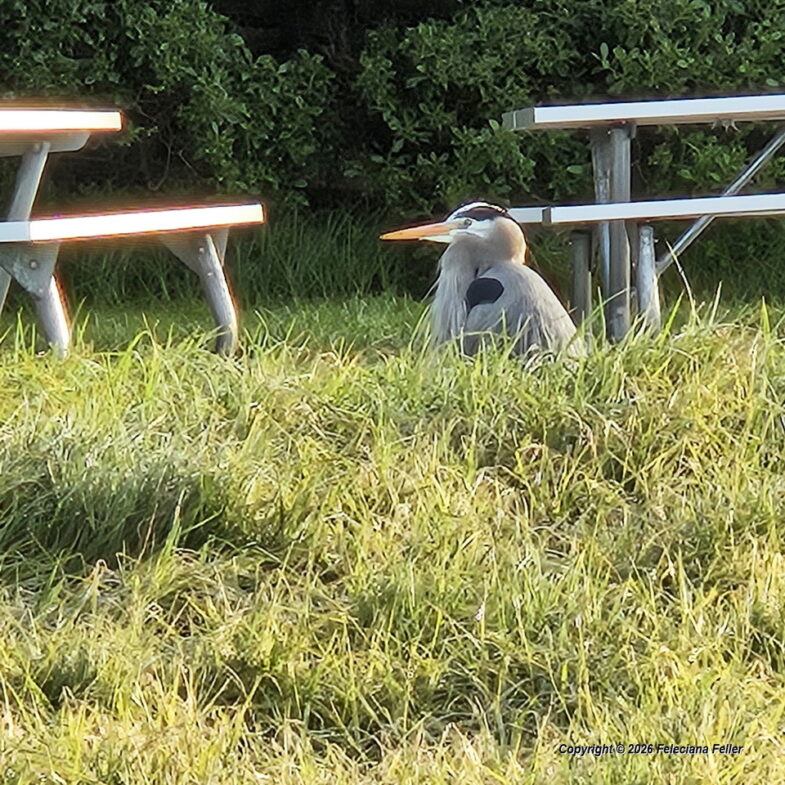
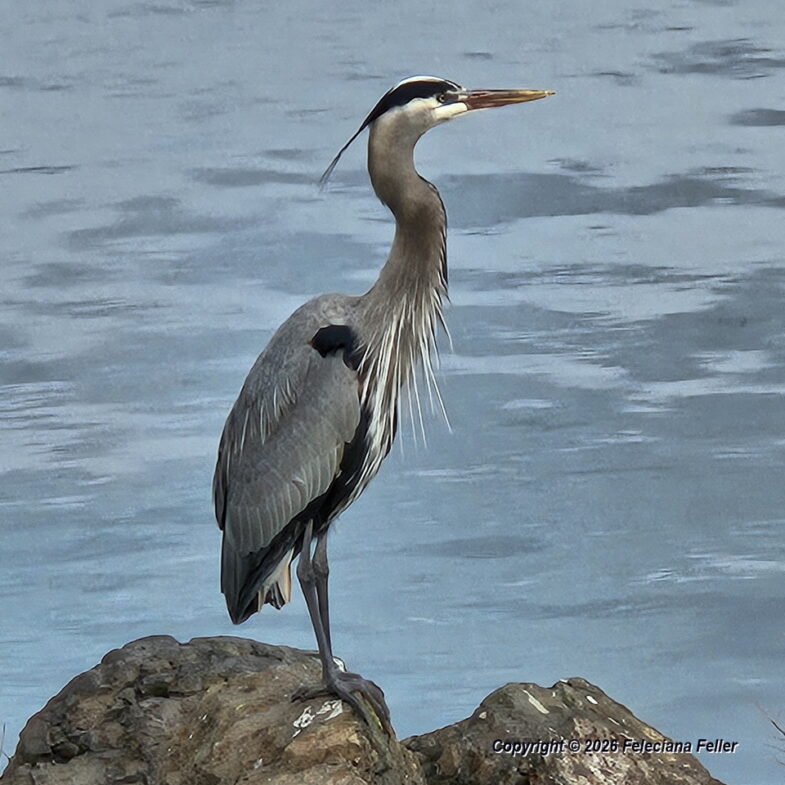
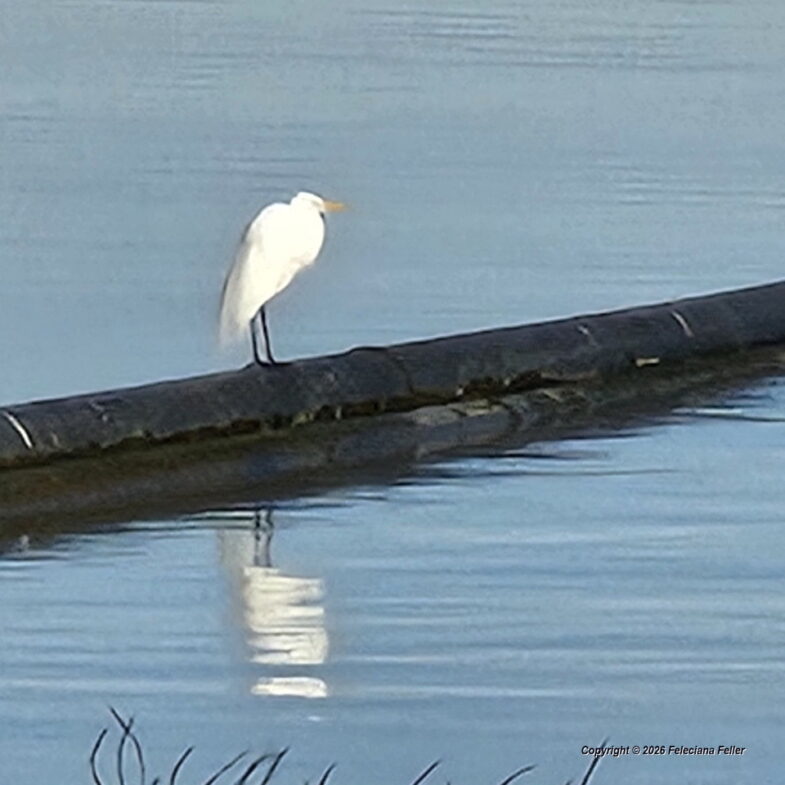
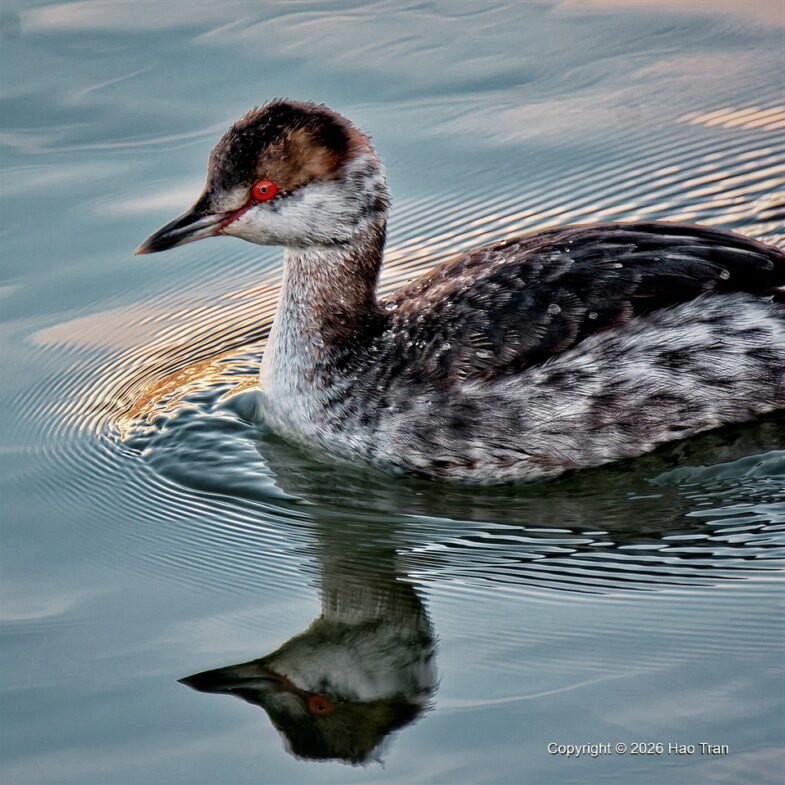
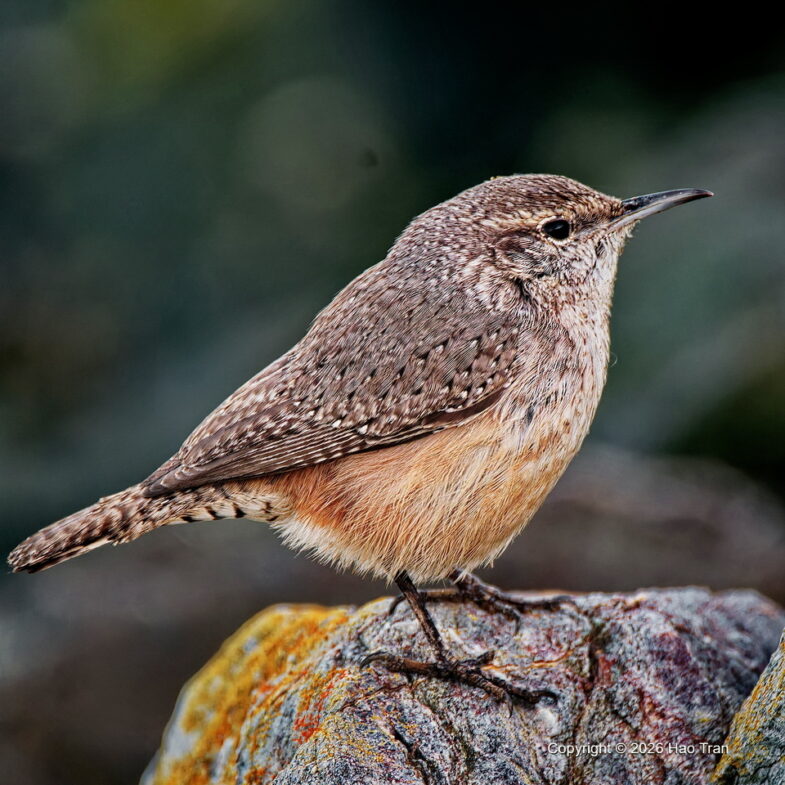

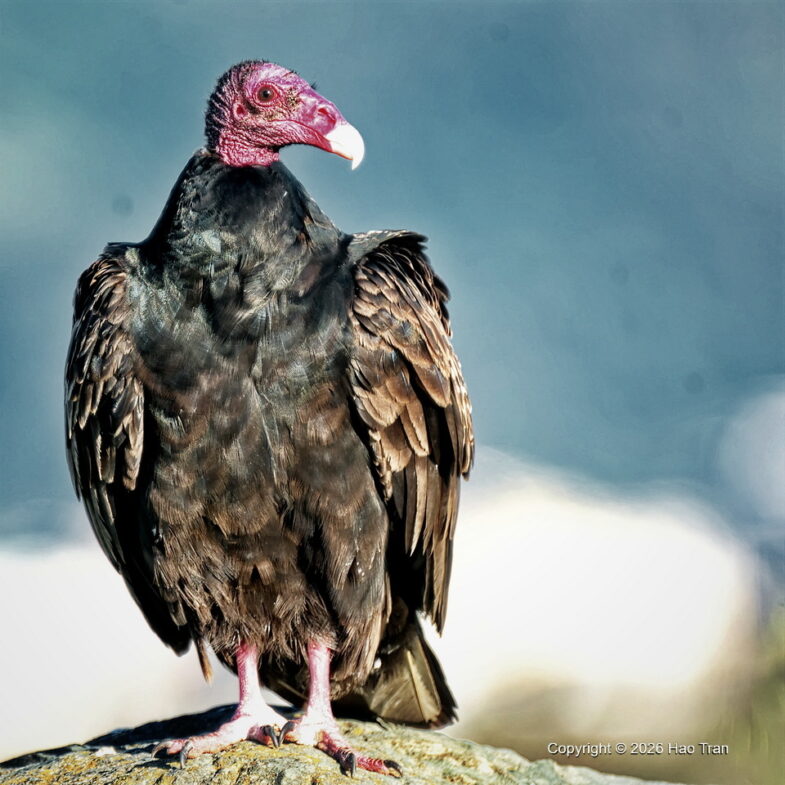
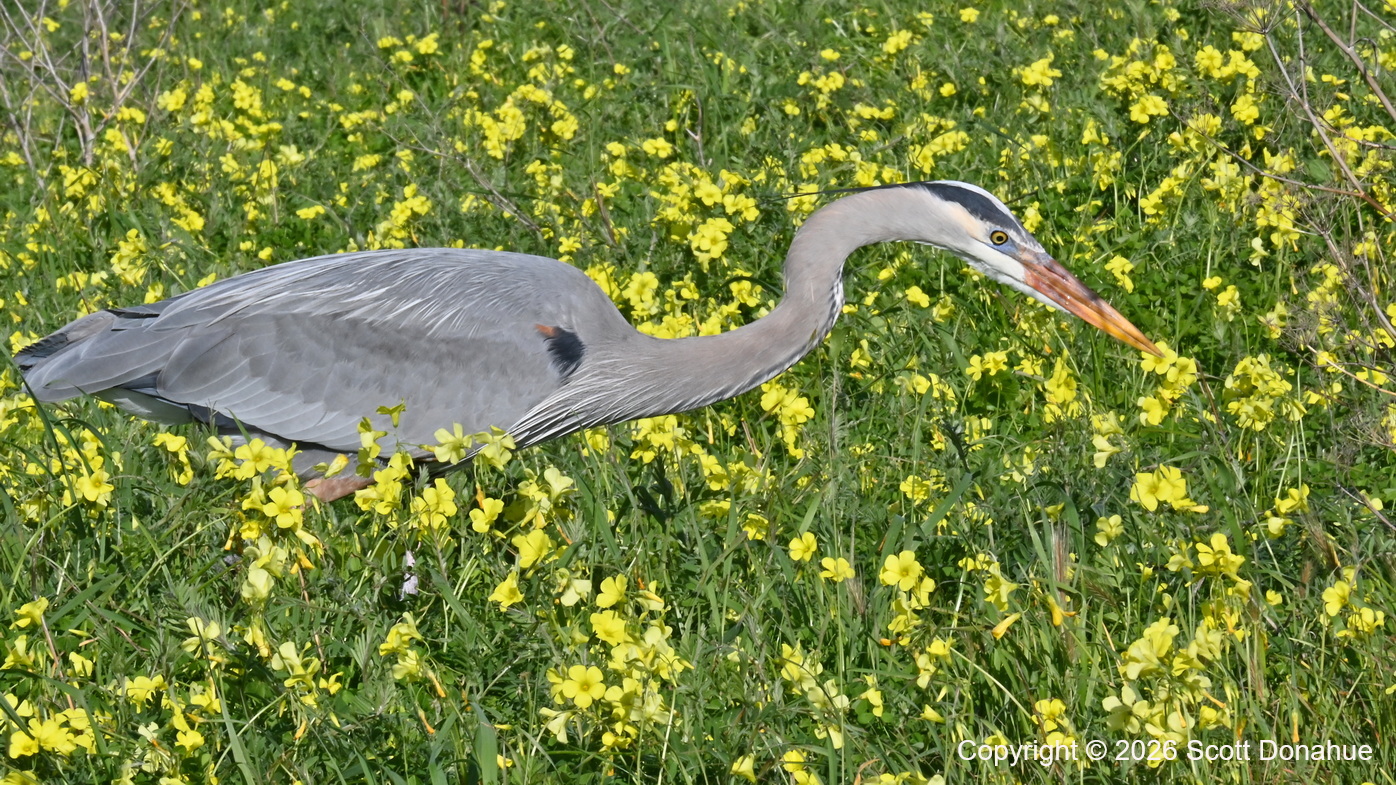
Ceanothus in Bloom
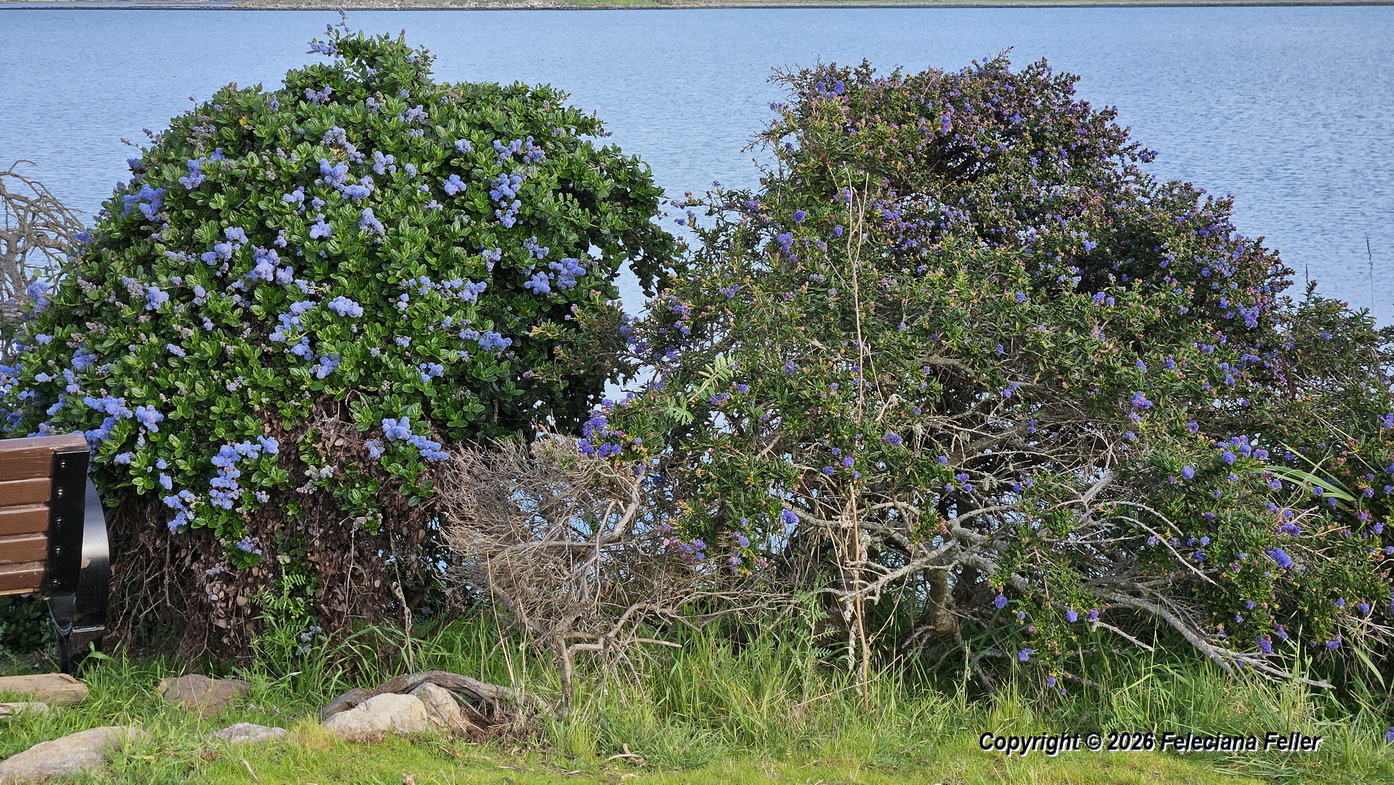
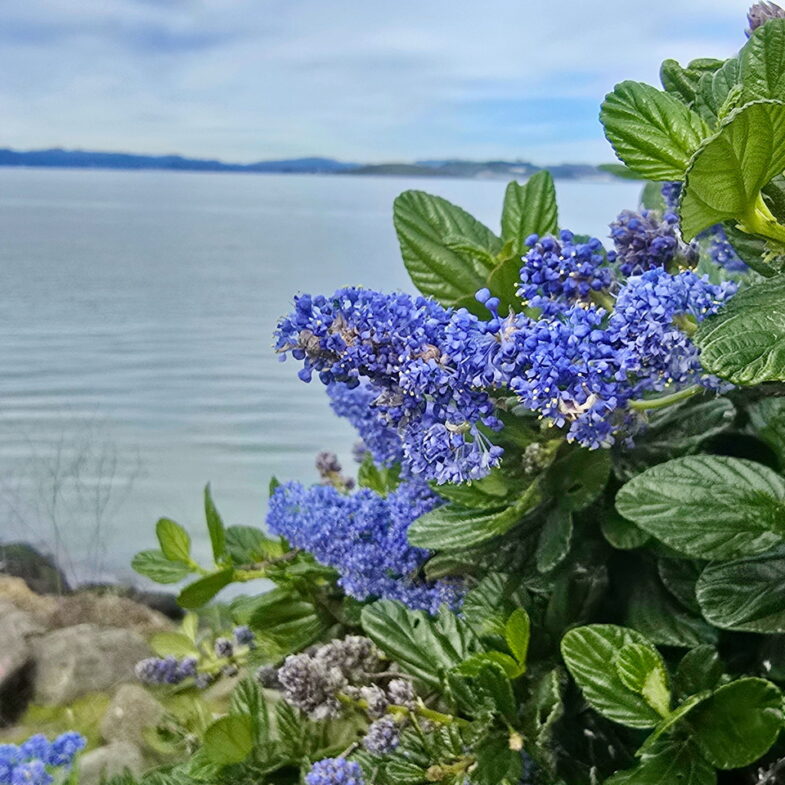
On the north side there is a romantic bench set low on the water side of the path, facing northwest. Behind it stand two old Ceanothus bushes. Old, meaning they were planted in the early 80s when the park was first built. One is bright blue and thriving. The other is more purple, and struggling. Feleciana Feller caught both of them in this photo:
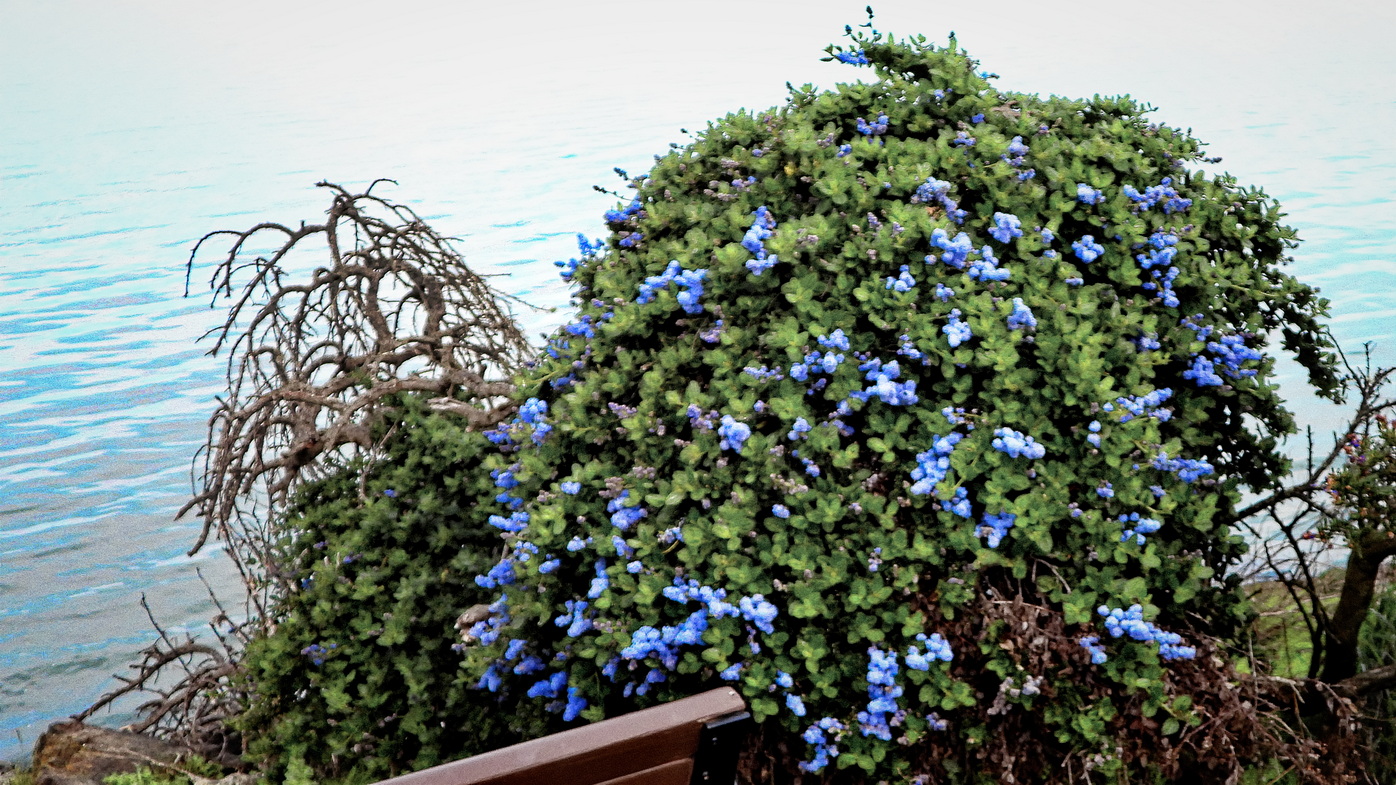
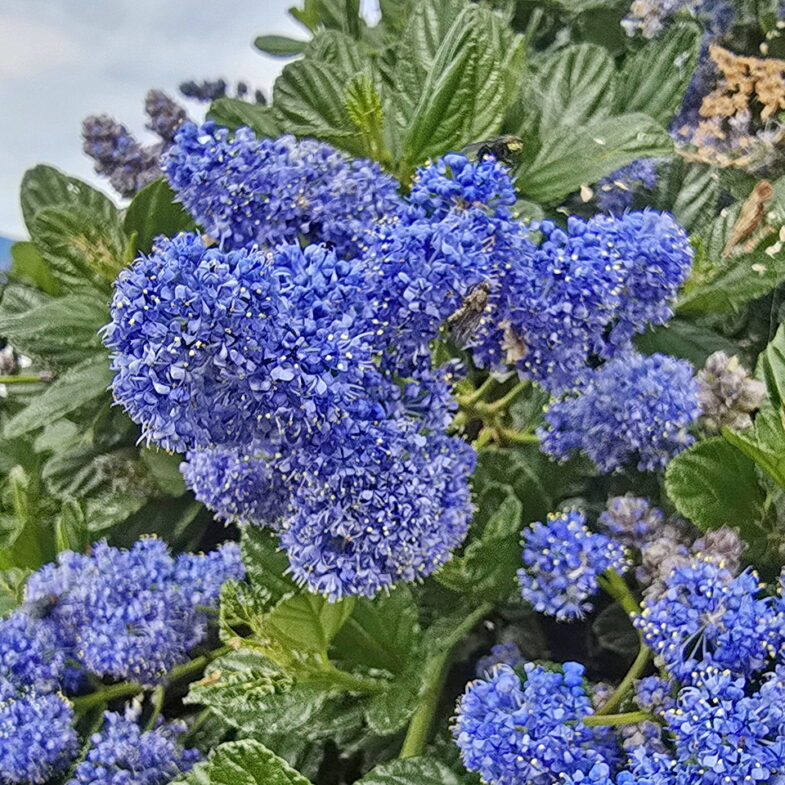
I photographed the brighter one, and took some closeups. Ceanothus is a California native that is a magnet for pollinators.
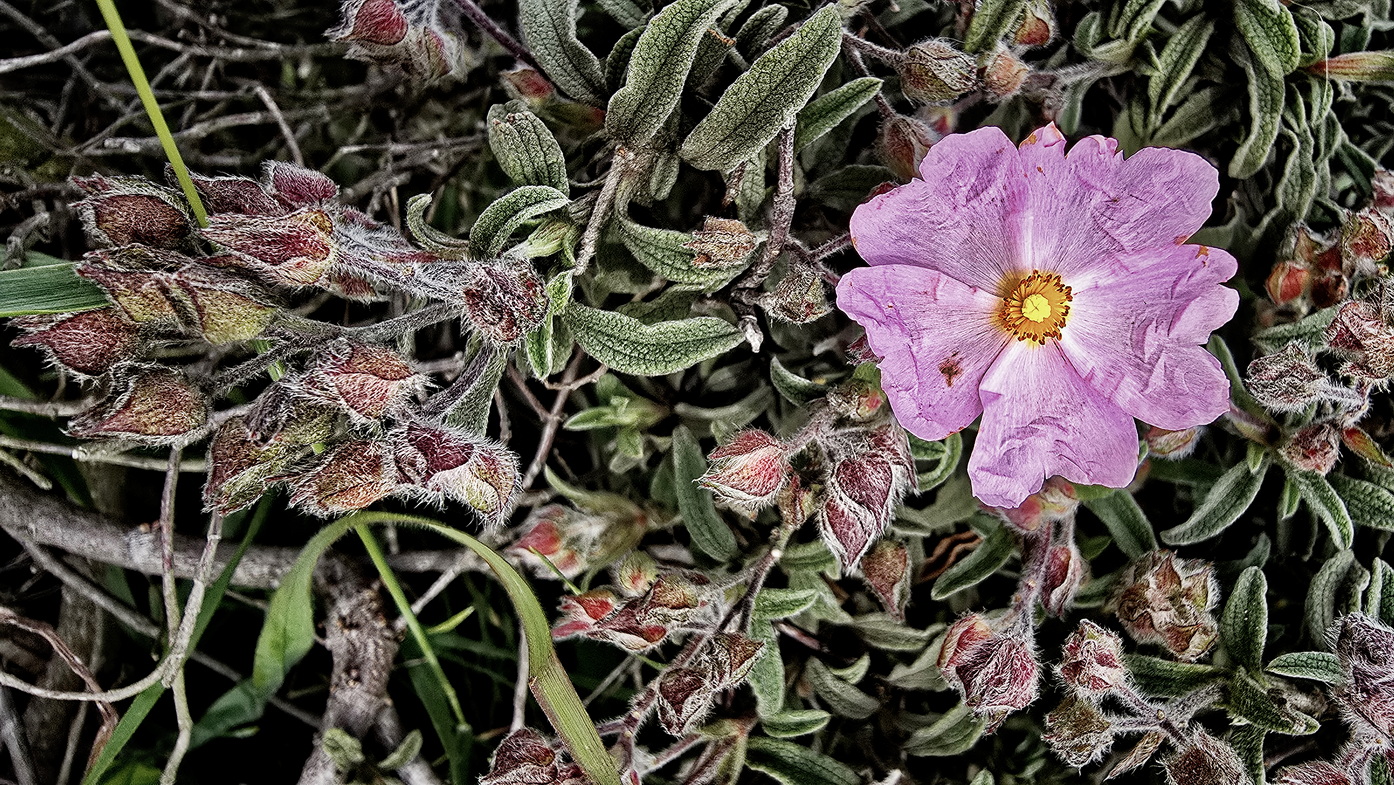
Directly behind the bench is a low shrub of Rock Rose (Cistus). It’s been there for years, blooming reliably, and it’s doing it again.
Publishing Schedule

This blog drops whenever there’s material and motivation, and not on a regular clockwork schedule. To avoid FOMO, subscribe.
. .