Park News Mar 3 2026
Owls Still Here?
It’s the season for Burrowing Owl migration. They’re experiencing the longer daylight. They’re feeling a pull to the place where they were hatched or where they mated and laid eggs last year. They’re wondering about the weather there and on the way. In some years, they’re gone by now. In just about every year, they’re gone by March 15. If you want to see one, don’t procrastinate.
On Sunday Mar 1, veteran owl spotter Mary Law saw all three owls still present: the “Shy Owl” south of the Spiral in Perch C (see map), the owl at Perch E (map), and the North Owl. Monday morning, I saw only the North Owl. Does that mean the other two have taken off? Not necessarily. Both the Perch C owl and the Perch E owl sometimes hide for a day or part of a day and then pop up again. If you spot any of our three “regulars” this week, it would be very helpful if you would get in touch — use the contact form or text 510-717-2414. We want to be able to record an accurate departure date for each owl, if possible.
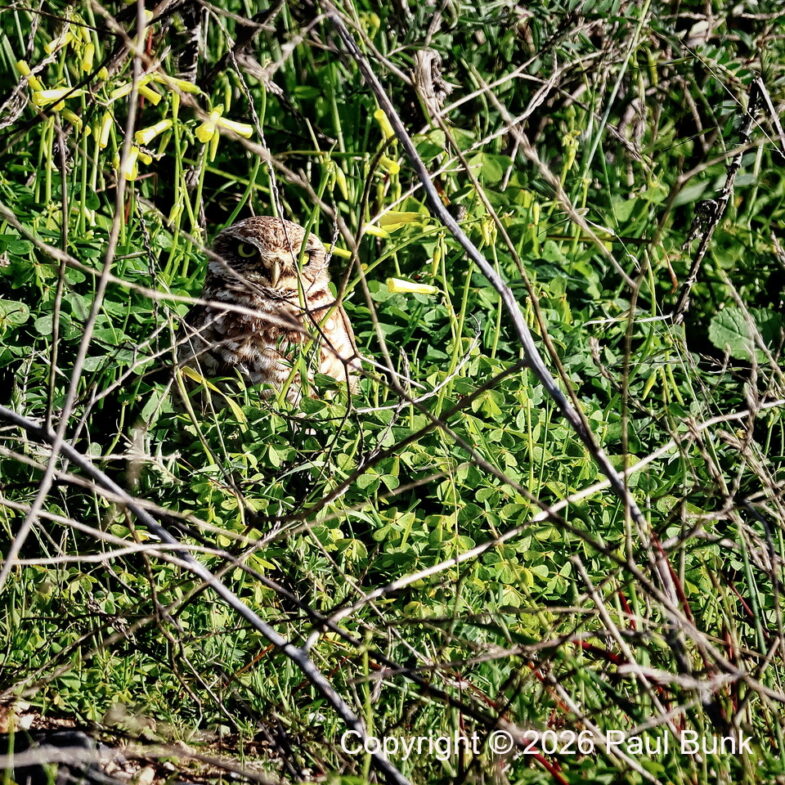
Meanwhile, several photographers took advantage of their presence last week and got photos. Here are two photos of the “Shy Owl,” one by regular contributor Roger Herried taken on Friday Feb 27 and the other by a new contributor, Paul Bunk, taken Feb 21.
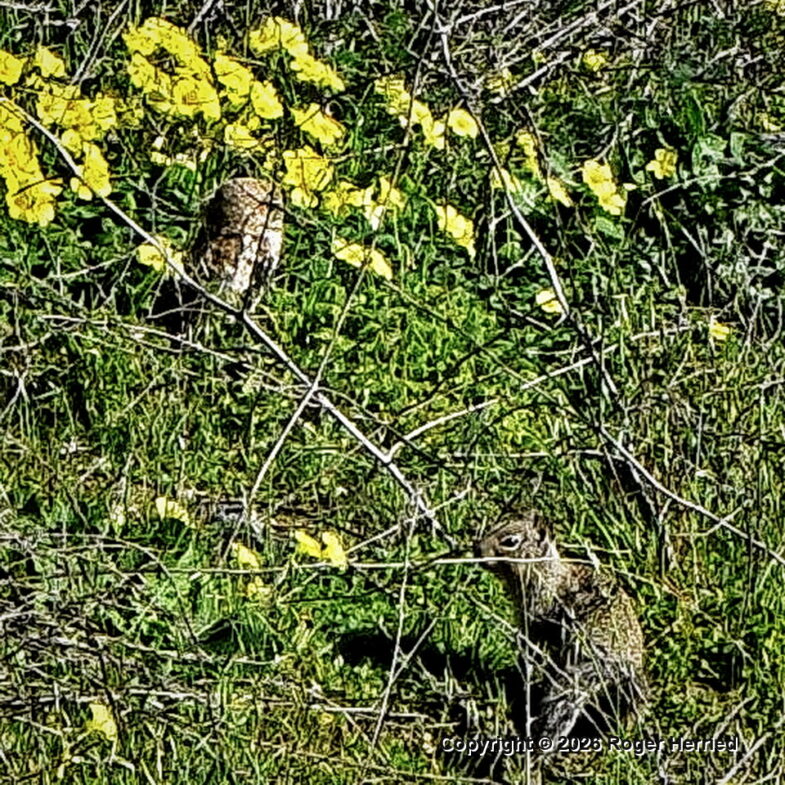
I have two photos of the owl at Perch E, one taken by Roger on Saturday, the other by Mary Law today (Tue 3/3).
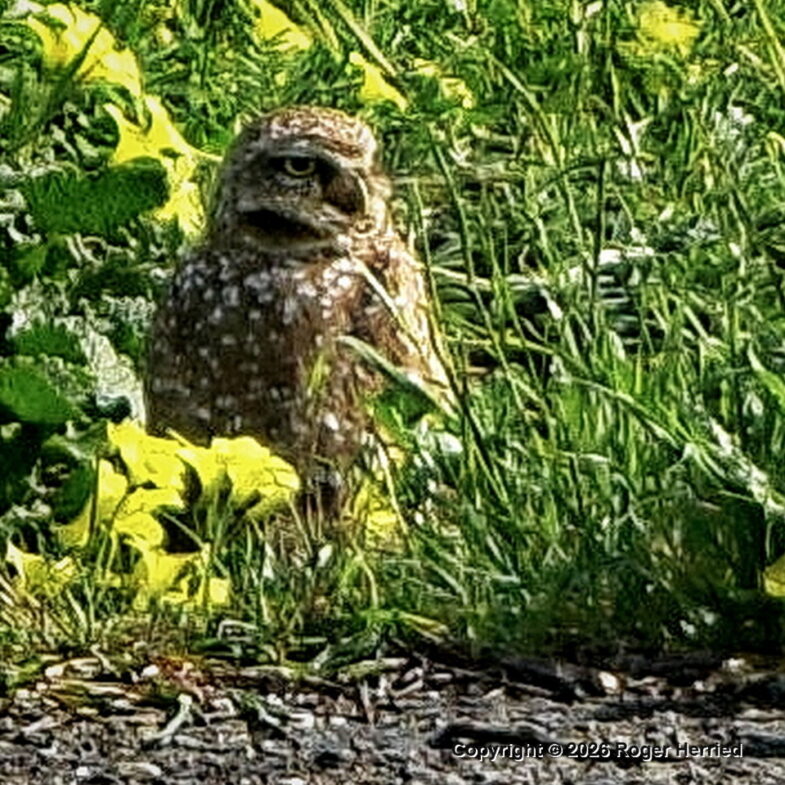

The North Owl again attracted the most lenses. often posing for its portrait in plain view. Bob Day and Paul Bunk both got nicely composed photos that stood out from the field for sharpness and clarity.
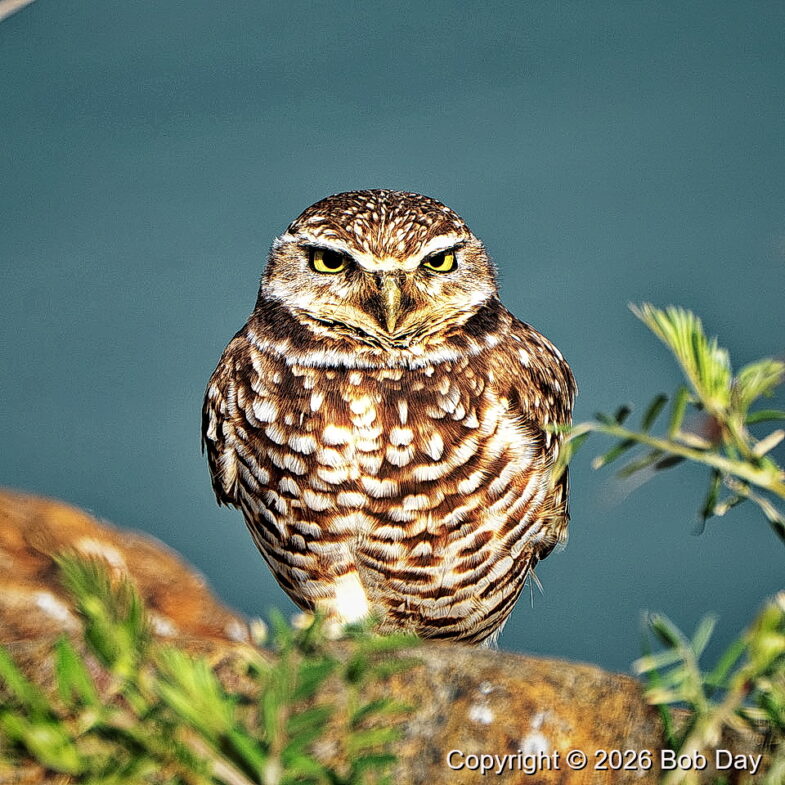
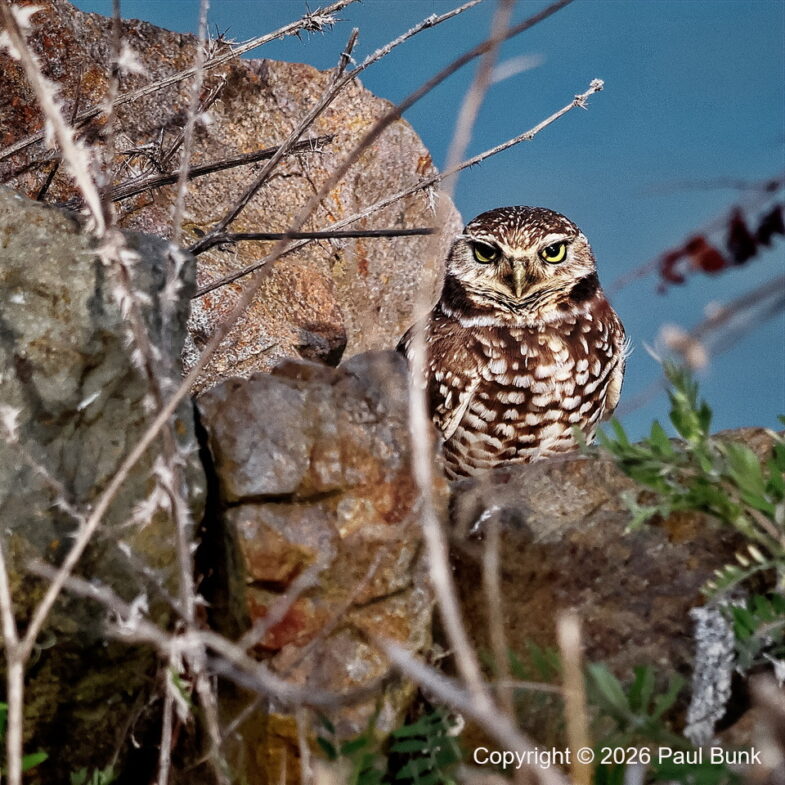


In the days ahead it will be important to document the owls’ presence or absence so that we have an accurate record of their movements. Burrowing Owl migrations are of scientific interest.
Other Feathers
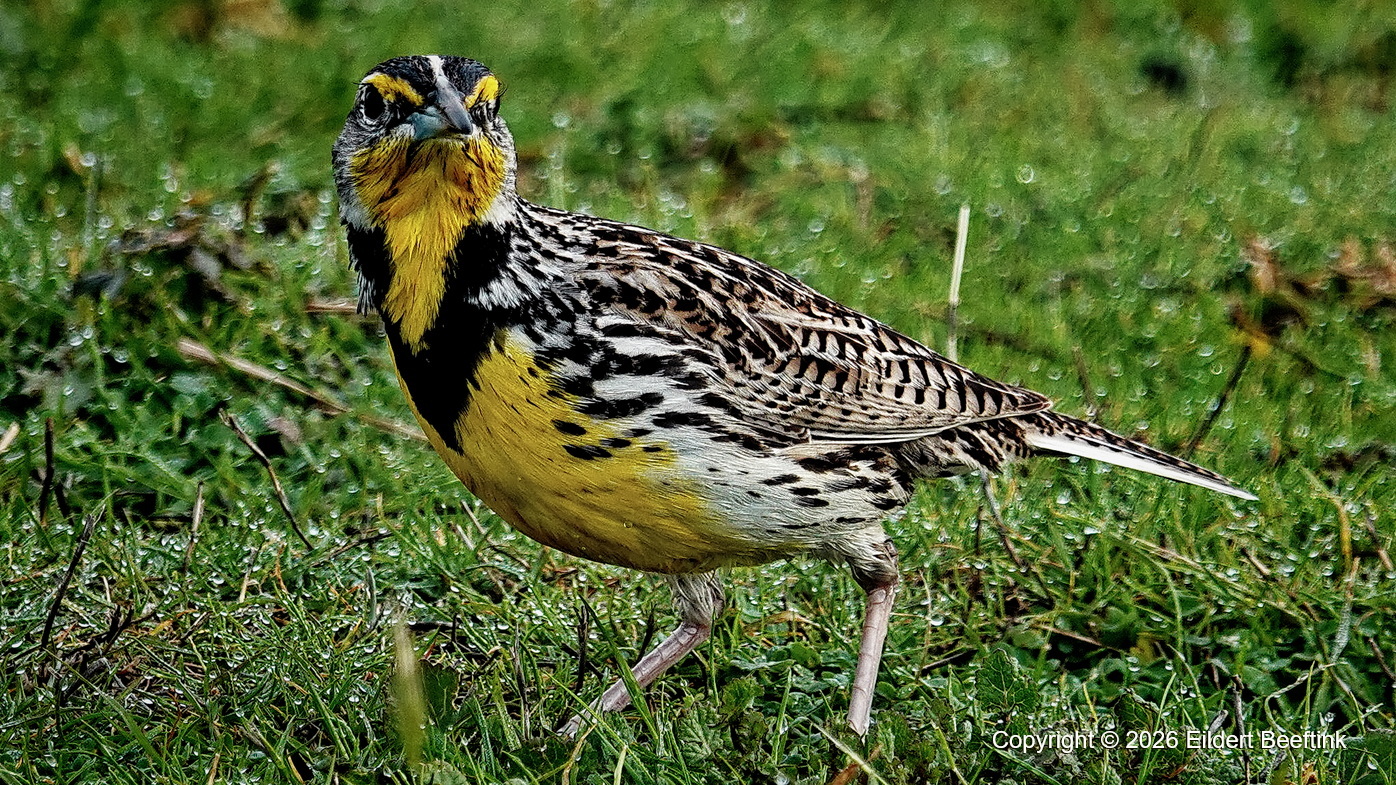
Western Meadowlarks have been regular visitors in the morning hours on the east side of the park and elsewhere at other times. Photographer Eildert Beeftink caught two of these beautiful grass-nesters:

Another bird that makes its nest in the grass, if the grass is tall enough, is this Savannah Sparrow, perched on a post at the edge of the east side meadow:

There was a lot of bird action on the water and in the air. My favorite photo is this one by Eildert of a Red-breasted Merganser male:

The bird is not having a bad hair day — it looks this way most of the time. It’s a deep-diving thin-billed duck that breeds in the far north. It “remains one of the least understood species of waterfowl in North America,” says the Cornell Bird Lab’s Birds of the World online encyclopedia. We don’t see them here very often but when they’re here, they stand out for their high level of activity.
Have you ever wondered why our common Double-crested Cormorant has that name? Normally you don’t see any crests on its head, much less two crests. But as mating season approaches, the answer pops out, as in this portrait by Eildert taken last week:
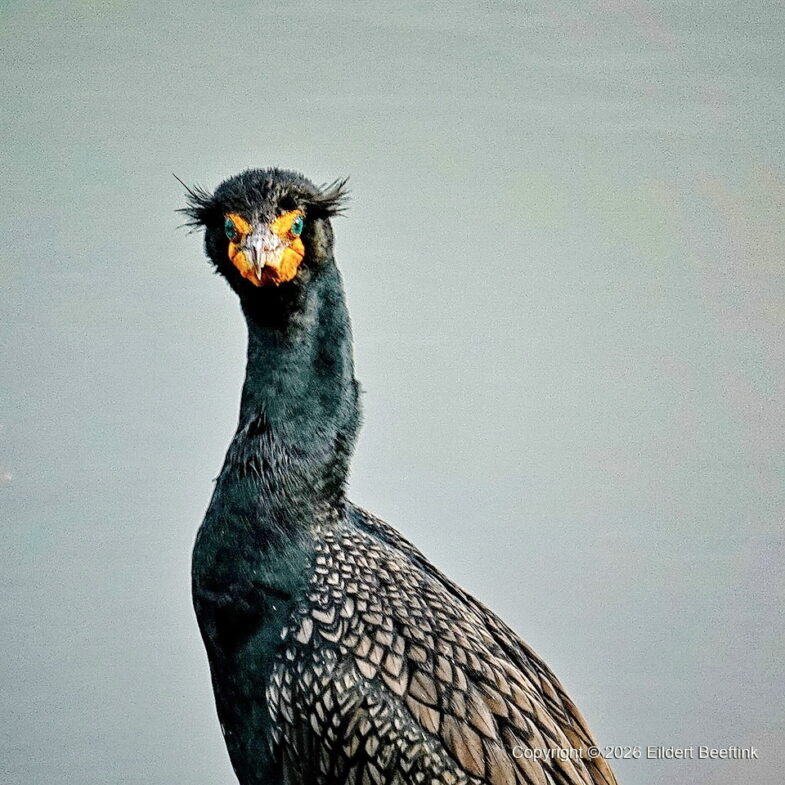
Both males and females show the double crests in mating season, but the males’ are more prominent.
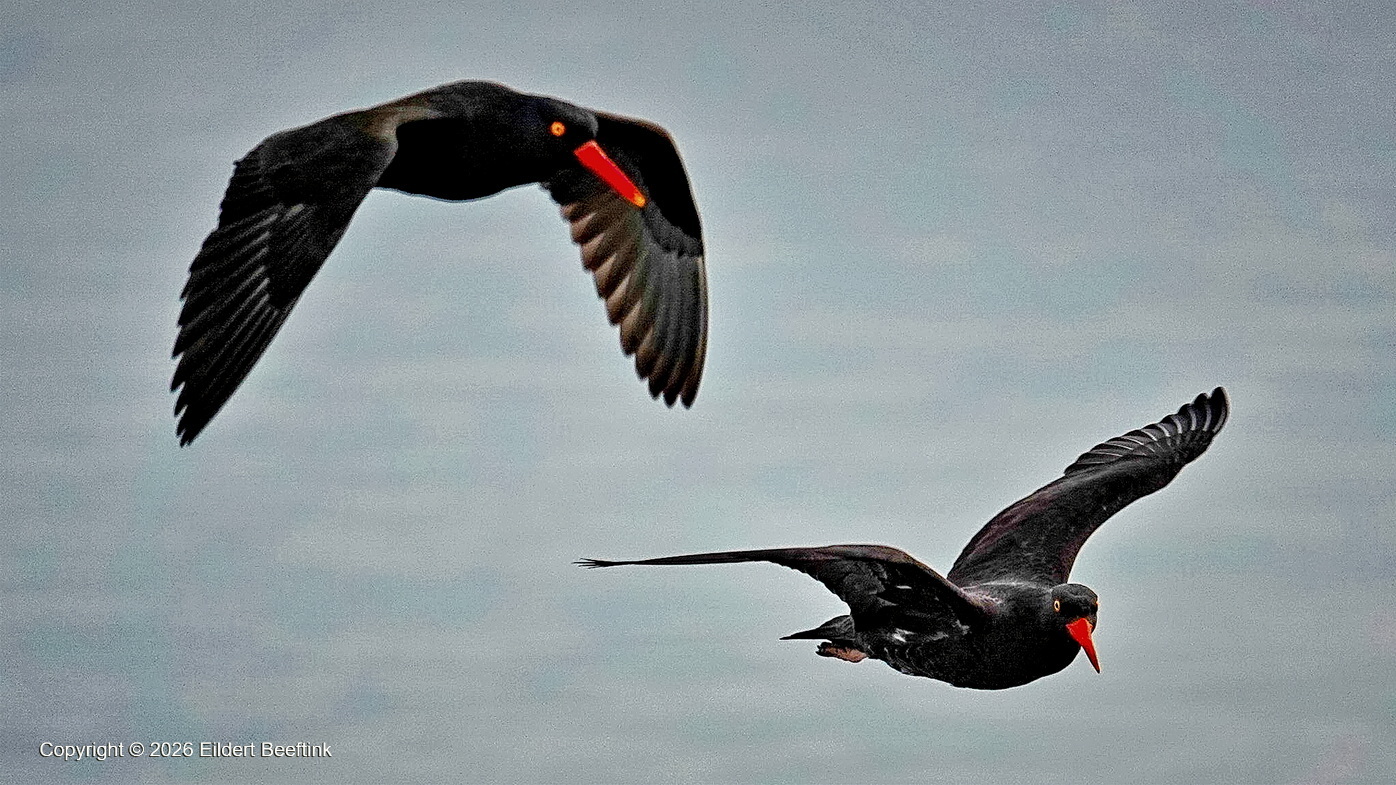
Black Oystercatchers have been seen at the water’s edge with some regularity in recent days. Eildert caught a pair of them in the air:
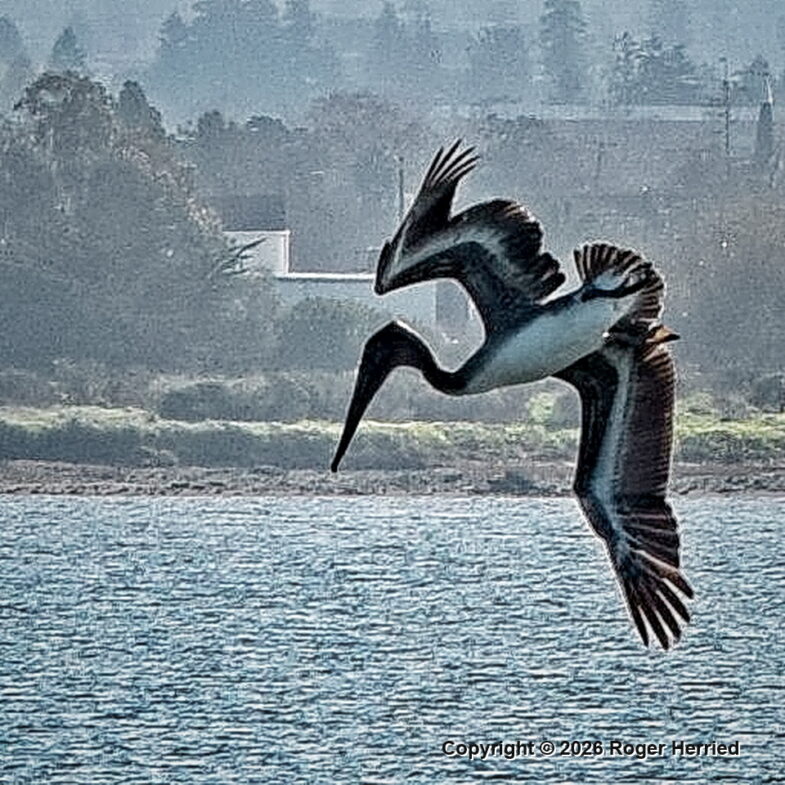
Brown Pelicans are aerial acrobats, halting and spinning in midair in preparation for a dive. Roger caught one of the big birds twisting for a plunge:
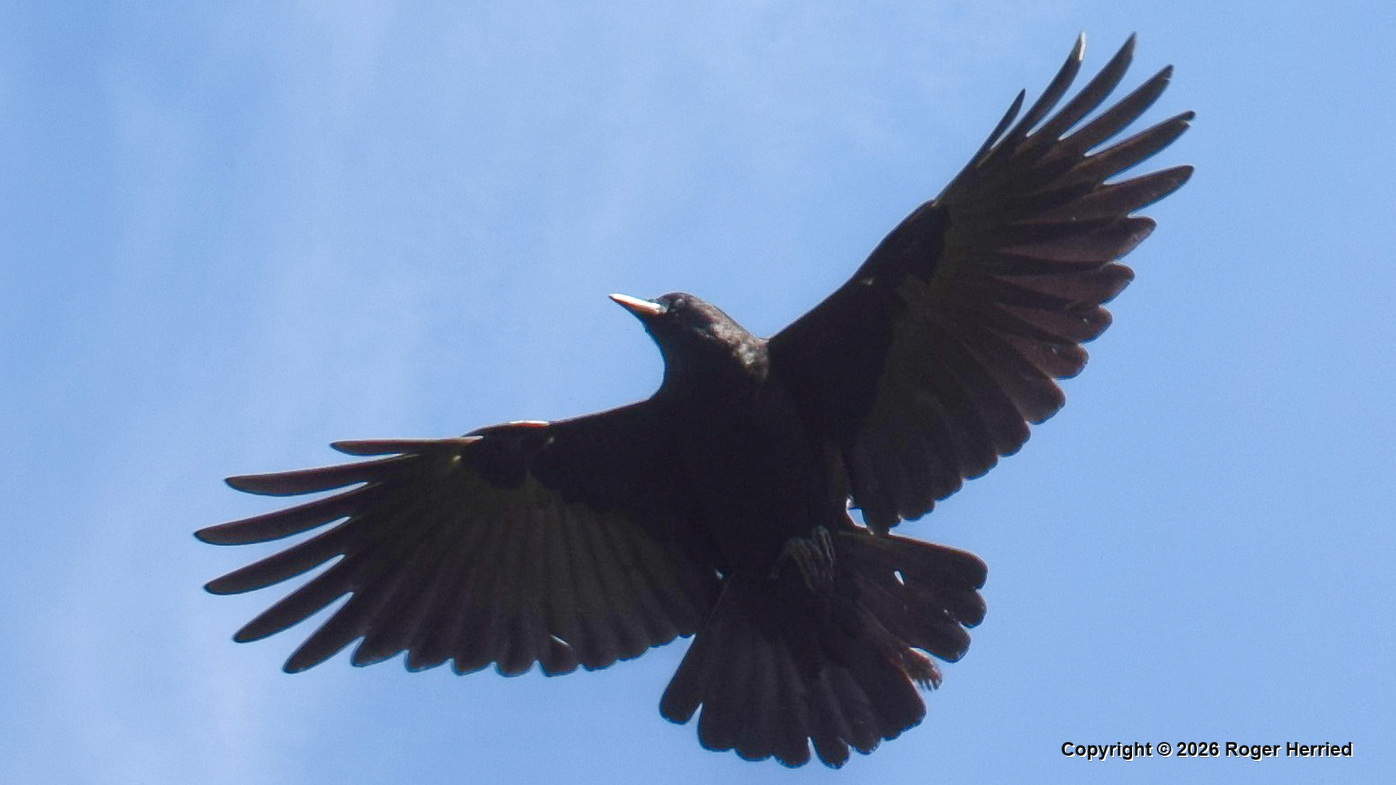
Finally, this portrait of an American Crow in flight shows their broad wing and tail area together with the “feeler” feathers at the wingtips. They are talented fliers, as well as highly intelligent foragers on the ground.
Native Plant Stewardship Days
Bob Huttar, Conservation Coordinator of the Chavez Park Conservancy, is inviting volunteers to another Stewardship day this coming Saturday Mar 7. He writes:
Greetings to our worthy volunteers!
This Saturday we are having another stewardship in Chavez Park to continue weeding, mulching and otherwise primping our plants. We didn’t get them all last Saturday so need to continue our efforts. And they are growing at a fast clip. We also didn’t get to the fennel, hemlock and Himalayan blackberry like we had hoped.
As usual we will be gathering at the storage bin at 9:00 Sat Mar 7. We have a pretty good supply of hori-horis, gloves and assorted other digging tools. Those T-shaped hand mattocks will be a good tool now because the plant roots are getting bigger. We have a few but if you have your own please bring it.
Hope to see you there!
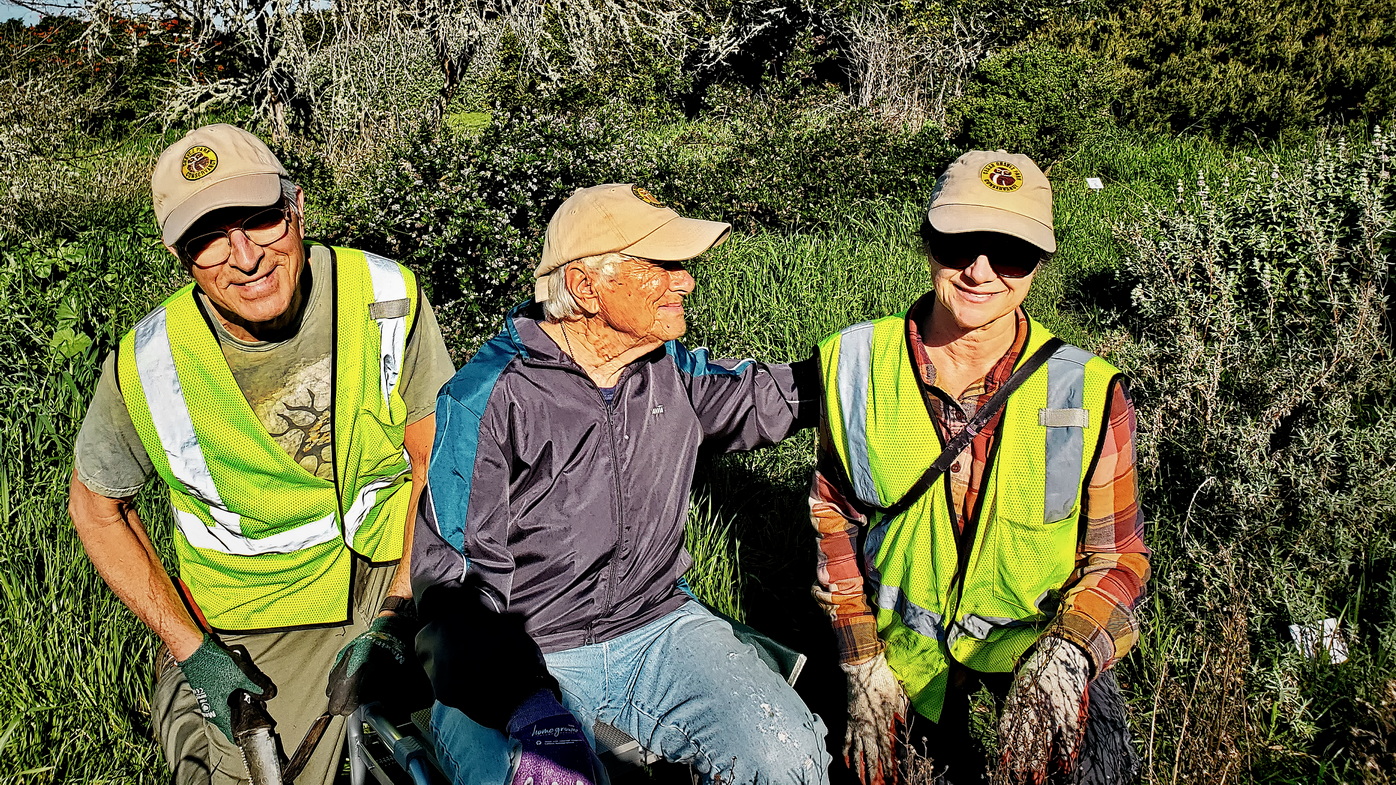
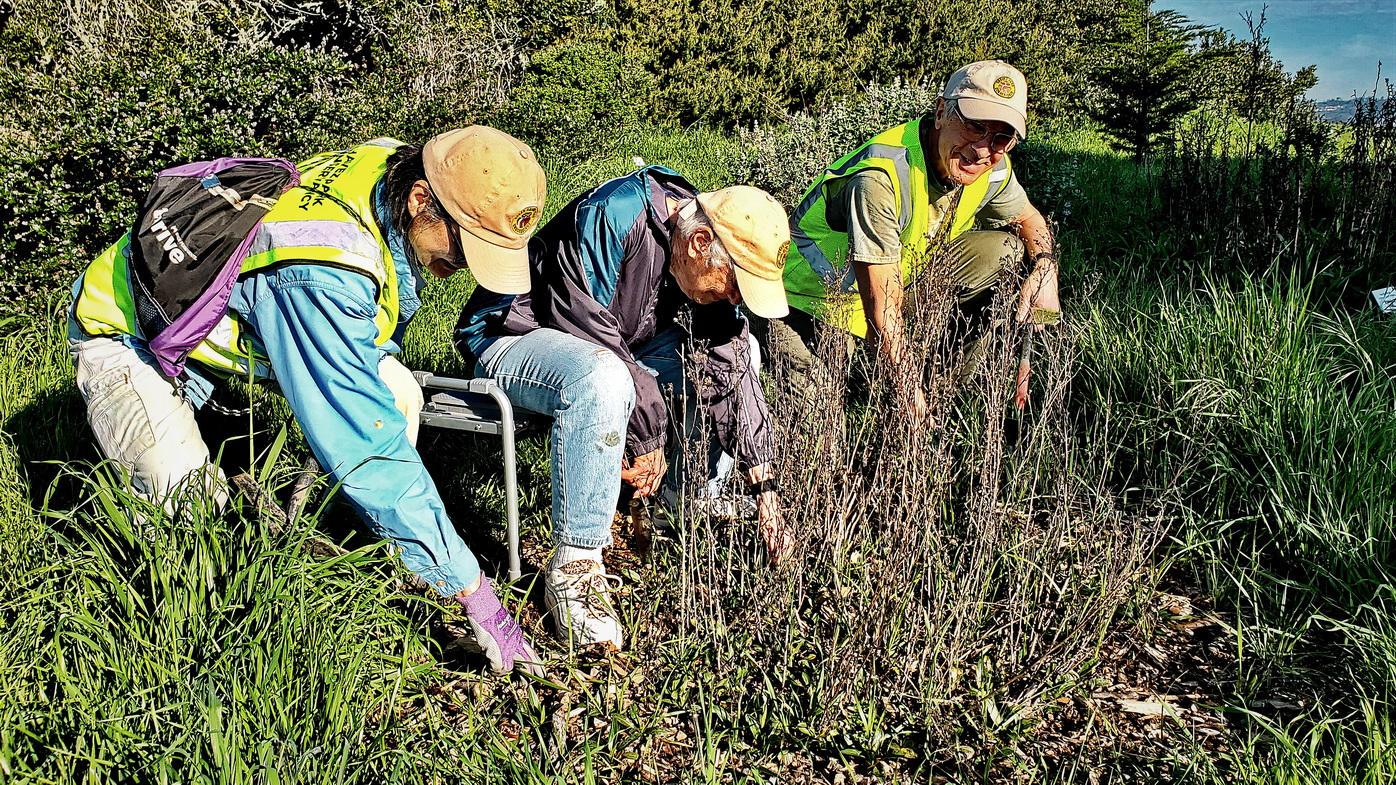
Here are two photos from the stewardship outing on Sat Feb 28:
One of the native pollinator plants that Conservancy volunteers put in the ground in recent years, and are now working to protect from weeds, is this lovely Red Flowering Currant (Ribes sanguineum):

Publishing Schedule

This blog drops whenever there’s material and motivation, and not on a regular clockwork schedule. To avoid FOMO, subscribe.
. .