
Park News Feb 8 2026
Superb Owl Contest
In honor of the day in sports, we’re launching a Superb Owl contest. Competitors are the Shy Owl at Perch C and the Cautious Owl at Perch E (check the map). But wait, there may be a third contestant, the new owl photographed on the north side on Thursday morning by Yvette Bozzini, here:

Regrettably the New Owl didn’t show up on Sunday — probably just passing through — so it’s back to the traditional contestants who’ve been here for weeks.
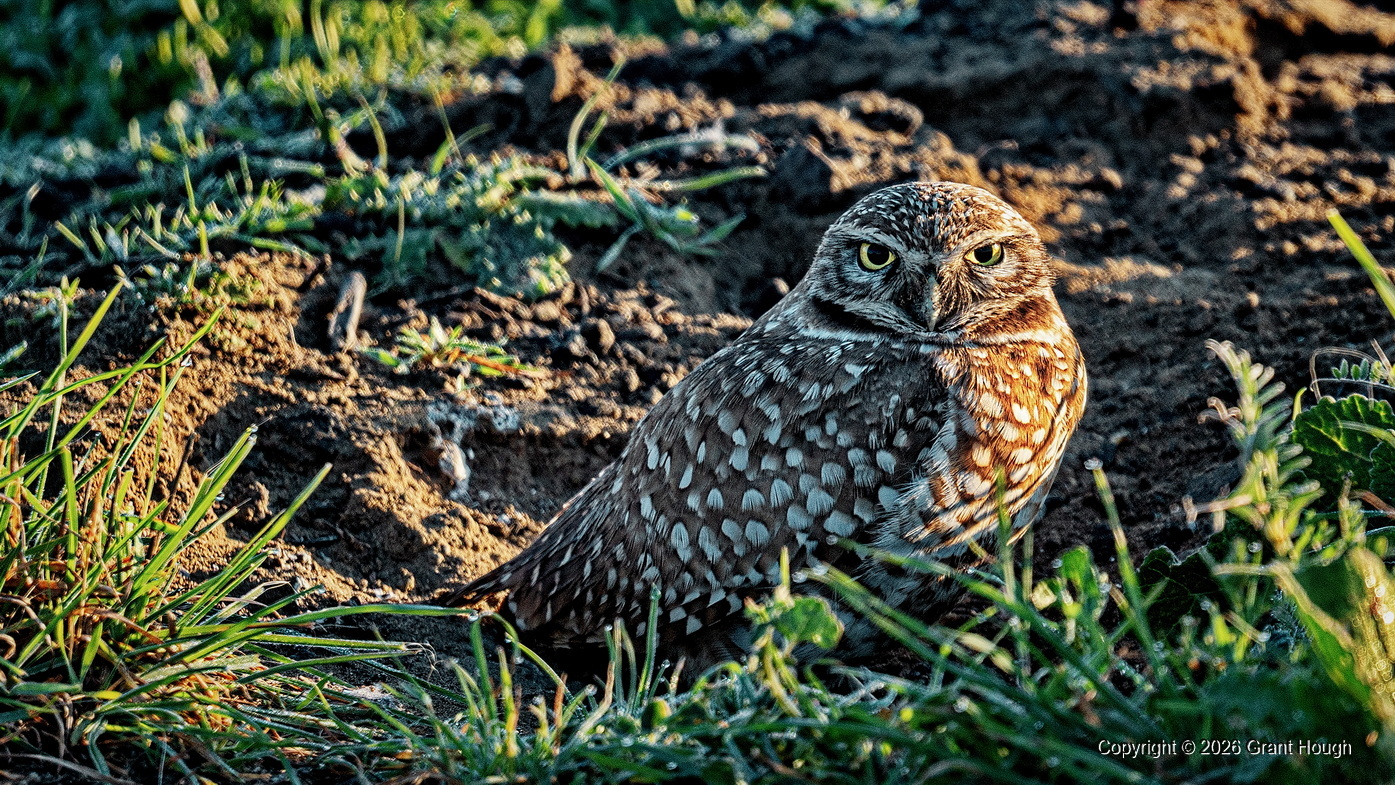
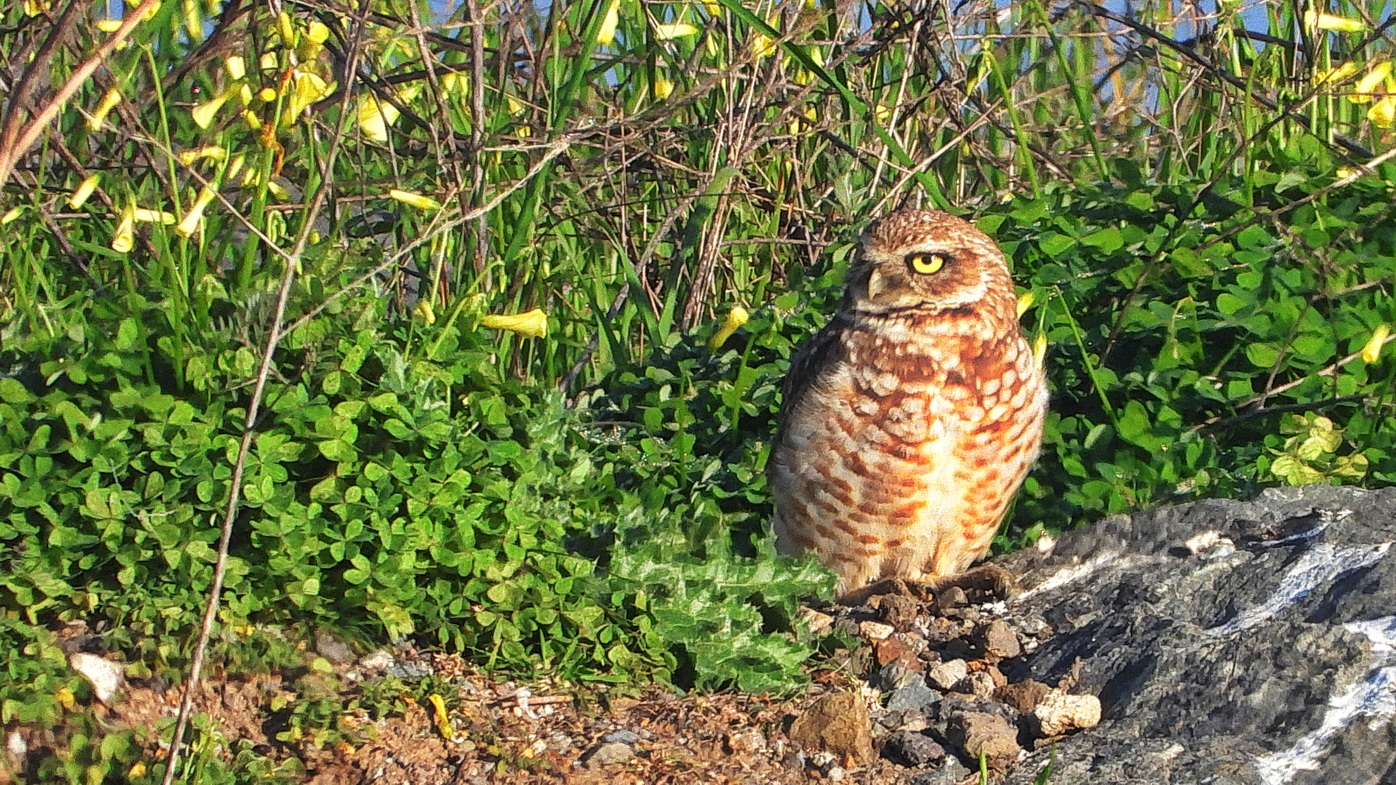
Park visitors agree that the Perch E owl has a better attack. Most of the time visitors could see it rather easily, once they knew it was there. But clearly the Perch C owl has a better defense. Apart from a few moments when it’s taking the rays, it’s heavily protected by the shrubbery. Bottom line: it’s a draw. They’re both Superb Owls.
Park visitors wanting to see them had better not delay. Burrowing Owls tend to migrate back to their breeding grounds starting mid-February. There’s no set date. Each bird has to decide its own schedule. They’re watching the length of daylight. They’re guessing what the weather will be like in their nesting territory. By St Patrick’s Day they’re generally all gone. Park visitors who procrastinate will lose out.
There’s a table in the Appendix to my new owl book (“Our Owls: Burrowing Owls in Chavez Park, Berkeley”) that gives the arrival and departure dates of owls going back to 2018.
Other Feathers
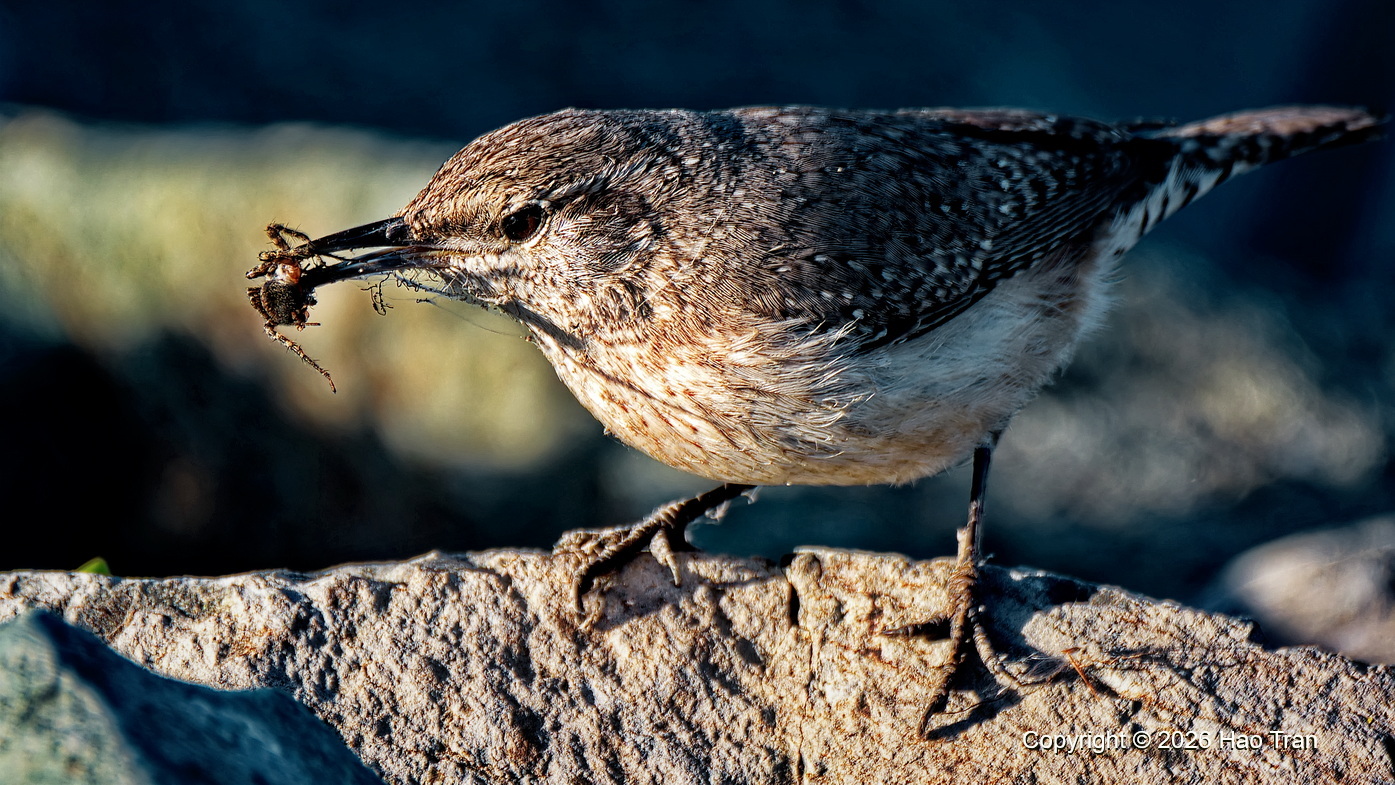
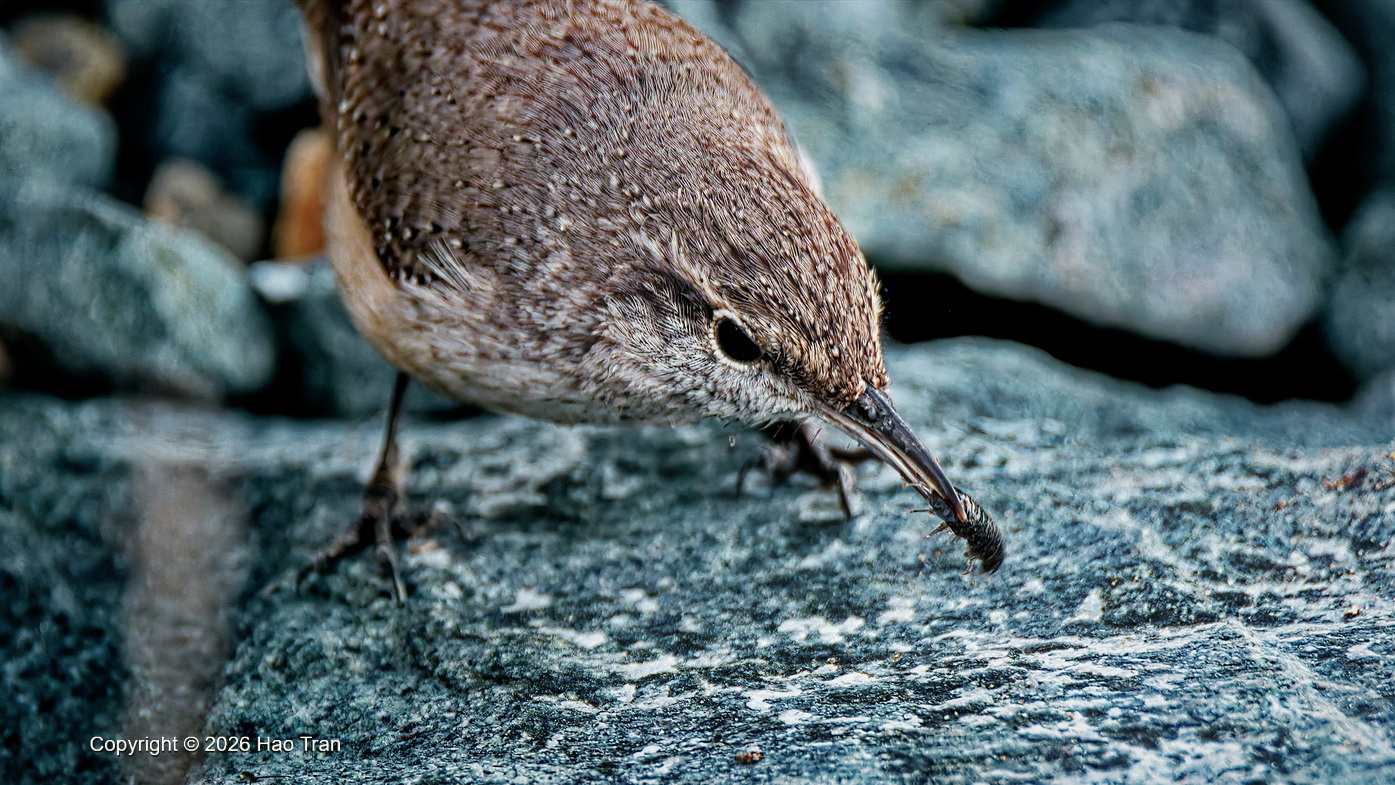
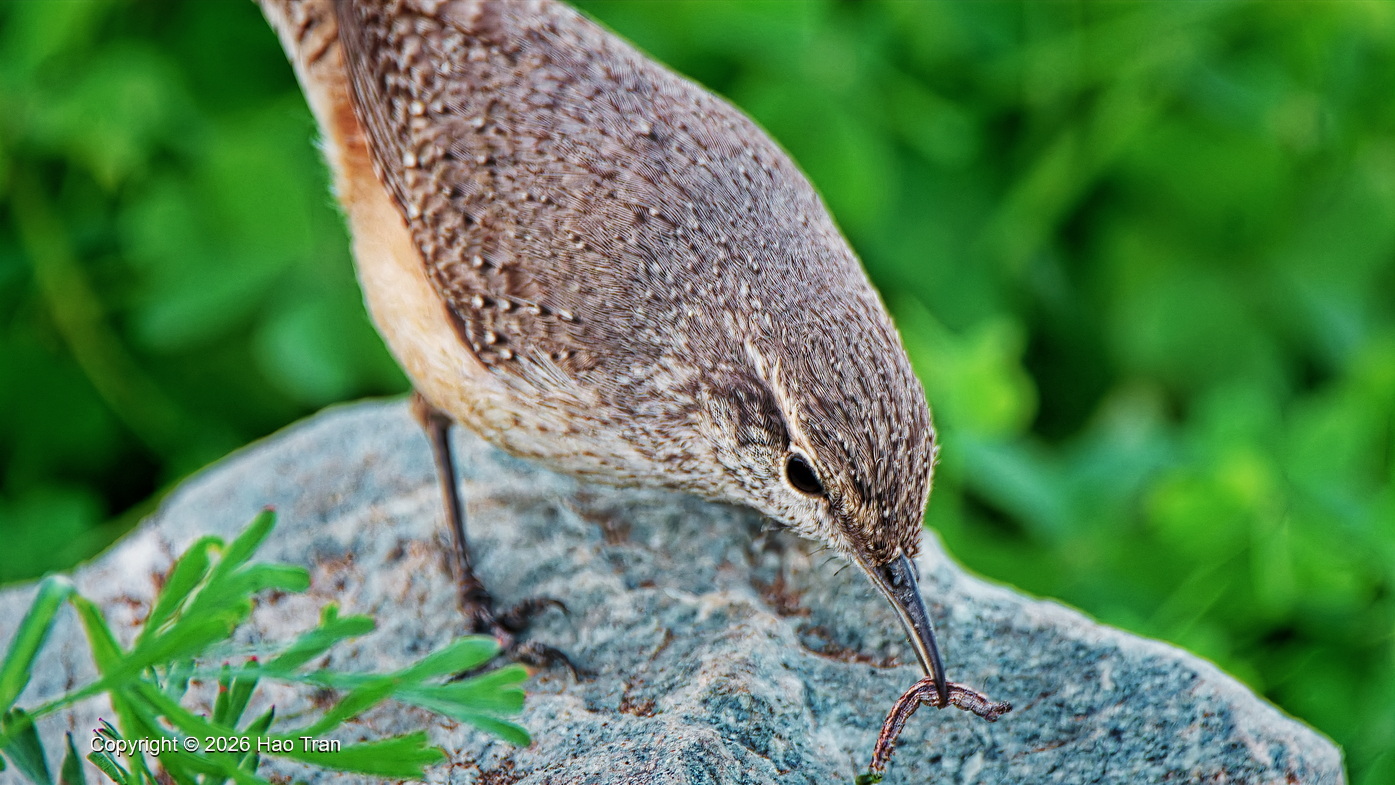
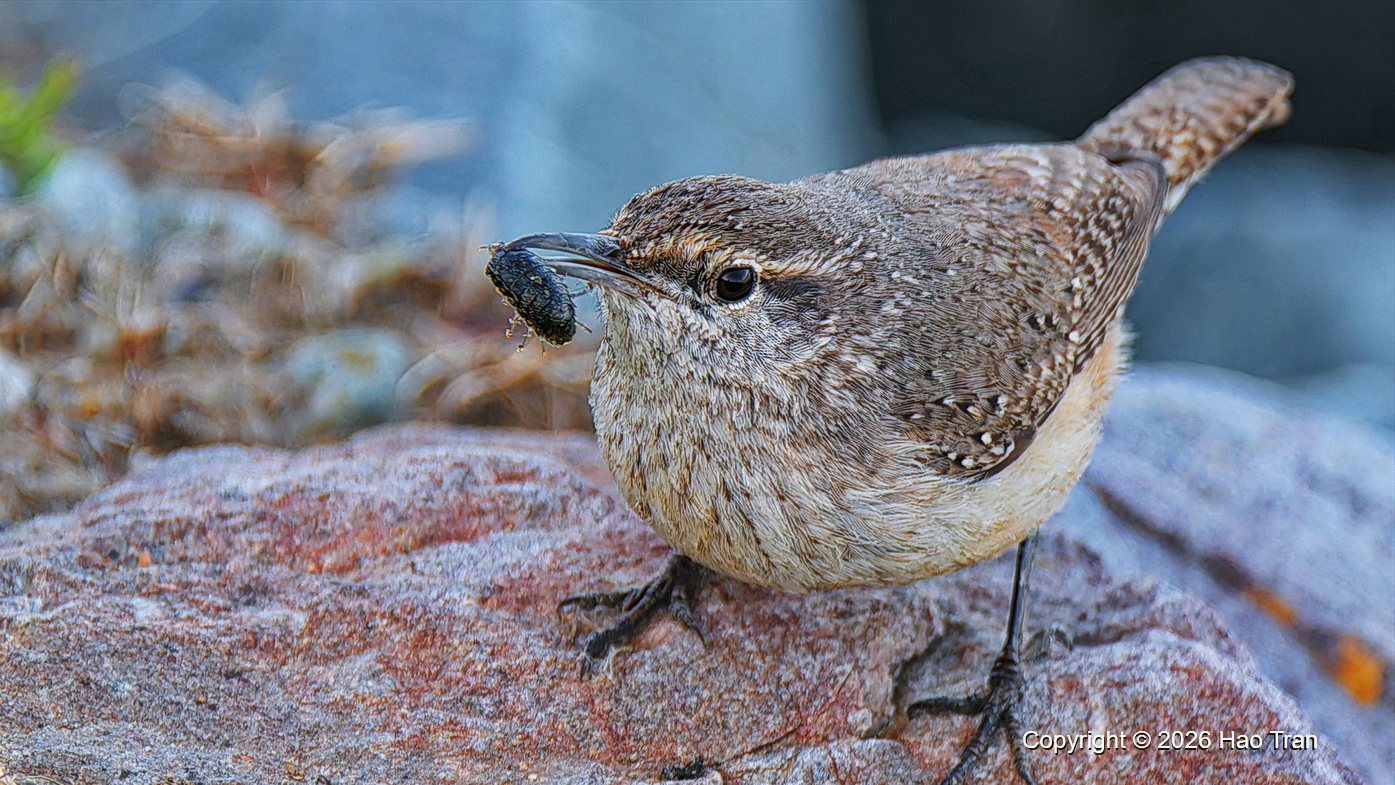
The clear winner in the Other Feathers contest this week, in my opinion, is this set of photos showing what the Rock Wren eats. The Rock Wren remains a fairly reclusive bird. Just this morning I talked with a birder armed with a scope, a camera, and binoculars, asking where a Rock Wren might be found. I advised her to contact Hao Tran, who has captured more pictures of this bird in our park than anyone. Until I saw these photos, I wondered what this little bird might find to eat in its chosen stony habitat, which looks to my eyes like a desert. It appears that the bird knows something about rocks not obvious to my human eyes, namely that they contain lots of bugs. These photos should go into a biology textbook.

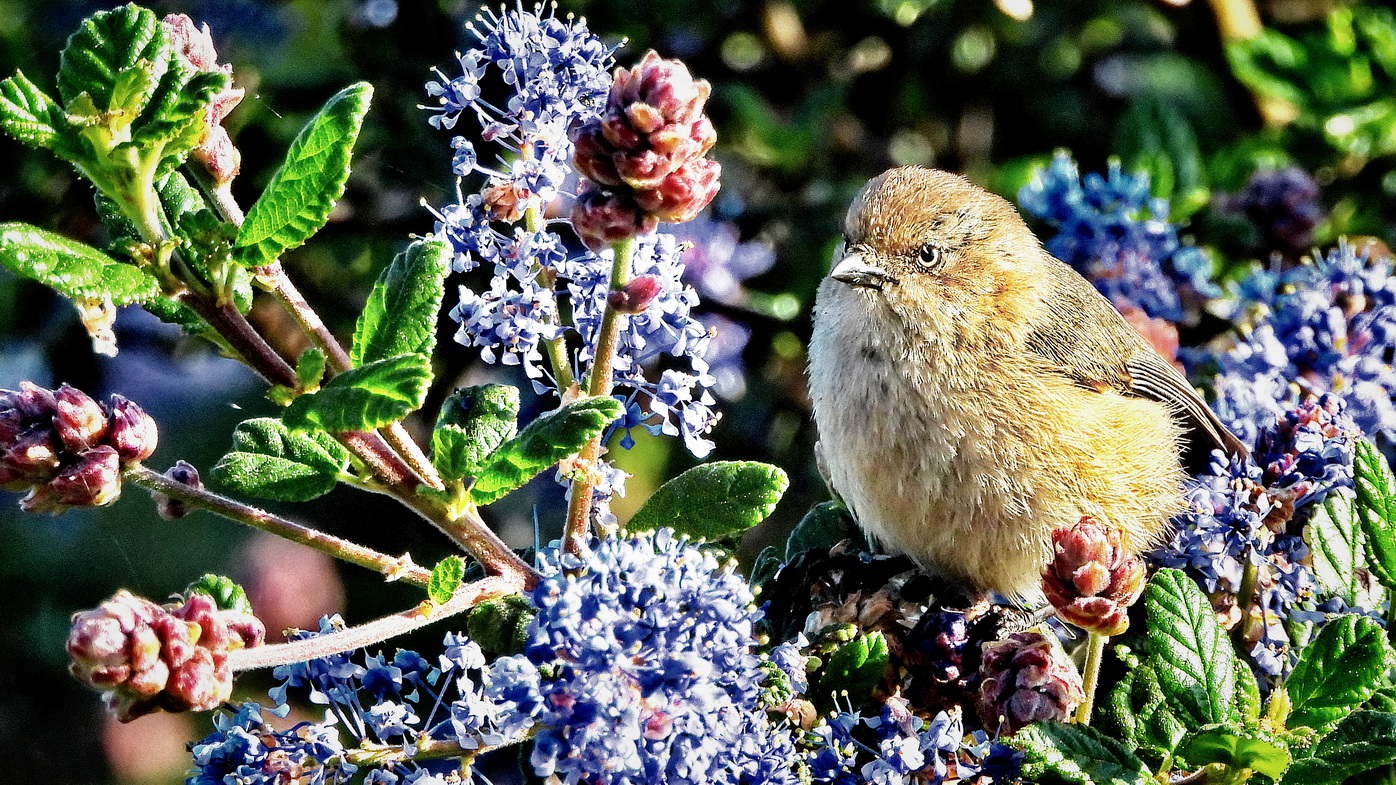
Also a lover of little bugs, but finding them on the fresh springtime blooms of a Blueblossom Ceanothus in a Pollinator Garden in the Native Plant Area, was this Bushtit. I had a hard time getting a decent photo, as it moved so quickly from place to place.
Undoubtedly the birders’ most sought-after item this week was the White-winged Scoter. Many searched but few succeeded. Among the winners was Eildert Beeftink, who shared this photo of one female White-winged Scoter together with two more commonly seen Surf Scoters:

The White-winged Scoter nests mostly in freshwater lakes in northwest Canada, and winters along ocean bays and coves. It’s a powerful diver, able to feed on mussels and crustaceans on bottoms up to 60 feet deep. They can dive deeper and take larger prey than the Surf Scoter.
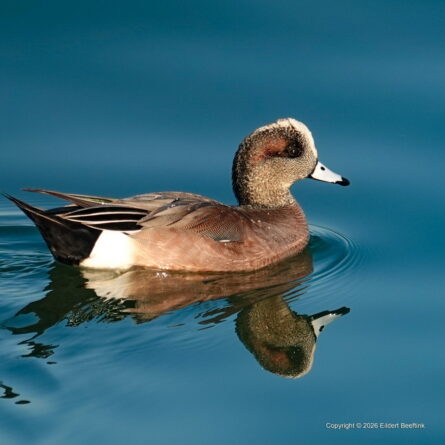
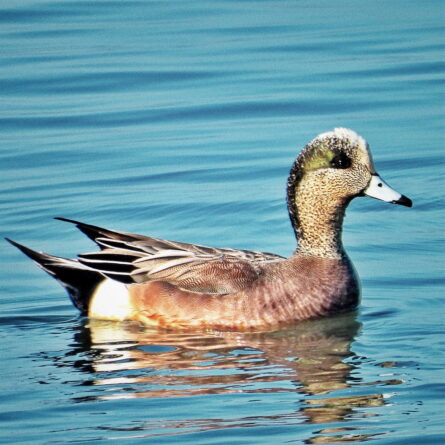
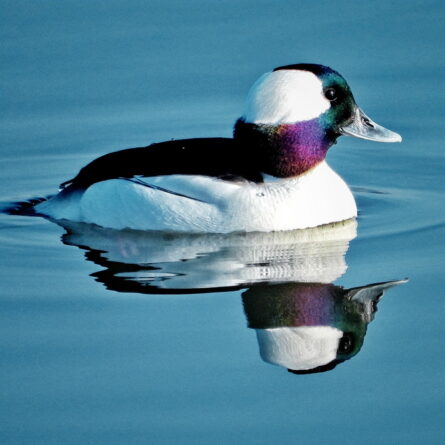
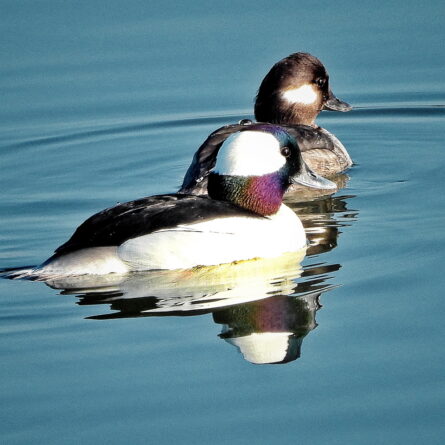
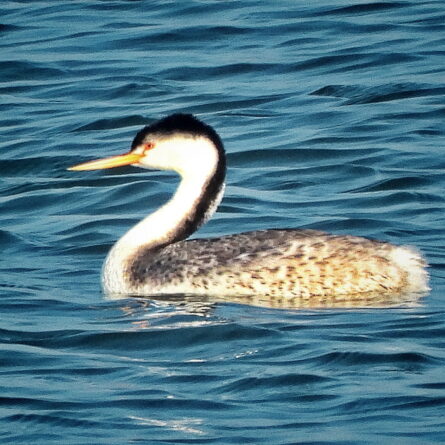
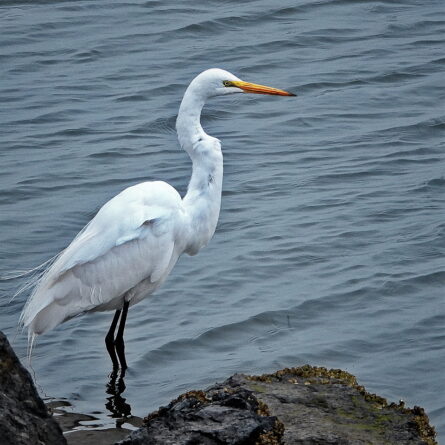
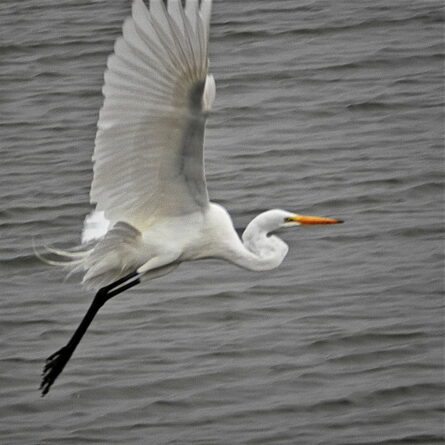
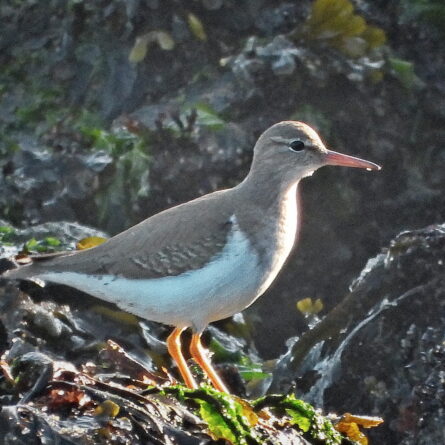
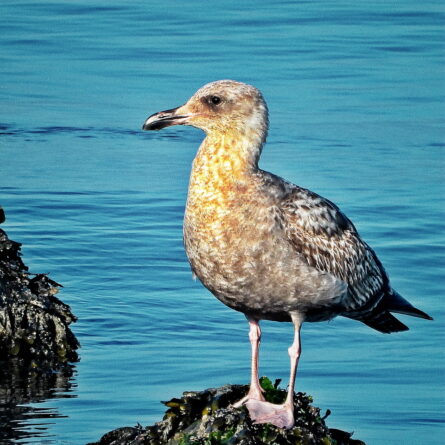
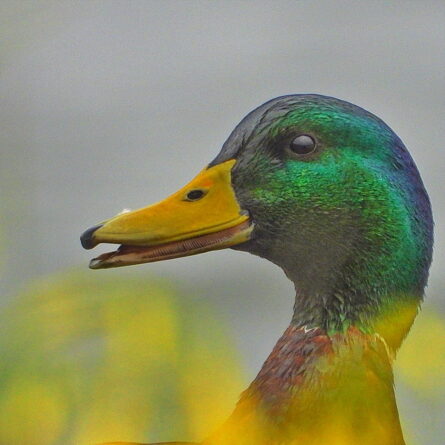
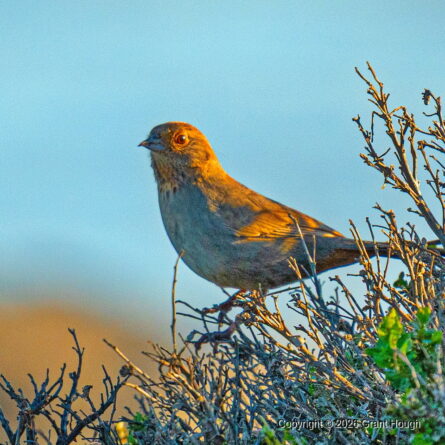
A variety of other feathers also found their way into the lenses of eager park visitors:




Signs of Spring
While winter storms rage across much of the continent, we’re seeing more and more signs of spring. In the park, some of the Blueblossom Ceanothus that Chavez Park Conservancy volunteers planted in the Native Plant Area two and three years ago are in early bloom. As the season advances the blooms will thicken and the color will deepen. Ceanothus is an irresistible magnet for pollinator birds and insects.

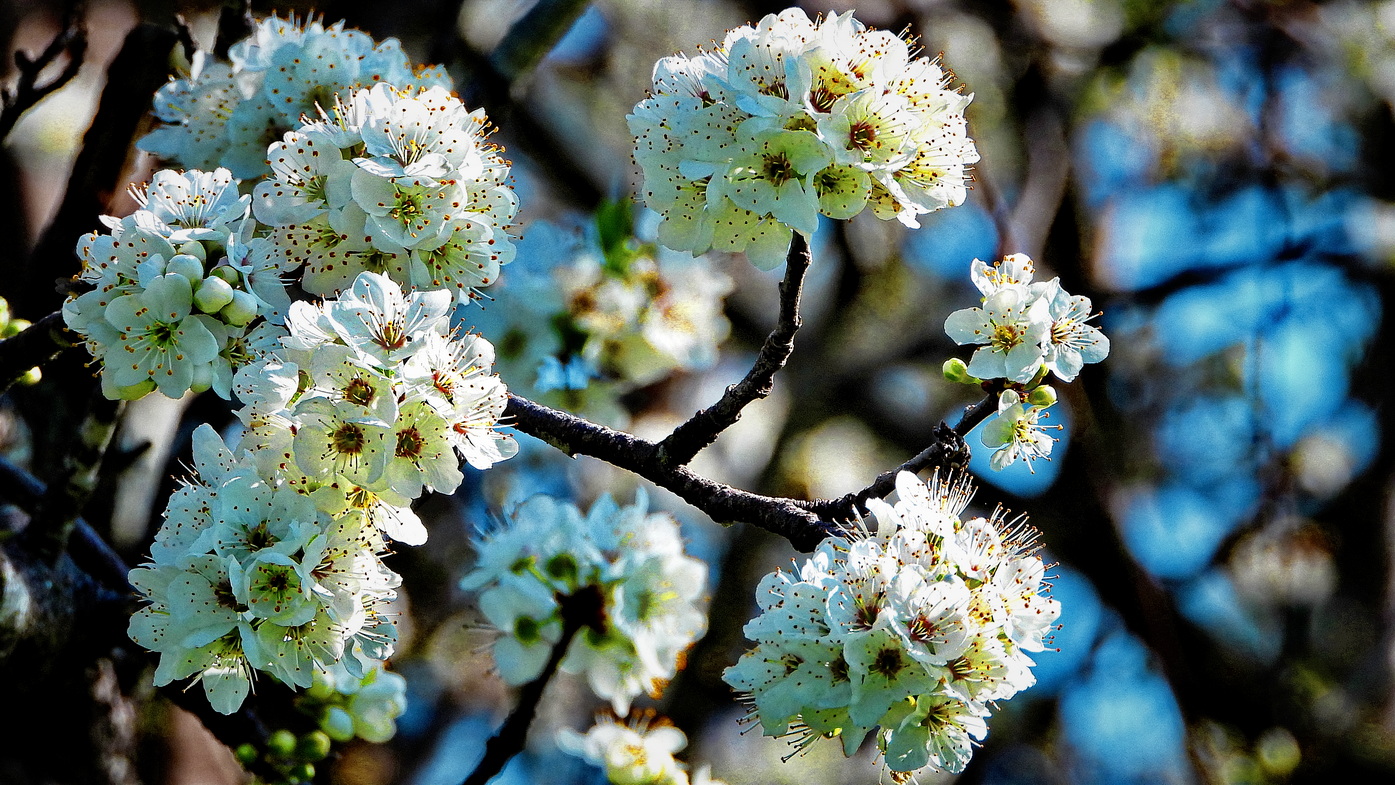
Meanwhile, along Spinnaker Way on the south edge of the park, the reliable Ornamental Cherry tree is also showing its early charms. By mid-February it will be at its peak, or a bit over.

A Healing Place
Park visitor Neil Fang has launched a Substack celebrating the healing and calming power of our waterfront.

After undergoing radical surgery for a life-threatening illness, Neil found that calling up images of the Berkeley waterfront distracted him from his pain and gave him the strength to resume his life.
“I believe deeply in modern medicine. I benefited from advanced surgical techniques, precise monitoring, and highly skilled clinical care. But I also believe that the meditation I practiced during that critical recovery period played a meaningful role. Not as an alternative to medicine—but as a complementary force that allowed my body to fully engage in healing.”
He suggests that hospital rooms have large screens showing images of the environment, such as sunsets and twilights. Scenes of this type will help people practice meditation and promote their healing. Neil Fang’s Substack is at this link.
Book News
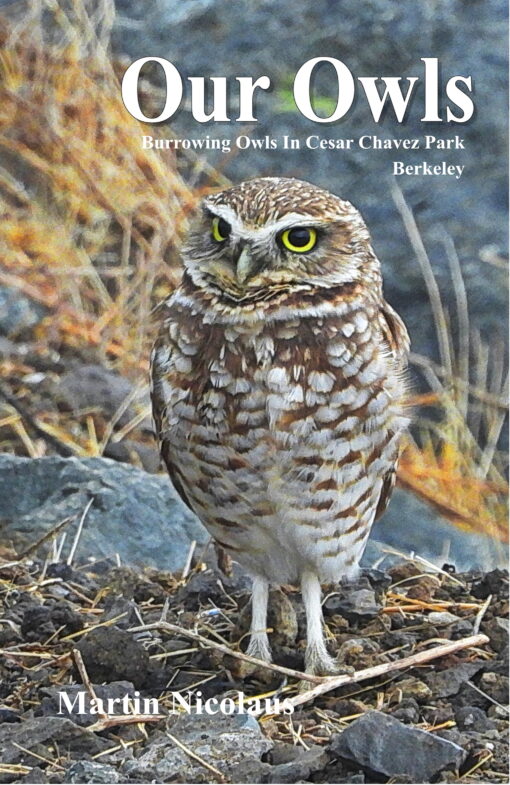
My book, “Our Owls: Burrowing Owls in Cesar Chavez Park, Berkeley” will soon be available to order in bookstores. I published it initially on Amazon because that’s fast and cheap and gets wide online distribution. But bookstores won’t order from Amazon, and neither will a sizeable number of my potential readers. I can’t blame them. The book will shortly be issued also by IngramSpark, the Print-On-Demand wing of the Ingram book distribution colossus, which supplies tens of thousands of retail book outlets. That doesn’t mean our local bookstores will necessarily have a stack of them on the table, but if you ask for one they can get it for you. (The Ingram ISBN is 979-8-9948304-1-3.) And if enough people ask for one, maybe they will put a stack on the table, who knows? Oh, and if you catch me in the park I might have a copy or two on me that you could purchase at an author’s discount.
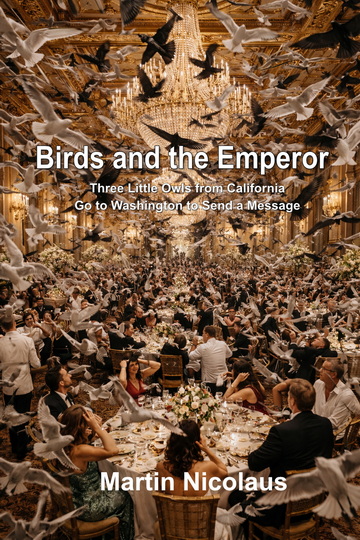
Meanwhile I’m launching an entirely new and totally different book. This one also features Burrowing Owls in our park, but these owls are fictitious, and their adventures are a fantasy that blends into science fiction and political satire. Teenage owl girl Cal and her brothers Tim and Dorzo sip the radioactive liquid said to lie under the park and acquire superpowers. Their main superpower is the ability to get into the heads of other creatures. There they can read their thoughts and feelings and sometimes change their behavior. They start out innocently enough programming the dogs in the park to stop chasing wildlife. Then they get into the heads of local people and become disturbed by much of what they learn. They decide that they should go tell the Emperor what’s going on so that he can make things better. They travel to DC in adventurous ways, and after several detours and mishaps in Florida, they devise a plan to get into the Emperor’s head. But their plan fails miserably and they become aware of a White House conspiracy about the Emperor’s succession. They feel defeated and return home to private lives, where they suffer tragedy but also do good deeds. Then a migrant bird offers to bring an avian virus from China that will kill large numbers of the Emperor’s subjects. They hold a bird council to decide the issue, but leave it unresolved. Some time later they return to DC, taking hundreds of thousands of other birds with them, and in the concluding chapter they make a big mess, literally, of the gala opening ceremony for the Emperor’s new golden ballroom.
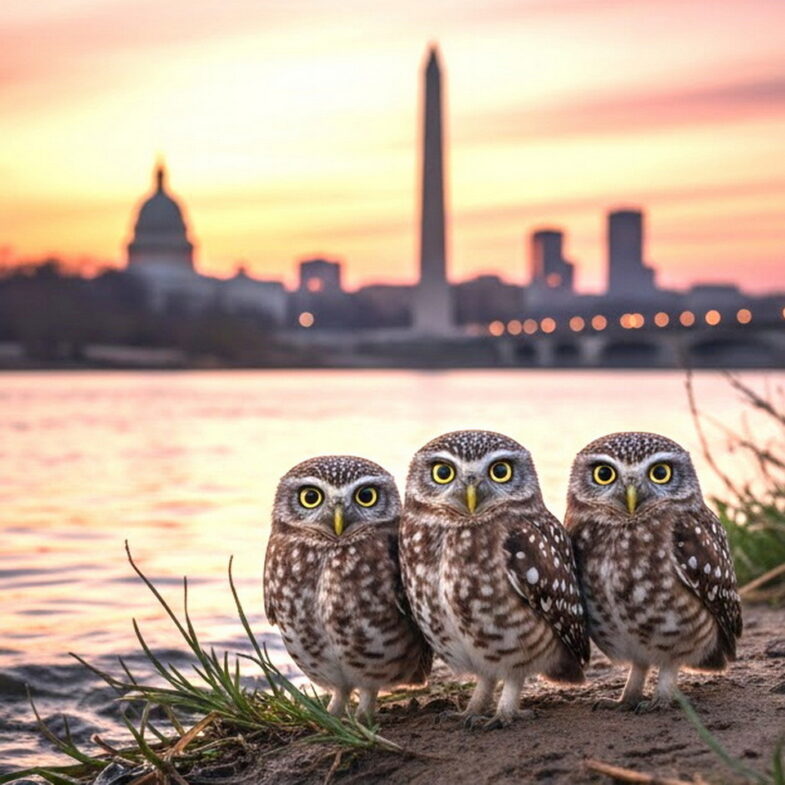
If it were a movie, the novel would probably be rated R for language, sexual situations, and violence, all by humans.
The title is “Birds and the Emperor: Three Little Owls From California Go to Washington to Send a Message.” It’s available right now as a Kindle ebook, and will be available shortly as both an Amazon and an Ingram print book. I’ll post updates here. This has been great fun to write and I hope you enjoy reading it.
Publishing Schedule

This blog drops whenever there’s material and motivation, and not on a regular clockwork schedule. To avoid FOMO, subscribe.
. .


Not suffering as much as Neil, but still scared and saddened by the limitations of my physical ability to enjoy nature, CC Park itself and these photos early in the morning make me smile and wonder at the amazing complexity and glory of nature. So grateful to Martin and all the photographers that give me these moments of pleasure and reminders of what makes life living for.