
Park News Jan 9 2026
Owl Update
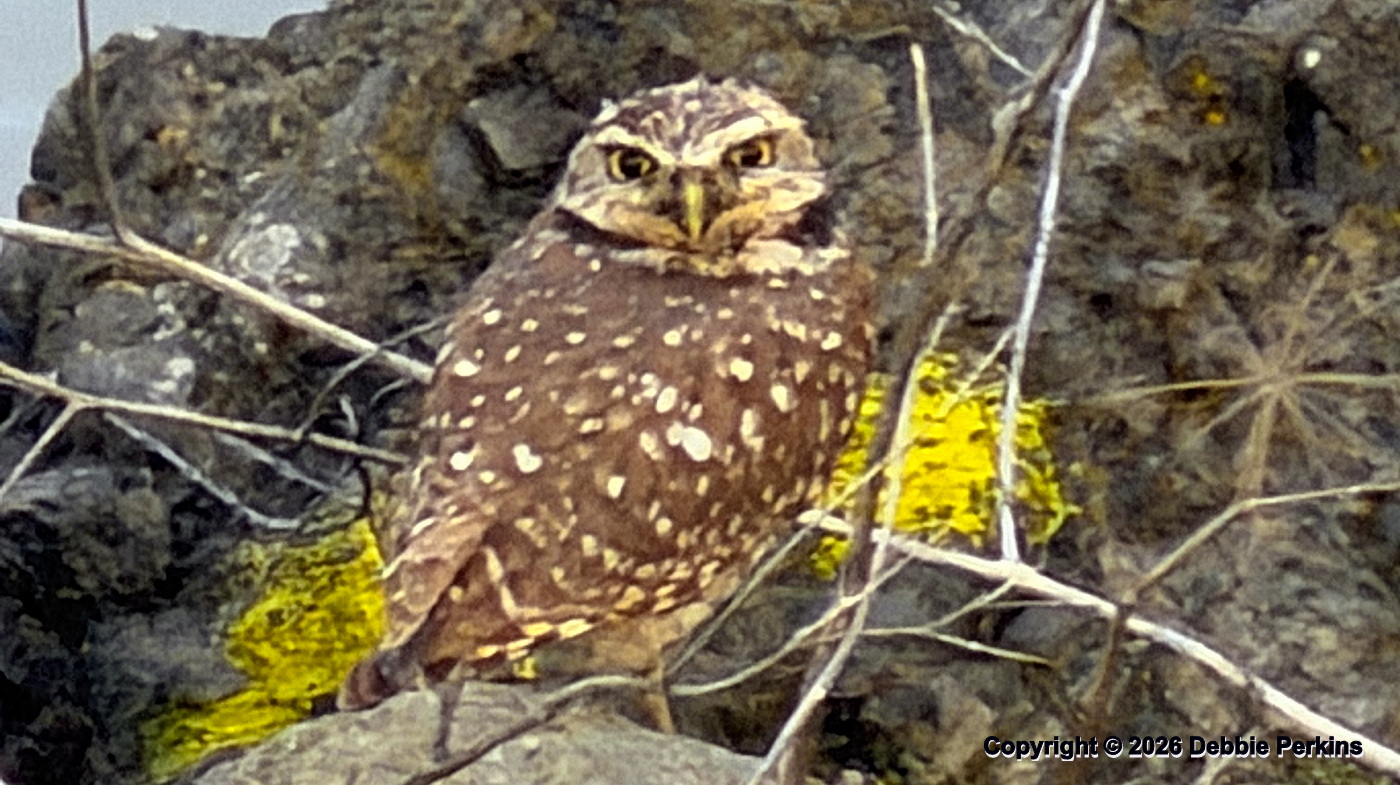
There is or was a third owl in town. Several people reported seeing an owl on Sat Jan 3 on the north side of the seasonal Burrowing Owl Sanctuary. The only park visitor who captured photos was Debbie Perkins, see photo above. This owl looks moderately settled for the moment, apparently perched on one leg.
There were no “third owl” sightings reported on Tue Jan 4. But then on Wed Jan 5, also on the north side but outside of the preserve, Eildert Beeftink photographed this owl perched on a rock at the water’s edge:
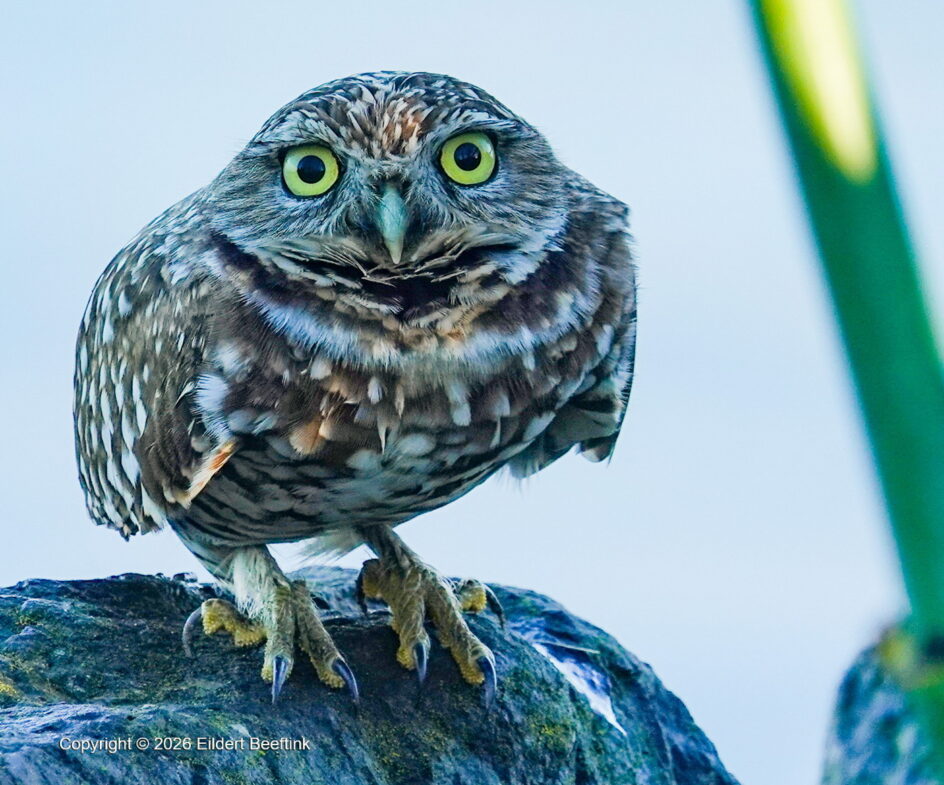
This owl is in a high-alert position, both feet on the ground and legs flexed. It could take to the air in a split second. This bird is not settled.
Two owls have been seen with some regularity on the south slope of the Spiral, in the area we’re calling Perch C. Check the map. Both owls were observed in the Perch C area on Jan 3 and on Jan 5. So Debbie’s and Eildert’s were third owls, possibly third and fourth.
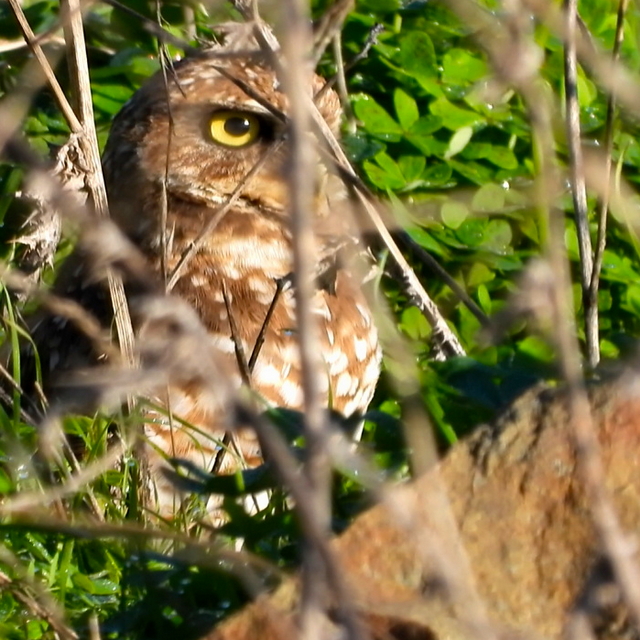
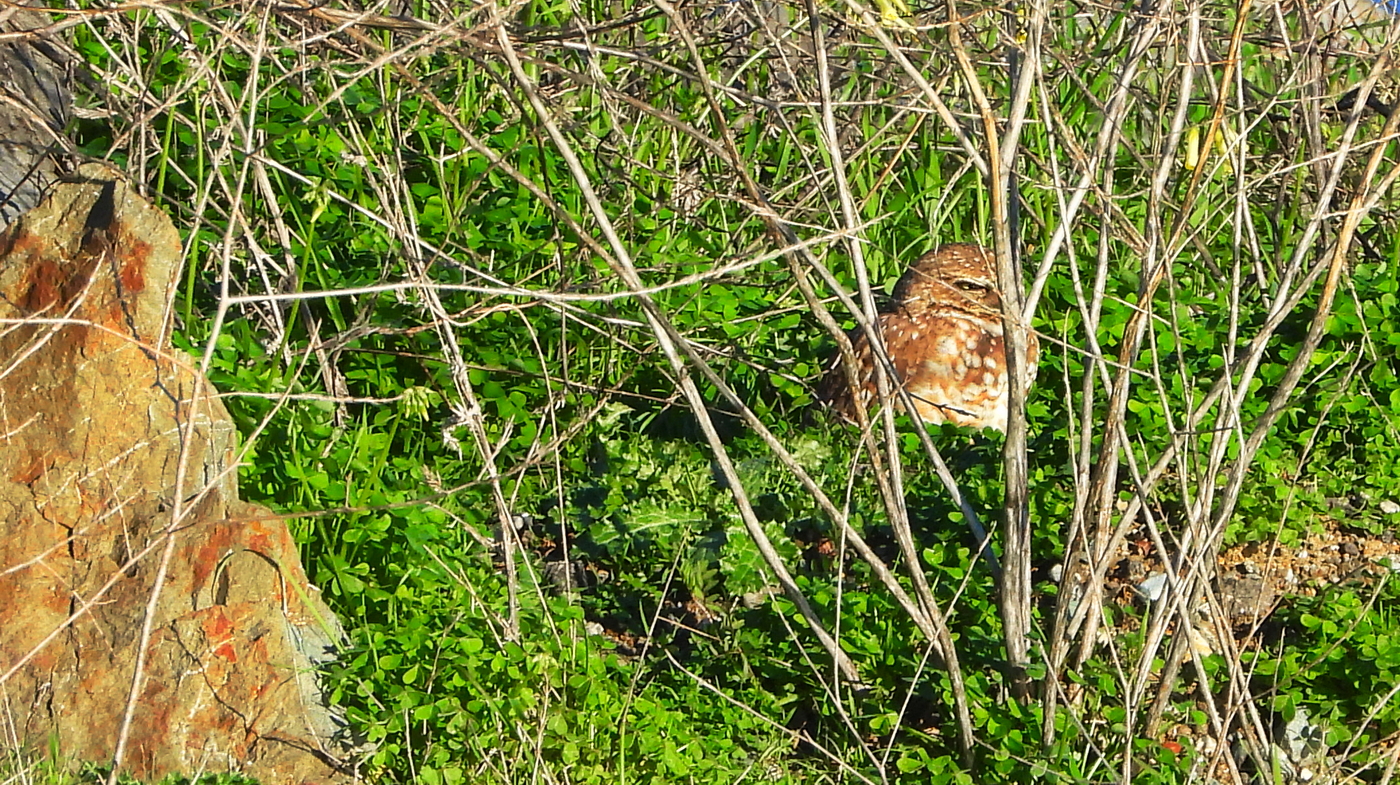
Then on Jan 7, it got more complicated. Down at Perch C there was only one owl. This one sat in deep vegetation behind the jagged reddish rock. See small photo at left. In my last post on Jan 6 I identified this bird, based on its breast feather patterns, as probably the same bird previously spotted at Perch A.
But the nearer owl in the Perch C area, the more visible one, which we’ve been calling the “Shy Owl” since it was first spotted on Nov. 14, was missing. Possibly it was hiding in a nearby burrow, but it did not emerge for more than an hour, and other park visitors later in the day also reported it missing.
Yet on Wed Jan 7 there was definitely an owl at Perch A. And this was a different bird from anything seen at Perch A previously. This owl had somewhat darker feathers on its face, and a different pattern of dots and stripes on its breast. Oddly, its foot and its lower belly feathers looked like the bird had recently walked in mud. There are reports in the ornithological literature of South American Burrowing Owls feeding on crayfish and other beach protein, but I’ve never seen an owl with muddy feet here.

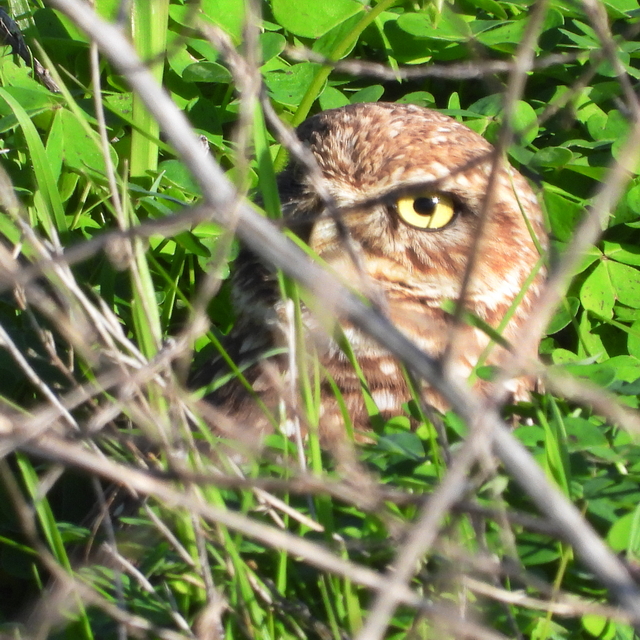
Then came Thu Jan 8. On that morning, the “Shy Owl” — or a bird in its usual position — reappeared. It poked its head out above the rapidly growing greenery all around it and peeked through a light thatch of twigs.
Park visitors with sharp eyes could spot it and see it move its head without using optics.
At the same time, Perch A was vacant, and no one spotted any owls north of the Spiral.
Then came Fri Jan 9. On the south slope of the Spiral, the “Shy Owl” usually visible without major obstruction was missing. The deep owl — the one behind the jagged reddish rock — was present. Seen from the usual camera spot near the south gate of the preserve, this bird was so blocked by vegetation that you could barely make it out. By moving south about forty yards and stretching my lens I could get a decent photo of it, showing that it actually perched about six feet east of the reddish rock. Here’s what that looked like:
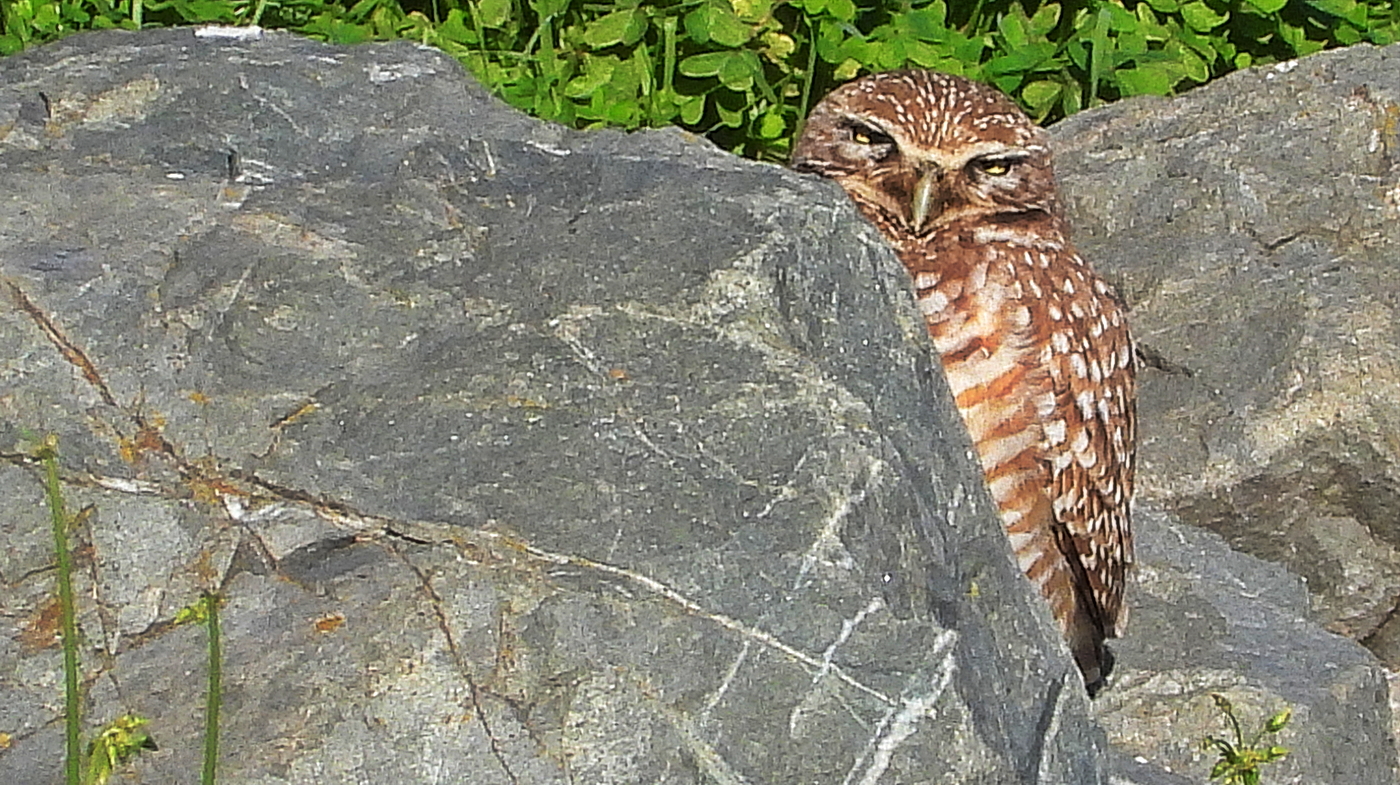
At that same time, there was an owl in Perch A again. It was half hiding behind a big rock, but enough of its breast pattern showed to make it very likely that it was the same owl seen at Perch A on Jan 7.
So there you have it. What does it all mean? It means that birds are full of surprises. Trying too hard to figure out what they’re up to can give you a headache. The great news is that we have owls in the park.
Other Feathers
One of my favorite non-owl photos of the season is this shot by filmmaker Rosemary Rawcliffe of a Black Phoebe capturing a juicy bite.
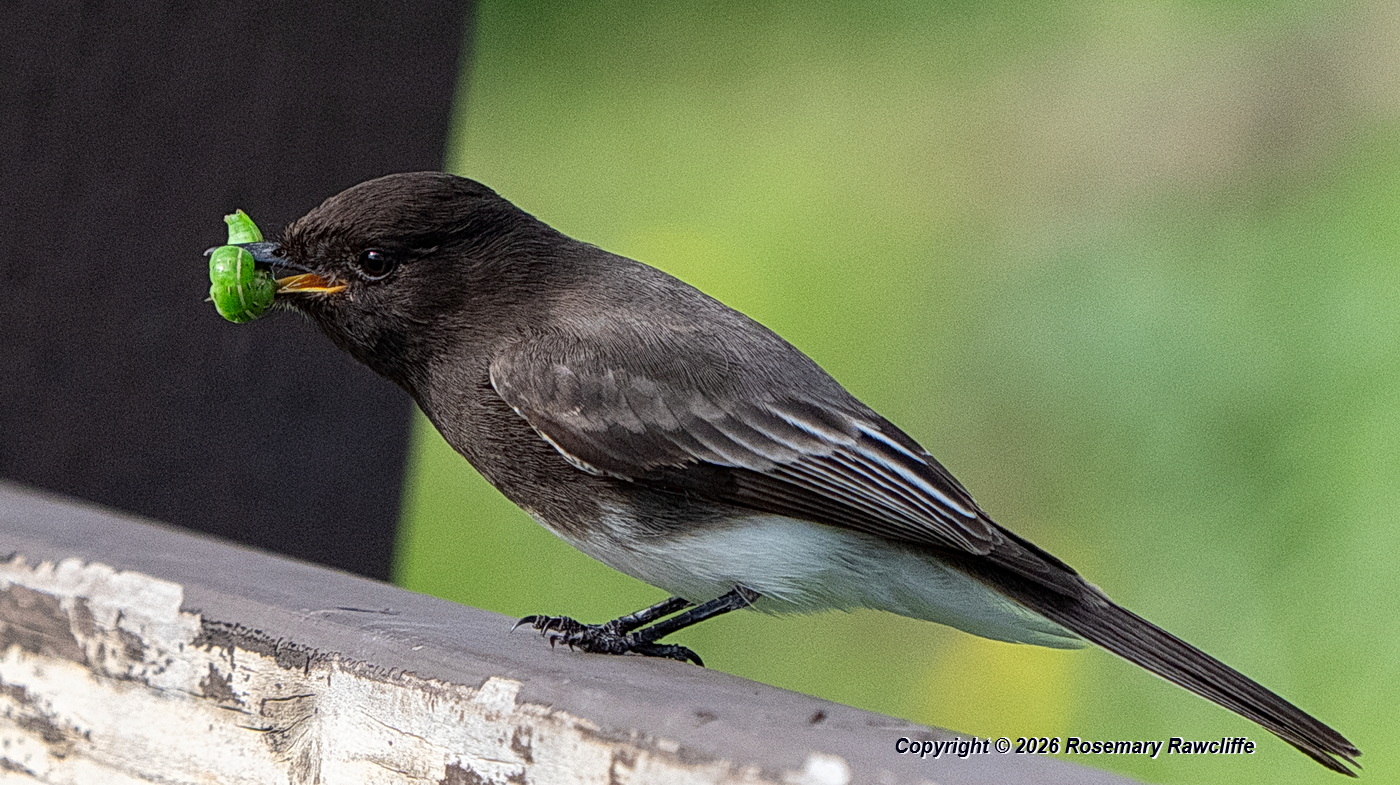
I also got a couple of images of Black Phoebes but they’re not nearly as good as this one so I’m not putting them up.
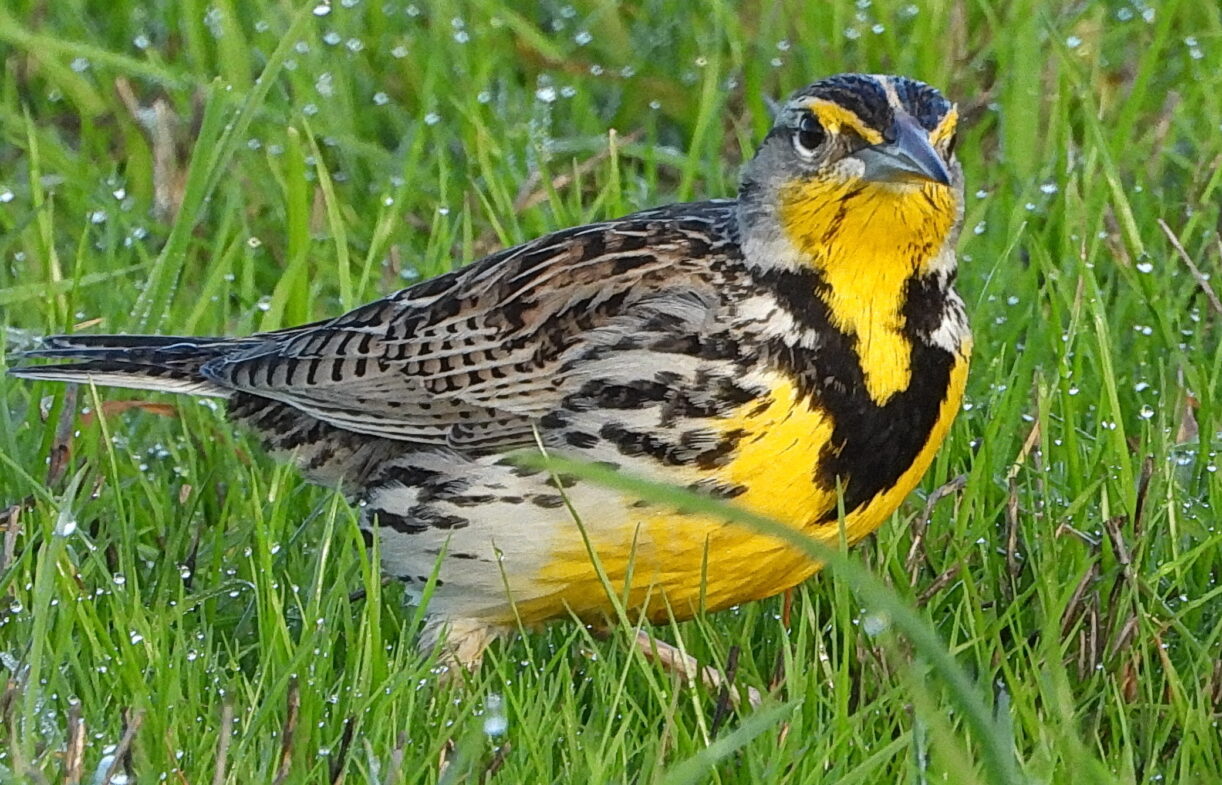
At around 8 am in recent days I’ve seen Western Meadowlarks foraging in the grass around the picnic areas on the east side of the park. One of them hopped on a rock next to the steel barbecue fixture, and gave an unusual portrait. This one had a more pronounced orange tint than usual on its throat. According to Google Gemini AI, this may be due to (a) a dietary option, where the bird has eaten more berries or insects containing carotenoids, or (b) it might be a male showing off in the breeding season to impress potential mates. We are approaching breeding season, so (b) makes sense.
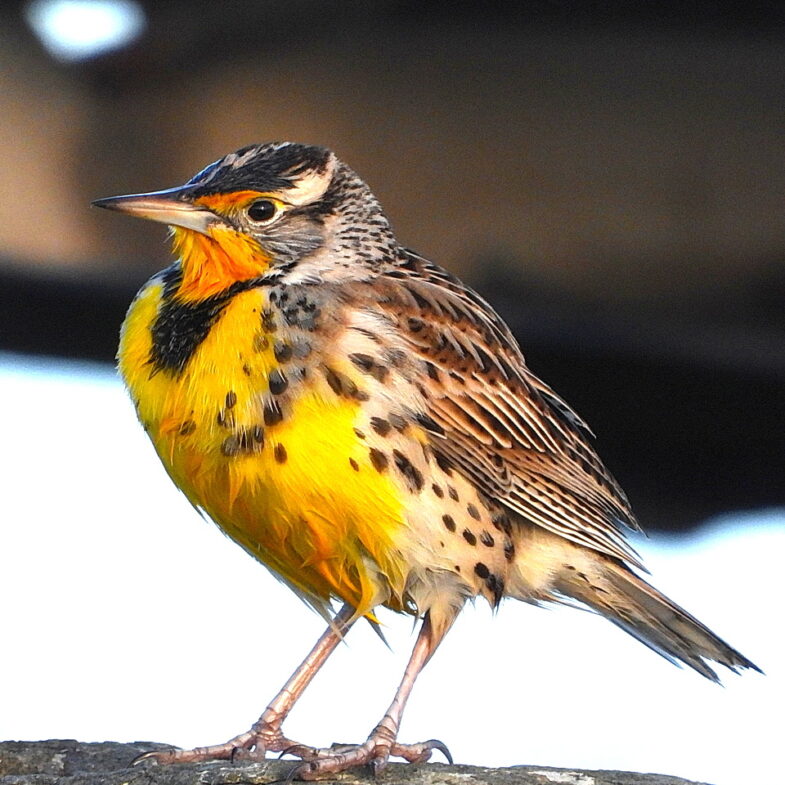
This is the more usual presentation:
Also approaching breeding season are other grass-nesting birds, including the Savannah Sparrow. I photographed this one perched on low twigs on the east side.
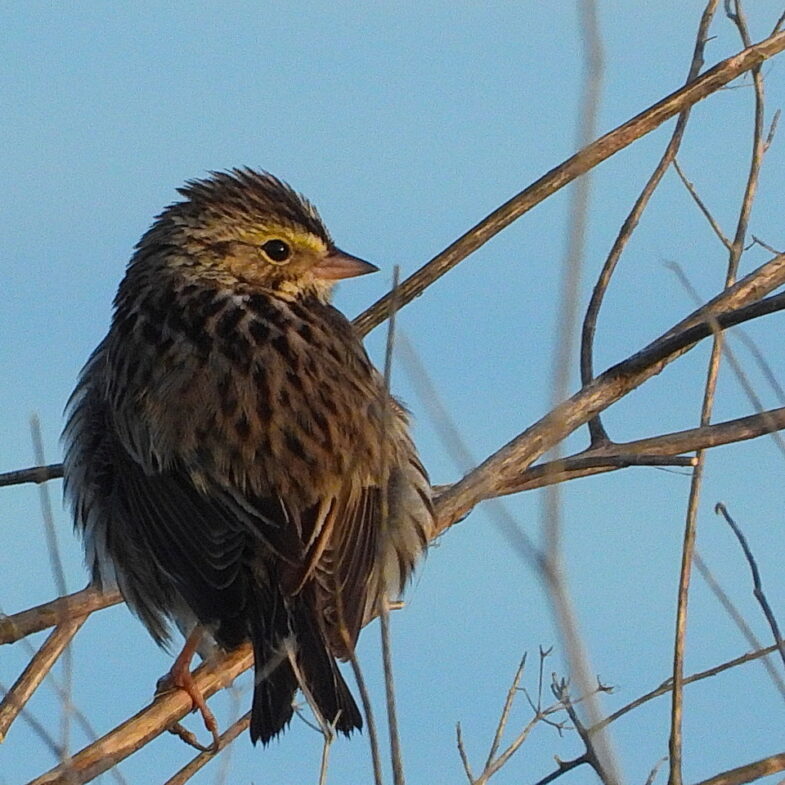
It then took off across the grass of the east side meadow. This area is its historic breeding territory, documented going back decades, when this area was allowed to grow naturally in springtime. In recent years the park administration has bought new and more powerful mowing machines, and has decapitated the grasses in this area. Grass-nesting birds need tall grass to weave cover for their nests and for access tunnels to the nests. They can’t do it in mowed grass. The Chavez Park Conservancy has begged the Parks administration year after year to leave a good patch of this meadow to grow naturally until the Summer Solstice, when the young birds will have hatched and fledged. Our pleas fall on deaf ears. Parks doesn’t care about bird nests. They want the park to look like a golf course, not like nature. But people don’t come to the park to play golf. We come to enjoy nature. And there’s lots of it.
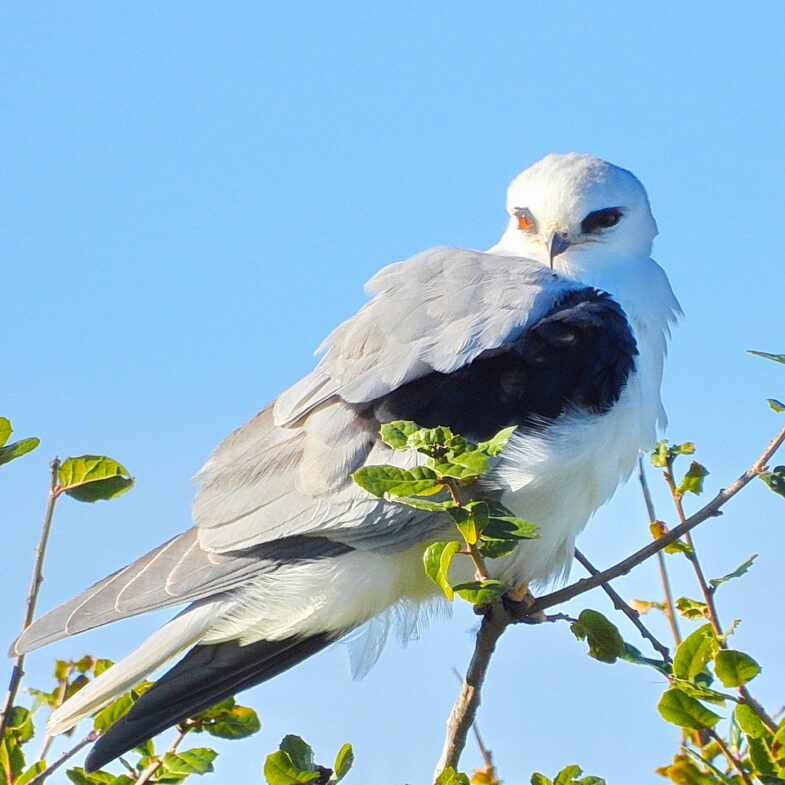
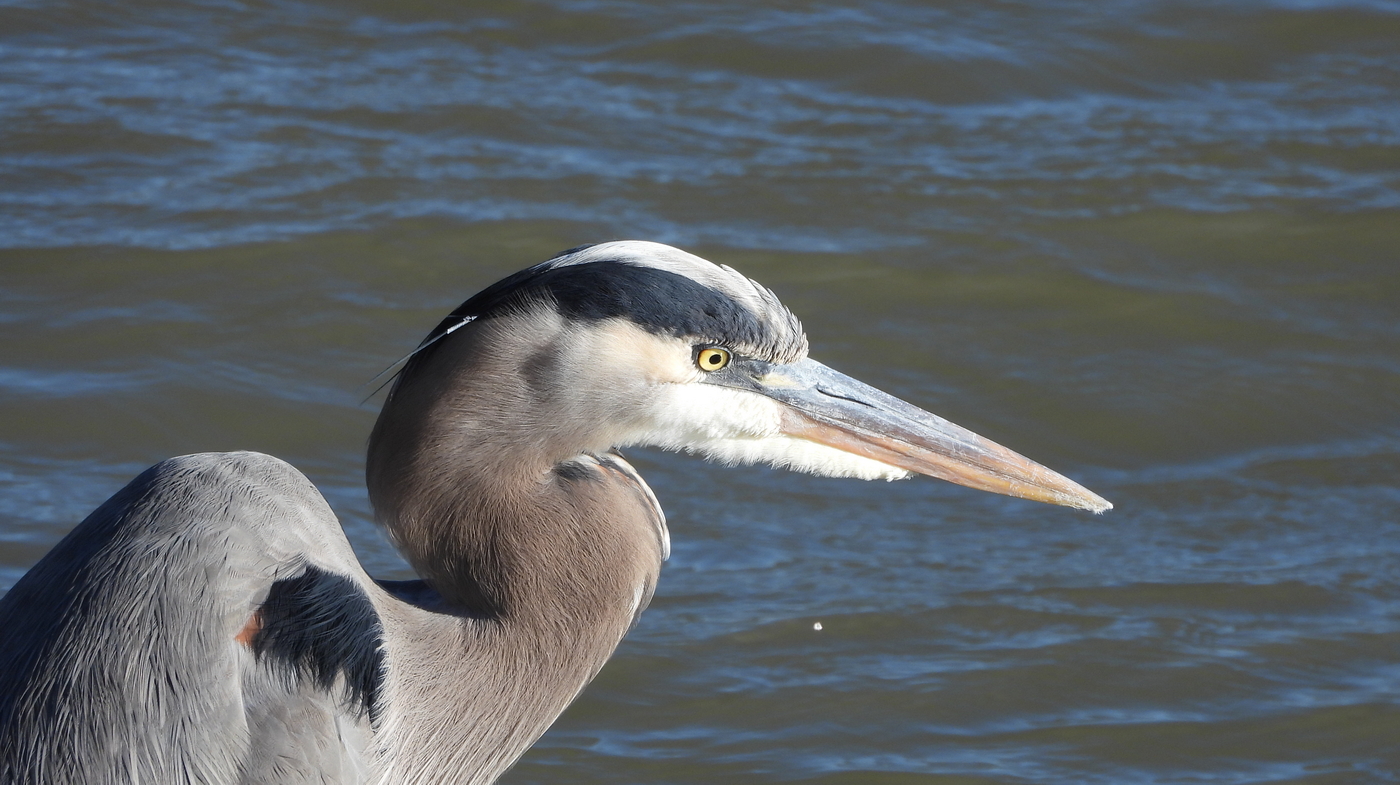
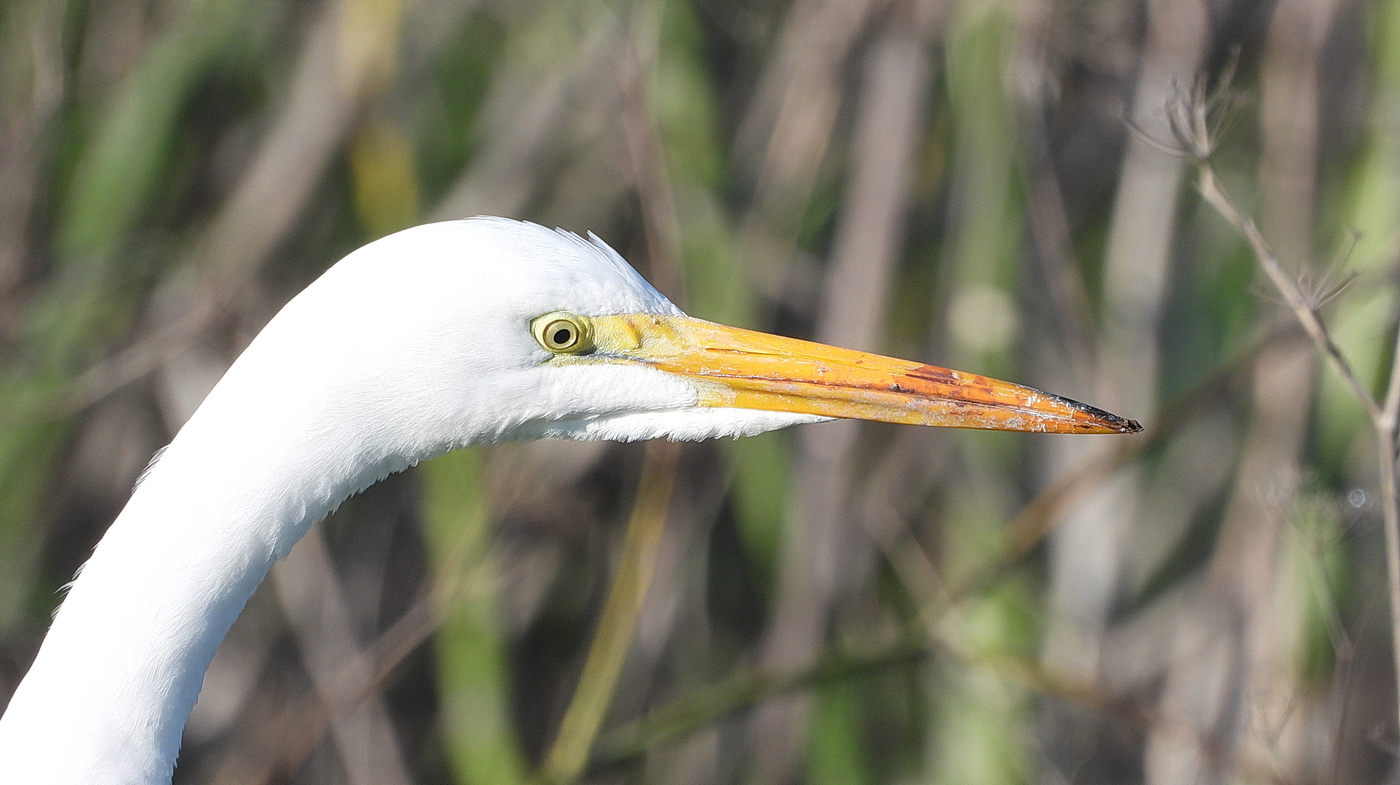
The other day park visitors looking at the Burrowing Owls on the south corner of the preserve saw not only an owl or two, but a Great Blue Heron on the rocks below, a Great Egret in the weeds to the west, a White-tailed Kite on a bush maybe forty yards behind us, and a half dozen White-crowned Sparrows almost at our feet. Here’s the kite, the heron and the egret.
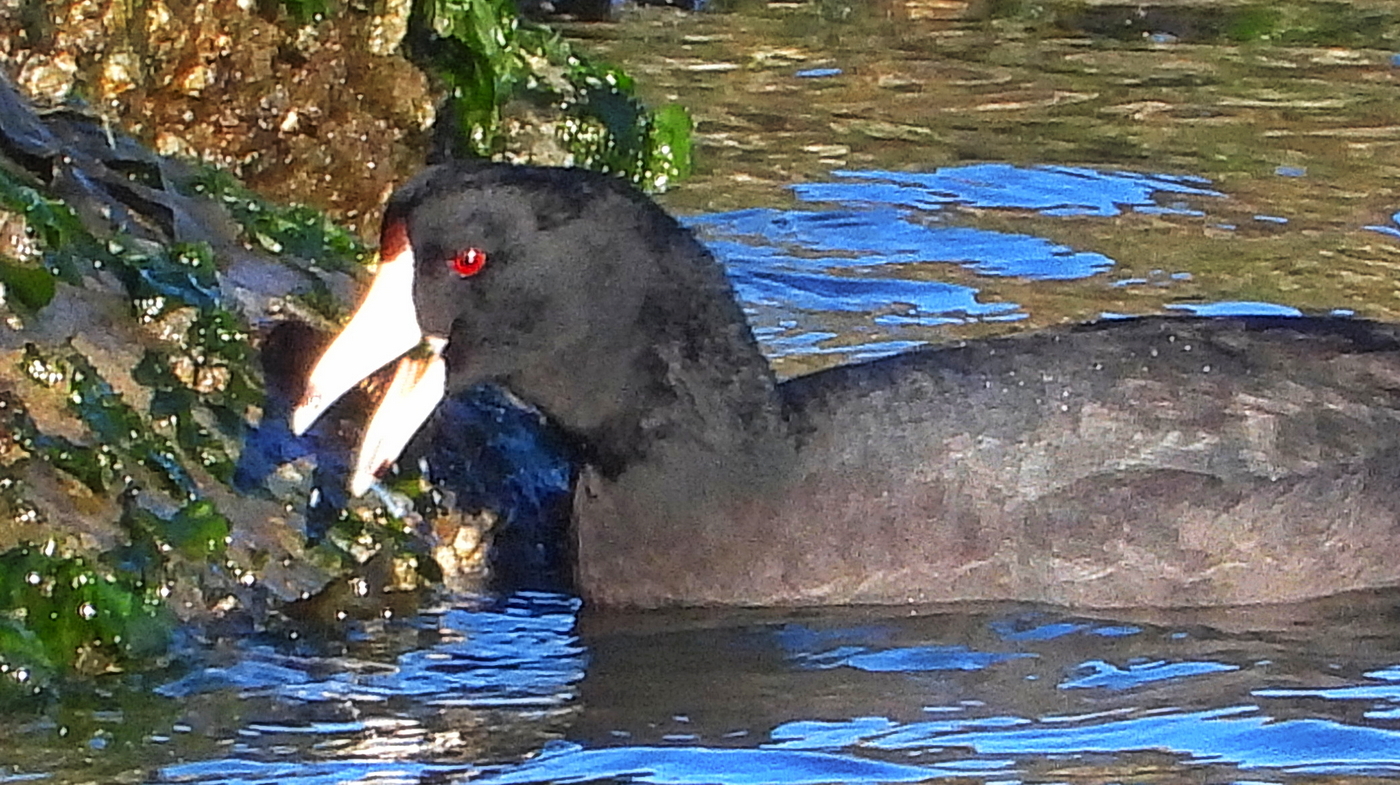
There was also action on the water. A pair of Coots were foraging on the seaweed at low tide. Here’s one of them.
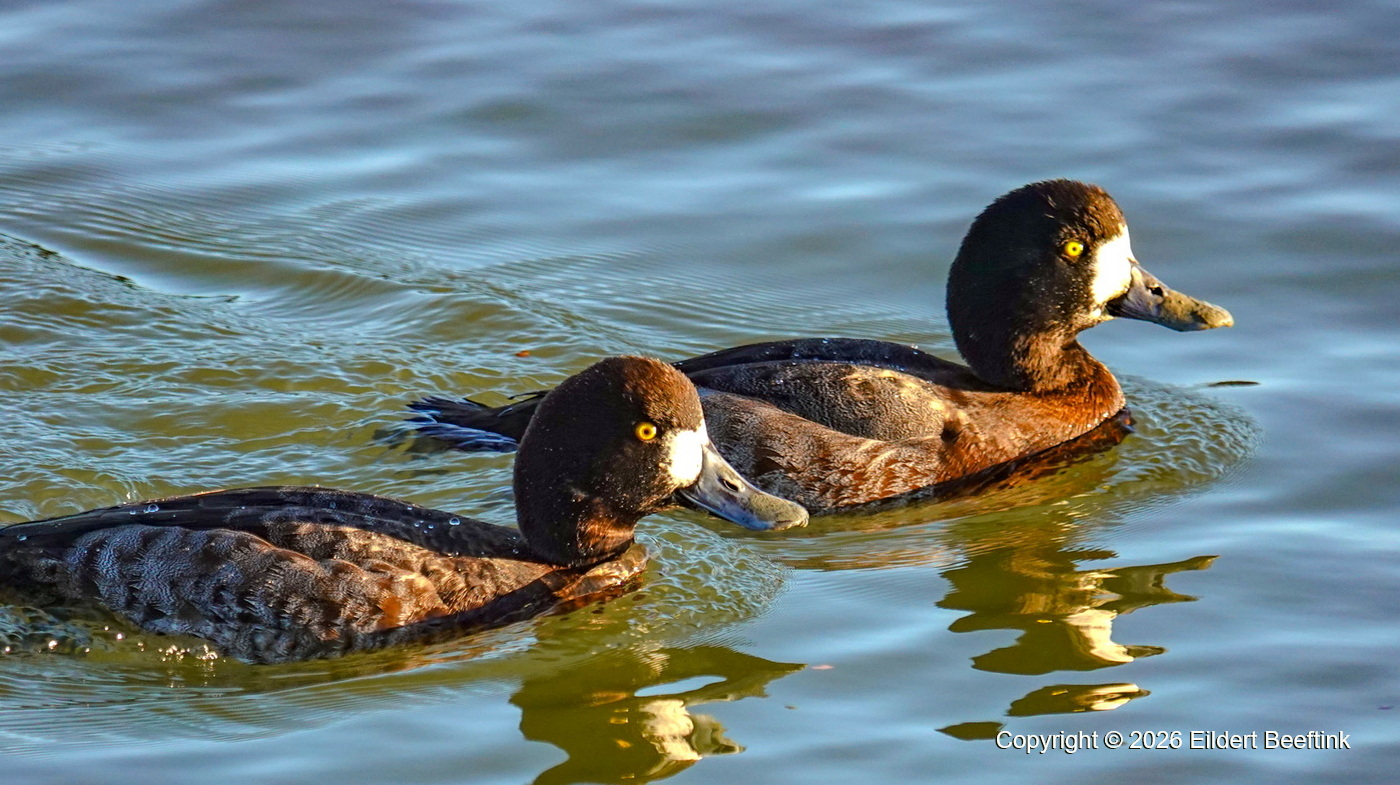
Eildert Beeftink captured nice images of this pair of female Scaup. Eildert says they’re Greater Scaup, not Lesser. He knows.
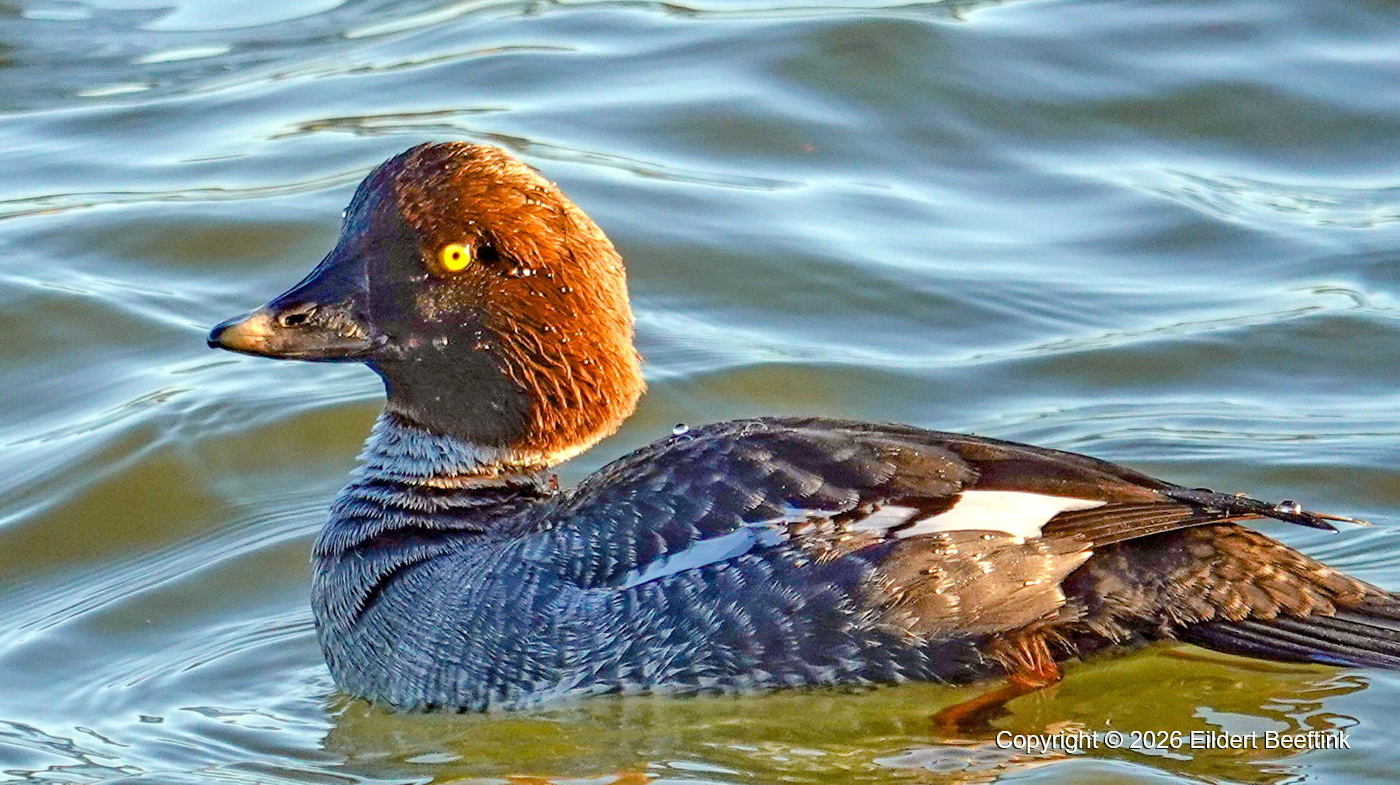
Here’s as sweet a photo of the Common Goldeneye male as I’ve seen in some time:
Finally, a photo of a Burrowing Owl not here in the park. An elsewhere owl has to be doing something special to get posted in this Chavez Park blog, and this one qualifies:
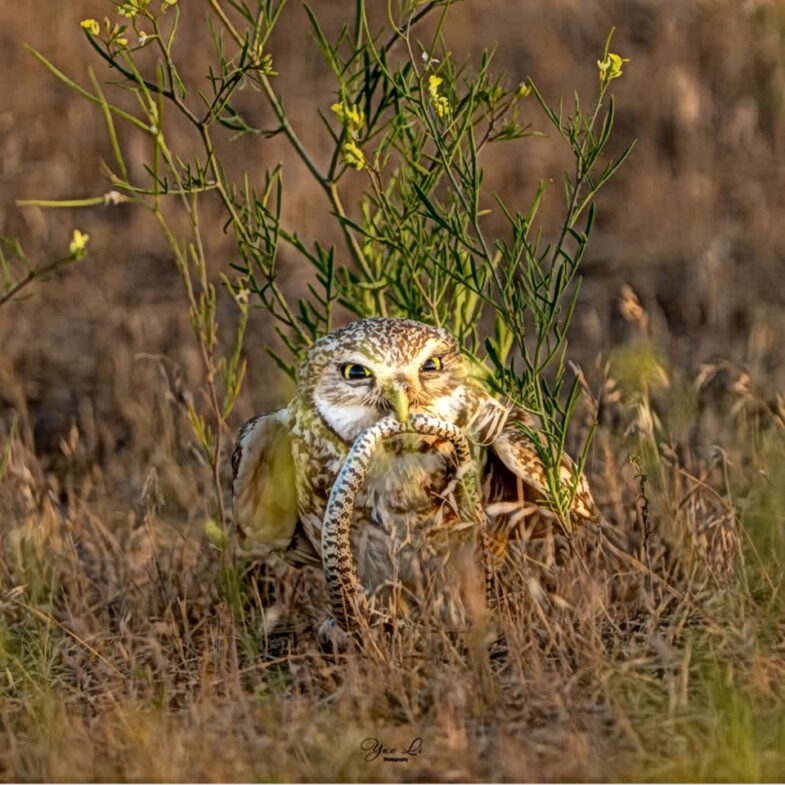
Owls are raptors, of course, and this little snake looks about the right size for a Burrowing Owl meal. I’m also being a bit of a raptor posting this photo. Susan Black found it on Facebook or on a Facebook-linked photo site, and had no way to contact the photographer to ask for permission to copy it. All we know is the photographer’s name is Yao Li. If he or she objects, I will of course take it down, with an apology. Meanwhile, enjoy.
Publishing Schedule

This blog drops whenever there’s material and motivation, and not on a regular clockwork schedule. To avoid FOMO, subscribe.
. .


https://www.facebook.com/groups/1657672334452627/permalink/4413257022227464/?app=fbl