Park News 4/20/2025
Now the Grackle!
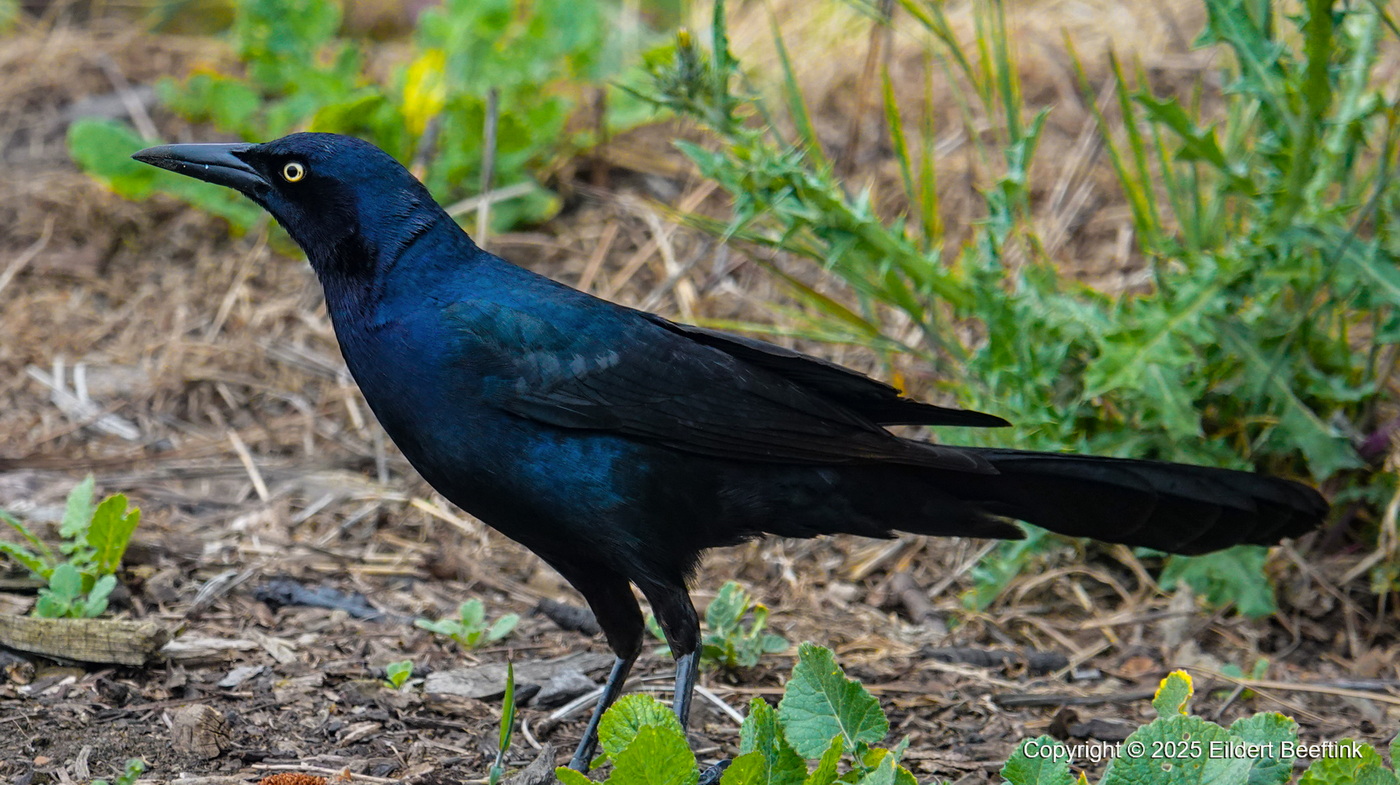
It was just a matter of time. The Great-tailed Grackle (Quiscalus mexicanus) has been moving steadily north from its home habitats down south. It’s one of the few bird species that has profited from agricultural and urban development. They’re common sights in Texas cities, eating whatever people discard. They descend in large numbers on ripening fields, where growers treat them as pests. In lush conditions, like the sugarcane fields of southern Texas, they can form flocks half a million strong. They’re smart enough to recognize people, and brave enough to dive-bomb people’s heads to protect their nests. They are strongly gendered in anatomy, with females about half the size of males. They breed lustily, with little attention to pair boundaries. They eat just about anything. And now they’re here. Or at least, one of them was here last week, where Eildert Beeftink’s sharp and experienced eye spotted it. This one was probably an explorer. It’s unlikely that our local American Crows will look kindly on their presence here. For the record, grackles aren’t related to crows. They’re members of the blackbird family (icterids). Let’s keep an eye out and see if they come in numbers.
Other Feathers
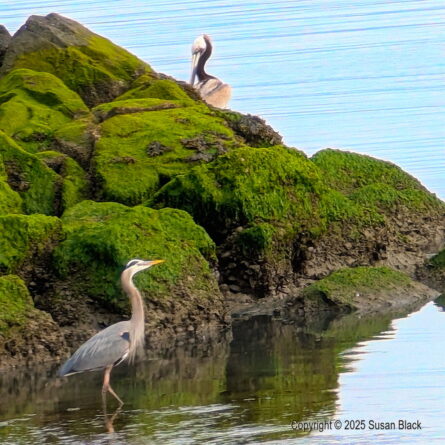
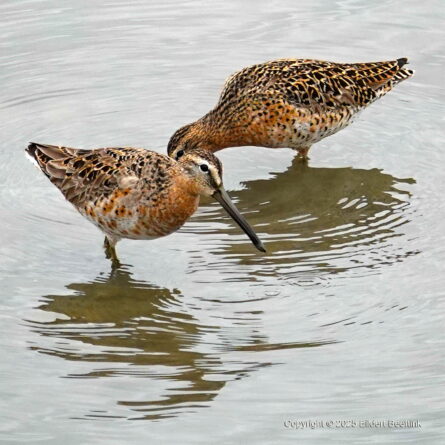
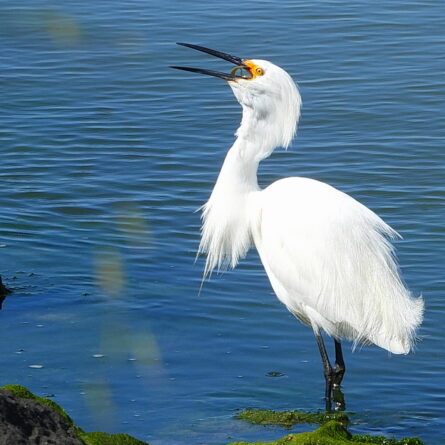
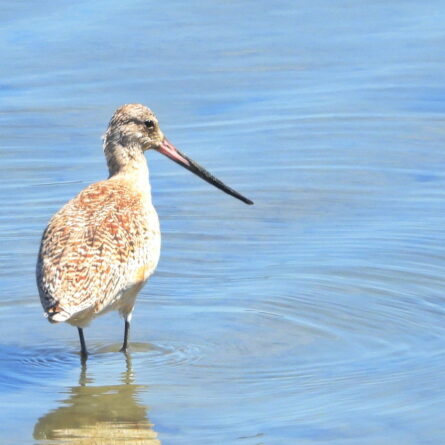
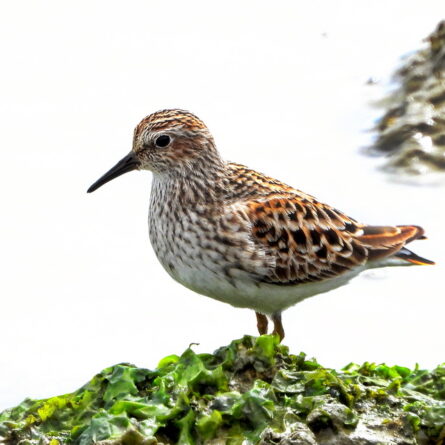
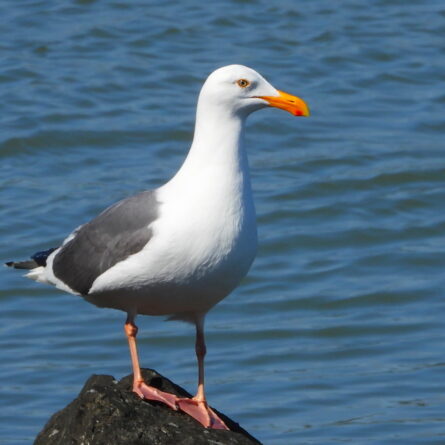
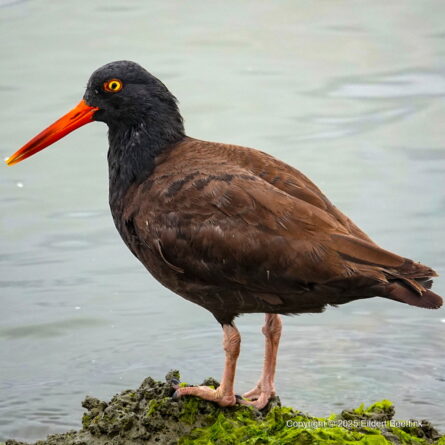
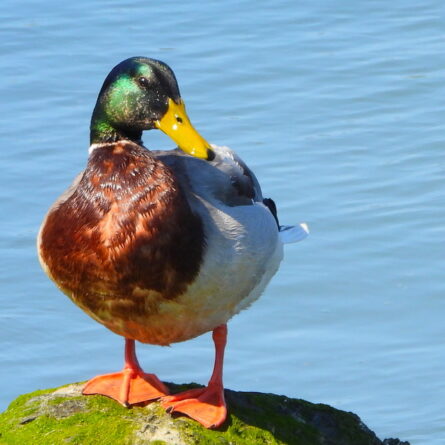
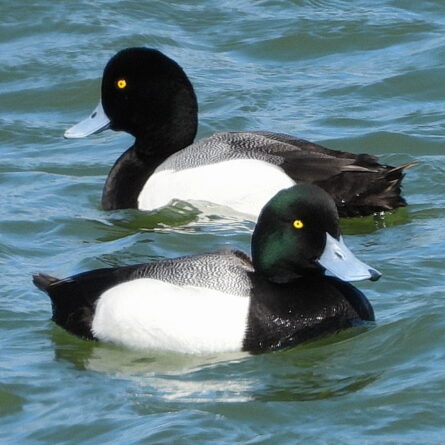
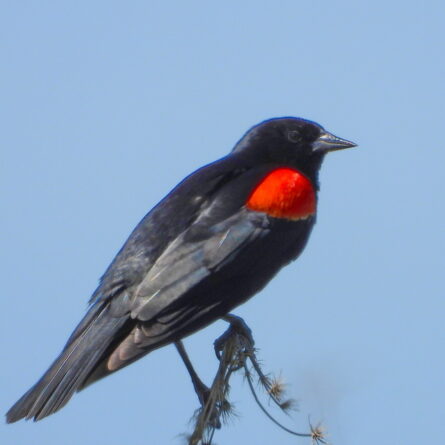
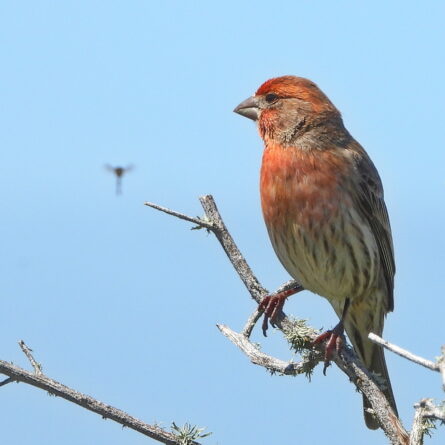
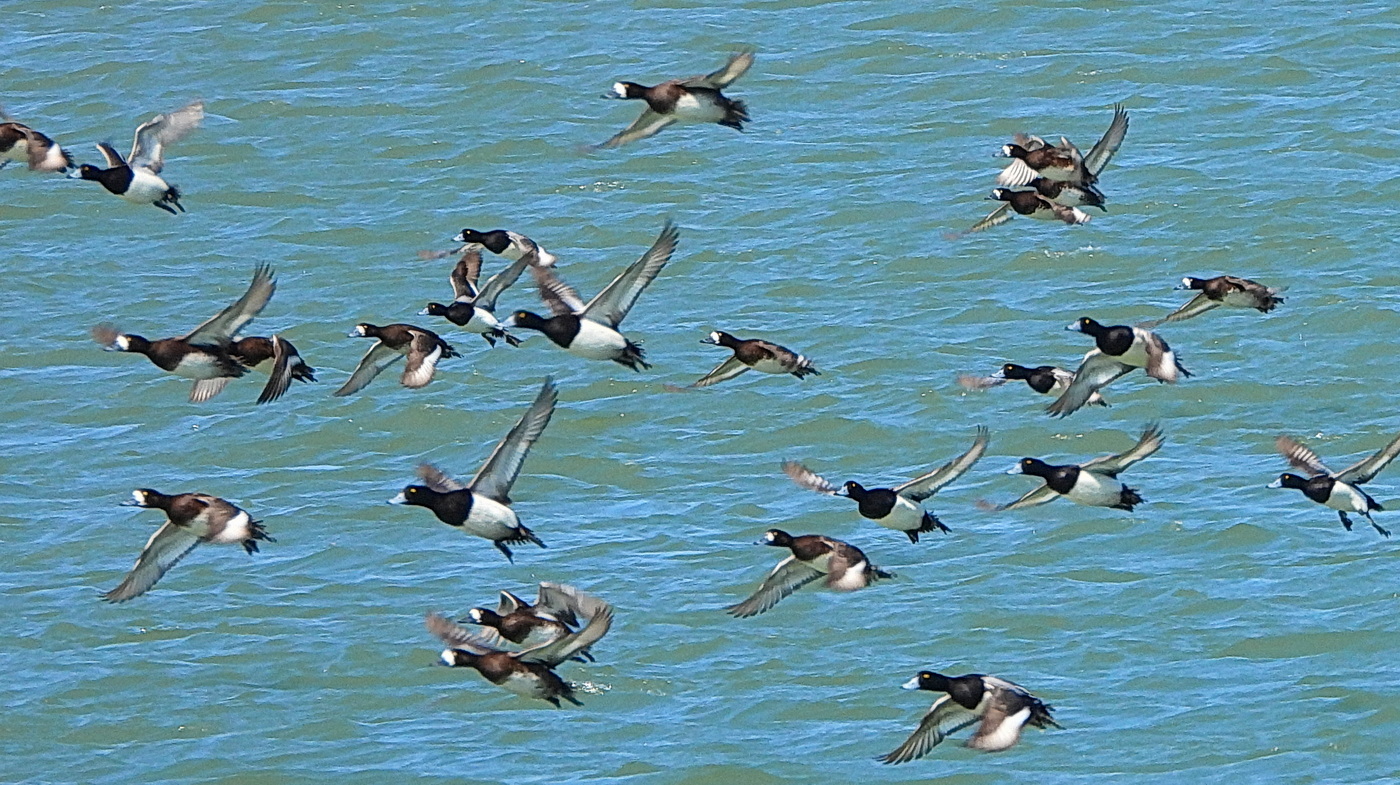
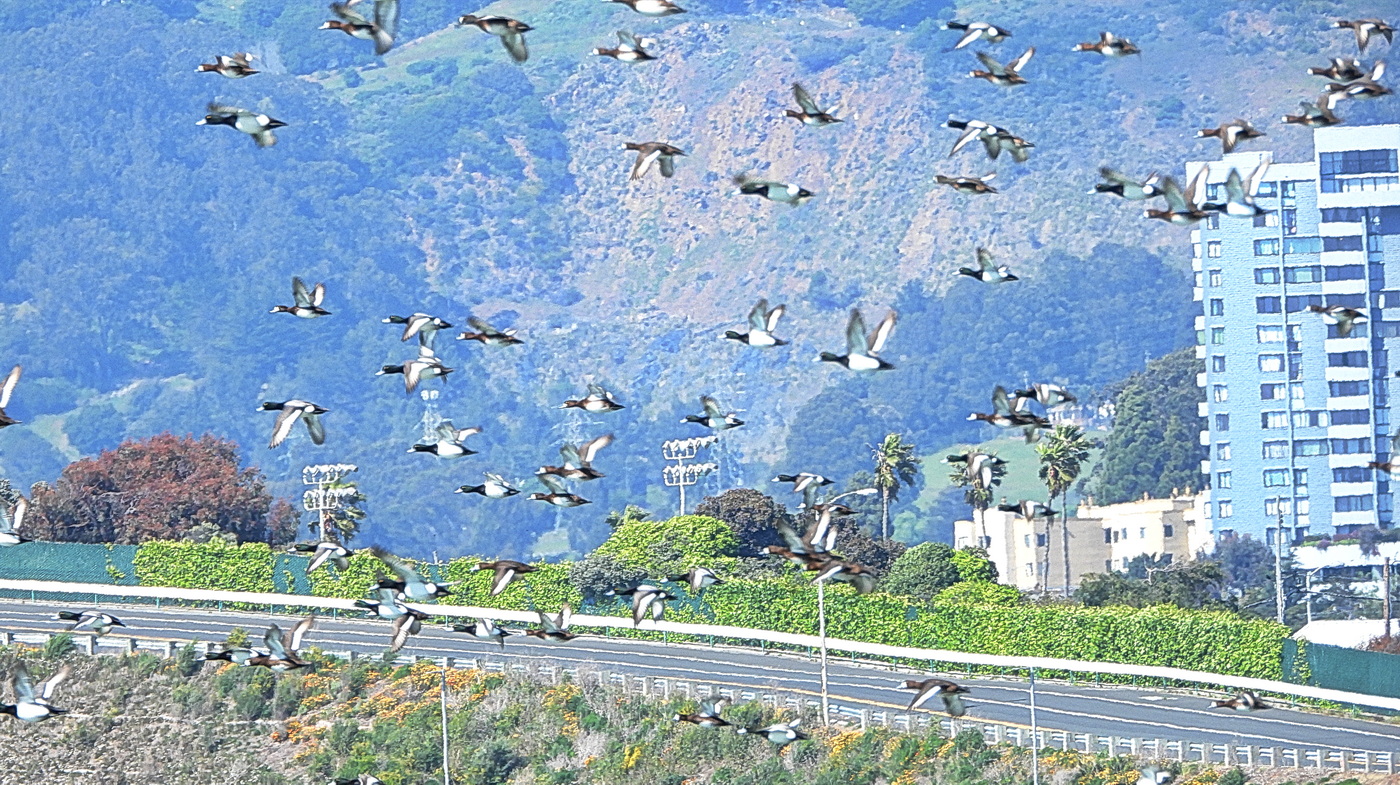
Among the good news on the feather front this week was the return of Brown Pelicans. Photographer Susan Black snapped a pic of a Great Blue Heron in the foreground with a pelican in the background. Other pelicans have been spotted flying by, and we may soon see them resume hunting and gathering in North Basin waters. Also noteworthy was a pair of Long-billed Dowitchers, rarely seen here lately. In other bird news, I saw about half a dozen male Red-winged Blackbirds in the Fennel areas of the northwest and western ridge. The fresh new Fennel isn’t tall enough yet for the females to build their nests, although some have been seen nesting in tall grass. I saw no females yet. They travel separately on their own timeline. Scaup occupied the North Basin by the many hundreds on Friday, and then suddenly, as if on a signal, took off northward en masse. Possibly a windsurfer spooked them. This flight was unusual in quantity and timing. In a past year I filmed them leaving in small batches at sunset. Possibly they settled again farther out in the Bay and regrouped.
Flowers and Friend
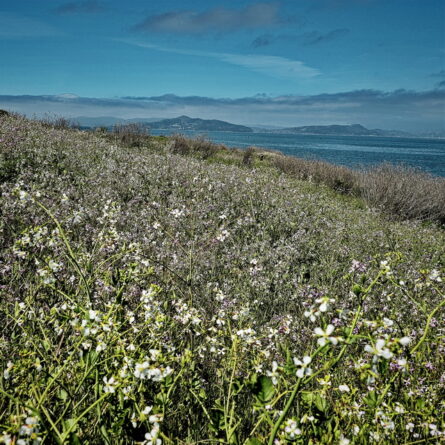
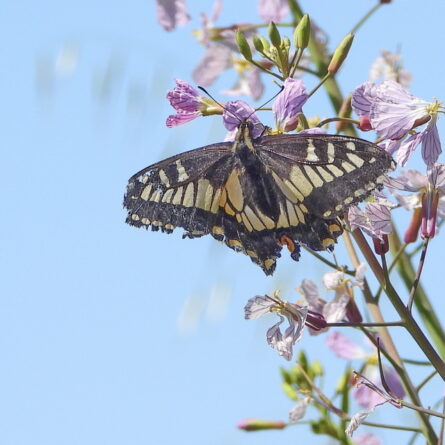
A single Wild Radish plant isn’t much to look at, but a mass of them makes a spectacular display. Such a show is live this week in the northwest quadrant of the park. Among the visitors to this bounty was this Anise Swallowtail (Papilio zelicaon) butterfly. Other butterfly species also showed but didn’t hold still long enough for their photos. The Wild Radish (Raphanus raphanistrum) is a relative of the cultivated radish, but its root is long and tough, not bulbous and crunchy like the radish you can get in the farmer’s market. Still, the wild variety is edible. The seeds are even a bit tasty.
Big Fins
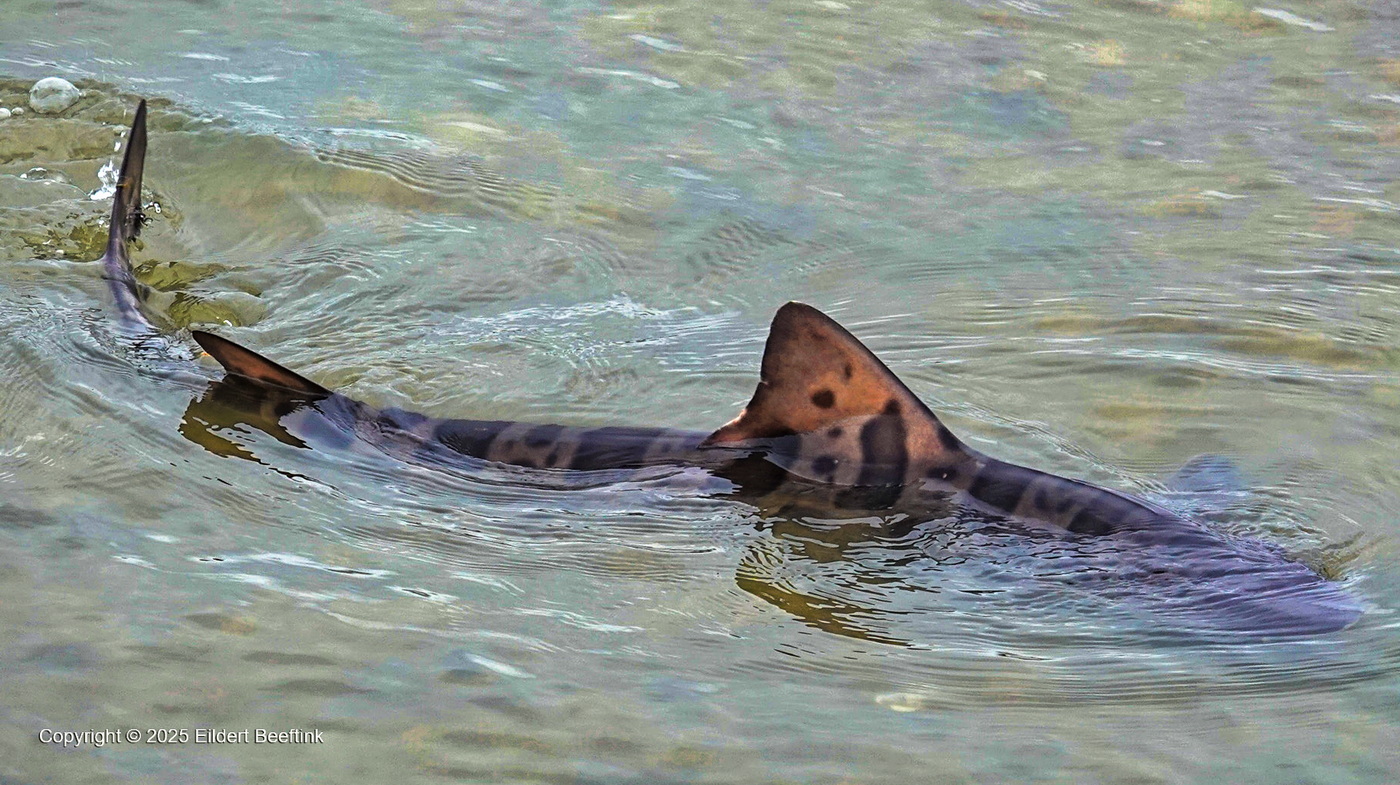
This is possibly the biggest, certainly one of the biggest Leopard Sharks photographed in the waters surrounding the park. Despite its formidable looks, people need have no fear of it. It’s a bottom feeder focused on clams, crabs, and similar folk. Thanks to Eildert Beeftink for this photo.
Bay Fair Sat Apr 26

Once again, as in past years, your Chavez Park Conservancy will participate in the Berkeley Bay Festival, held this year on Sat Apr 26 from 11 to 4.
Thanks to the generosity of Phil Rowntree, we’ll have a good quality 10×10 tent.
We’ll have the popular interactive game where you get to pin the names on the photos of wildlife.
We’ll have flyers with the beautiful poster of Chavez Park birds done by artist Bill Reynolds.
We could definitely use volunteers to staff the table anytime between 11 and 4. Please send an email to info@chavezpark.org if you can be there and lend a hand.
The event is great fun, draws hundreds of people, and provides many with their first invitation to visit Cesar Chavez Park and appreciate its many natural beauties.
Waterfront Monitors Laid Off
A Marina source informs that all four Waterfront Monitors who have worked to patrol and protect the area for the past seven years are to be laid off at the end of April. The decision apparently came from uptown, meaning the City Manager’s office. The monitors are paid as part-timers with minimal wages and no benefits. The budget savings are microscopic. The loss to the waterfront’s security may be substantial. The monitors acted as the city’s eyes and ears during off hours, and were trained to de-escalate conflicts and provide information. The south edge of Chavez Park along Spinnaker Way was part of their jurisdiction. In their absence, there will be many hours when no city staff are present on the Waterfront.
Some Cities Can Repair Their Piers
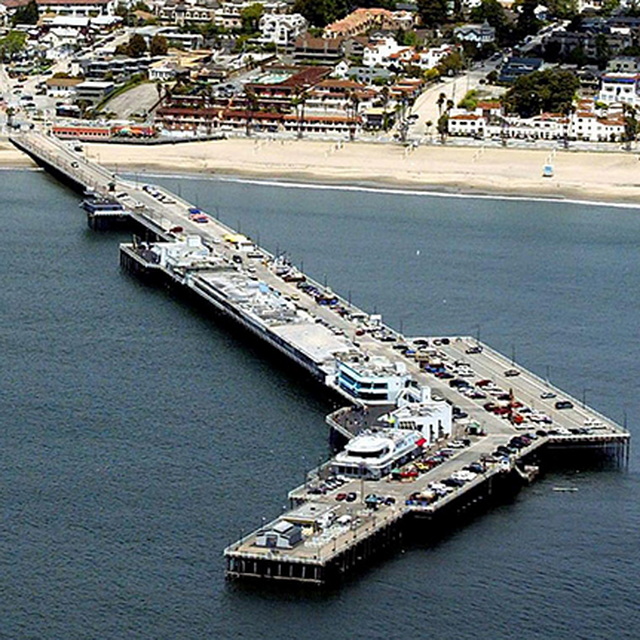
The Berkeley Municipal Fishing Pier has been closed for almost ten years now. There has never been a reckoning for why it was allowed to deteriorate. Instead of promptly repairing this vital waterfront asset, authorities have veered on a digression toward an unneeded and exorbitantly expensive commuter ferry, which will delay any pier access until at least 2028. Apparently Berkeley is not a city that can simply repair a pier.
But other cities can. Case in point, Santa Cruz. Its famous municipal wharf was hit by a major storm that collapsed its far end in December 2024, forcing closure of the whole pier. Less than two weeks later, the lost end was blocked off and the rest of the pier reopened, and is open currently. An intensive effort is underway to restore the whole structure. Damage there was much more severe than at the Berkeley fishing pier, where no structural members have collapsed, and areas thought to be fragile could be screened off, allowing the rest of the pier to be used. The death of the pier has meant a long downhill slide for the whole southern portion of the Waterfront.
The city seems tone deaf to the desires of local and regional visitors to have this famous and beloved structure reopened.
Publishing Schedule

This blog drops whenever there’s material and motivation, and not on a regular clockwork schedule. To avoid FOMO, subscribe.
. .